
Tired of the monotonous gym routine, or simply looking for an exhilarating, full-body workout that connects you with nature? Dive into the world of rowboat fitness! This unique approach to exercise offers a refreshing alternative to traditional workouts, leveraging the serenity of water with the intensity of a comprehensive physical challenge. For beginners, the thought of mastering a rowboat for fitness might seem daunting, but with the right guidance, rapid progress is not just possible, it’s inevitable.
This guide will introduce you to three beginner-friendly rowboat fitness programs, meticulously designed to build your stamina, strength, and technique, ensuring you not only get fit but also fall in love with the rhythmic glide of rowing. Get ready to transform your body and mind, all while enjoying the great outdoors.
Why Rowboat Fitness is Your Next Best Workout
Rowing a boat is far more than just a leisurely paddle; it’s a dynamic, low-impact exercise that engages nearly every major muscle group in your body. It stands out as an exceptional form of fitness for several compelling reasons:
- Full-Body Engagement: Unlike many exercises that isolate specific muscles, rowing is a synergistic movement. It effectively works your legs (quads, hamstrings, glutes), core (abs, obliques, lower back), and upper body (lats, rhomboids, biceps, triceps, shoulders). This holistic approach leads to balanced muscle development and increased overall strength, as highlighted by experts on full-body workouts.
- Cardiovascular Powerhouse: The continuous, rhythmic motion of rowing provides an incredible cardiovascular workout. It elevates your heart rate, improving heart health, lung capacity, and overall endurance. For more insights into the benefits of aerobic activity, consult resources like the American Heart Association.
- Low-Impact and Joint-Friendly: For those concerned about joint stress, rowing is a fantastic option. The fluid motion places minimal strain on your knees, hips, and ankles, making it suitable for a wide range of ages and fitness levels, including individuals recovering from injuries or those with joint sensitivities.
- Mental Wellness and Stress Relief: Exercising outdoors, especially on water, offers profound mental health benefits. The tranquil environment, fresh air, and rhythmic motion can reduce stress, improve mood, and enhance focus, providing a powerful antidote to daily pressures. Studies on the benefits of outdoor exercise often emphasize these positive psychological impacts.
- Accessibility for Beginners: While it looks complex, the basic mechanics of rowing are intuitive. With proper instruction and a gradual approach, beginners can quickly grasp the fundamental technique and start reaping the benefits.
Before You Dip Your Oars: Essential Preparations
Before embarking on your rowboat fitness journey, a few crucial considerations will ensure safety, comfort, and effectiveness.
- Safety First: Always prioritize safety on the water. Wear a properly fitted personal flotation device (PFD), even if you’re a strong swimmer. Check weather forecasts, be aware of water conditions, and ideally, row in designated safe areas or with a partner during your initial outings. Government safety guidelines for water recreation are invaluable resources.
- Equipment Basics: While specific racing shells exist, for beginner rowboat fitness, a stable recreational rowboat or even a robust dinghy can suffice. Ensure your oars are the correct length for your boat and comfortable to grip.
- Basic Rowing Technique: A foundational understanding of the rowing stroke is critical. It comprises four phases:
- Catch: Arms extended, shins vertical, lean forward slightly.
- Drive: Push off with your legs, then swing your back open, and finally pull with your arms.
- Finish: Legs flat, lean back slightly, oars pulled into your sternum.
- Recovery: Extend arms, hinge forward from the hips, then slide up to the catch position. Focus on power from the legs and a fluid connection between movements. For detailed technique guidance, reputable sources like British Rowing offer excellent visual and textual explanations.
- Warm-up and Cool-down: Always begin with 5-10 minutes of light cardio and dynamic stretches (arm circles, leg swings) to prepare your muscles. Conclude with 5-10 minutes of static stretches, holding each stretch for 20-30 seconds, to improve flexibility and aid recovery. These practices are standard recommendations from health organizations like the Mayo Clinic.
Program 1: The Steady-State Stamina Builder
This program is the perfect entry point for absolute beginners, focusing on building a solid foundation of cardiovascular endurance and mastering basic rowing technique. It emphasizes consistent effort over sustained periods.
Goal & Philosophy
The primary goal is to enhance aerobic capacity and develop muscle endurance without overexertion. The philosophy is “slow and steady wins the race,” focusing on long, comfortable rows that allow you to refine your stroke and build a robust base. This program is excellent for those new to structured exercise.
Weekly Schedule & Structure
Aim for 3 sessions per week, with at least one rest day between sessions.
- Session 1 (Day 1):
- Warm-up: 5 minutes light rowing (very easy pace).
- Main Workout: 20-25 minutes of steady, comfortable rowing. Your effort level should allow you to hold a conversation easily (Zone 2 heart rate).
- Cool-down: 5 minutes easy rowing, followed by stretches.
- Session 2 (Day 3):
- Warm-up: 5 minutes light rowing.
- Main Workout: 25-30 minutes of steady, comfortable rowing. Focus on smooth, consistent strokes.
- Cool-down: 5 minutes easy rowing, followed by stretches.
- Session 3 (Day 5):
- Warm-up: 5 minutes light rowing.
- Main Workout: 30-35 minutes of steady, comfortable rowing. Try to maintain consistent stroke rate.
- Cool-down: 5 minutes easy rowing, followed by stretches.
Key Focus
- Endurance: Gradually increasing your time on the water.
- Basic Technique Mastery: Concentrating on the correct sequence of the rowing stroke (legs, core, arms, then reverse).
- Cardiovascular Foundation: Building a strong aerobic base for future, more intense workouts.
- Enjoyment: Savoring the peaceful experience of rowing.
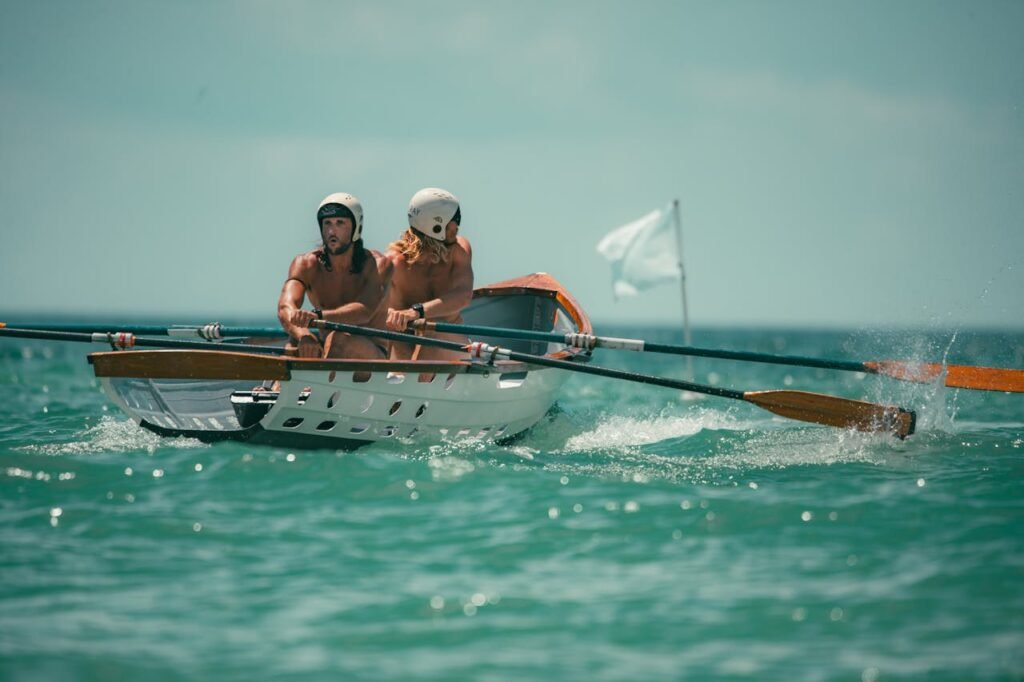
Program 2: The Interval Power Booster
Once you’ve established a baseline with the Steady-State Stamina Builder, this program introduces bursts of higher intensity to improve power, speed, and cardiovascular efficiency. It’s a stepping stone to more advanced rowboat fitness while still being beginner-friendly.
Goal & Philosophy
To improve anaerobic threshold, increase power output, and boost calorie expenditure. The philosophy here is “work hard, recover harder,” alternating between periods of high effort and active recovery. Interval training is a proven method for rapid fitness gains, as supported by research from institutions like Harvard Health Publishing.
Weekly Schedule & Structure
Aim for 2-3 sessions per week, ensuring adequate rest days.
- Session 1 (Day 1):
- Warm-up: 10 minutes easy rowing.
- Main Workout:
- Repeat 4-6 times:
- 2 minutes at moderate-high effort (challenging but sustainable, cannot hold a conversation).
- 3 minutes at easy recovery pace (light rowing, conversational).
- Repeat 4-6 times:
- Cool-down: 5-10 minutes easy rowing, followed by stretches.
- Session 2 (Day 3):
- Warm-up: 10 minutes easy rowing.
- Main Workout:
- Repeat 5-7 times:
- 1 minute at high effort (pushing hard, difficult to speak).
- 2 minutes at easy recovery pace.
- Repeat 5-7 times:
- Cool-down: 5-10 minutes easy rowing, followed by stretches.
- Optional Session 3 (Day 5 – if feeling good):
- Warm-up: 10 minutes easy rowing.
- Main Workout: 20-25 minutes steady-state rowing (from Program 1) to build active recovery and base endurance.
- Cool-down: 5 minutes easy rowing, followed by stretches.
Key Focus
- Power Output: Developing the ability to generate force quickly with each stroke.
- Cardiovascular Bursts: Training your heart and lungs to adapt to varying intensities.
- Fat Burning: Interval training is highly effective for burning calories both during and after the workout.
- Mental Toughness: Pushing through discomfort in short bursts.
Program 3: The Full-Body Toning Trajectory
This program is designed for beginners who have completed Program 1 and 2, or those who are slightly more athletic and want to integrate rowing into a comprehensive toning routine. It combines sustained effort with a focus on form to sculpt and strengthen muscles across your entire body.
Goal & Philosophy
To build lean muscle mass, improve muscle definition, and enhance overall body strength through prolonged, controlled rowing. The philosophy is “precision and persistence,” emphasizing excellent technique over longer durations to maximize muscle engagement and promote consistent growth.
Weekly Schedule & Structure
Aim for 3-4 sessions per week.
- Session 1 (Day 1): Focus on Legs & Core
- Warm-up: 10 minutes easy rowing.
- Main Workout: 35-40 minutes of steady-state rowing at a moderate pace. Concentrate on driving primarily with your legs and engaging your core firmly with each stroke. Imagine driving your feet through the footplate.
- Cool-down: 5 minutes easy rowing, followed by stretches focusing on hamstrings, quads, and hips.
- Session 2 (Day 3): Focus on Back & Arms
- Warm-up: 10 minutes easy rowing.
- Main Workout: 35-40 minutes of steady-state rowing at a moderate pace. Concentrate on a powerful layback from your hips and a strong, controlled pull with your back muscles and arms. Feel your lats and biceps working.
- Cool-down: 5 minutes easy rowing, followed by stretches focusing on back, shoulders, and arms.
- Session 3 (Day 5): Mixed Intensity Intervals
- Warm-up: 10 minutes easy rowing.
- Main Workout: Incorporate elements from Program 2, but extend the work periods slightly. For example:
- Repeat 3-4 times:
- 3 minutes at moderate-high effort.
- 3 minutes at easy recovery.
- Repeat 3-4 times:
- Cool-down: 5-10 minutes easy rowing, followed by full-body stretches.
- Optional Session 4 (Day 6 – if energy allows):
- Warm-up: 5 minutes easy rowing.
- Main Workout: 20-25 minutes easy, conversational rowing, focusing purely on perfect technique and fluidity. This can be a restorative session.
- Cool-down: 5 minutes easy rowing, followed by stretches.
Key Focus
- Muscle Definition: Developing lean muscle mass in all major rowing muscle groups.
- Prolonged Endurance: Building the capacity for longer, quality rowing sessions.
- Comprehensive Strength: Strengthening the entire kinetic chain involved in rowing.
- Advanced Technique: Finer tuning your stroke for maximum efficiency and power, a crucial aspect of overall fitness.
Program Comparison: Choosing Your Path to Progress
To help you decide which program aligns best with your current goals and fitness level, here’s a comparative overview:
| Program Name | Primary Goal | Intensity Level | Sample Duration (per session) | Key Benefits |
|---|---|---|---|---|
| Steady-State Stamina Builder | Base Endurance & Technique | Low-Moderate | 20-35 minutes | Heart health, basic muscle endurance, stroke refinement, stress reduction. |
| Interval Power Booster | Power, Speed, Anaerobic Fitness | Moderate-High | 20-35 minutes | Increased calorie burn, improved speed, enhanced cardiovascular efficiency. |
| Full-Body Toning Trajectory | Muscle Toning, Strength, Form | Moderate-High | 35-45 minutes | Lean muscle development, improved posture, enhanced sustained power, holistic strength. |
Maximizing Your Rowboat Fitness Journey: General Tips
Regardless of the program you choose, these universal tips will help you make the most of your rowboat fitness adventure:
- Consistency is Key: Adhering to your chosen program regularly is more important than sporadic, intense efforts. Regularity builds habits and yields consistent progress. Consistency is fundamental for any sustainable physical activity regimen as recommended by the CDC.
- Listen to Your Body: Pay attention to signals of fatigue or pain. Rest when needed, and don’t push through discomfort that feels wrong. Recovery is just as vital as the workout itself.
- Hydration & Nutrition: Fuel your body properly. Drink plenty of water before, during, and after your rows. Consume a balanced diet rich in lean proteins, complex carbohydrates, and healthy fats to support energy and recovery. Proper hydration is critical for all forms of exercise, as highlighted by the National Institutes of Health.
- Progression: As you get fitter, gradually increase your rowing duration, intensity, or stroke rate. Don’t rush progression; listen to your body and challenge yourself appropriately. This principle of progressive overload is a cornerstone of effective exercise science.
- Track Your Progress: Keep a log of your sessions – duration, distance, perceived effort, and how you felt. Seeing your improvement is a powerful motivator.
- Enjoy the Experience!: Remember why you started – the joy of being on the water, the fresh air, and the unique challenge. Embrace the journey of getting stronger with every stroke. Many find outdoor physical activities to be a valuable part of their overall wellness strategy.
Frequently Asked Questions (FAQ)
Q1: How quickly will I see results from rowboat fitness?
A: With consistent effort (3-4 sessions per week) and adherence to a program, beginners can often start feeling stronger and seeing improvements in stamina within 2-4 weeks. Visible changes in body composition, such as increased muscle tone, may take 6-8 weeks or longer, depending on diet and individual factors.
Q2: Do I need a special rowboat to start these programs?
A: No, you don’t need an expensive racing shell. A stable recreational rowboat, dinghy, or even a sturdy jon boat can be used for these beginner programs. The key is stability and comfort on the water. As you progress, you might consider boats designed for faster or more efficient rowing if you wish.
Q3: Is rowboat fitness suitable for all ages?
A: Yes, due to its low-impact nature and full-body engagement, rowboat fitness is suitable for a wide range of ages, from teens to seniors. It’s always advisable to consult with a healthcare professional before starting any new exercise program, especially if you have pre-existing health conditions. The World Health Organization advocates for physical activity across all age groups.
Q4: What if I don’t have access to water or a rowboat?
A: If water access is limited, an indoor rowing machine (ergometer) is an excellent alternative that mimics the rowing motion and provides similar physical benefits. Many gyms have them, and they are a popular piece of home fitness equipment.
Q5: How do I improve my rowing technique?
A: Consistent practice is crucial. Focus on the four phases of the stroke (catch, drive, finish, recovery) and ensure they flow smoothly. Many online resources, including videos from professional rowers and organizations, can provide visual guidance. Consider getting feedback from an experienced rower or coach if available. Regularly revisiting fundamental technique guides, such as those found on Wikipedia’s Rowing article, can also be beneficial.
Conclusion
Embarking on a rowboat fitness journey is more than just a workout; it’s an invitation to a healthier, more adventurous lifestyle. These three beginner-friendly programs—The Steady-State Stamina Builder, The Interval Power Booster, and The Full-Body Toning Trajectory—offer clear pathways for rapid progress, transforming your physique and enhancing your well-being. By embracing the power of the oars, the serenity of the water, and the discipline of structured training, you’re not just getting fit; you’re cultivating a lifelong passion. So, find your boat, choose your program, and get ready to pull your way to unprecedented levels of fitness and fulfillment.