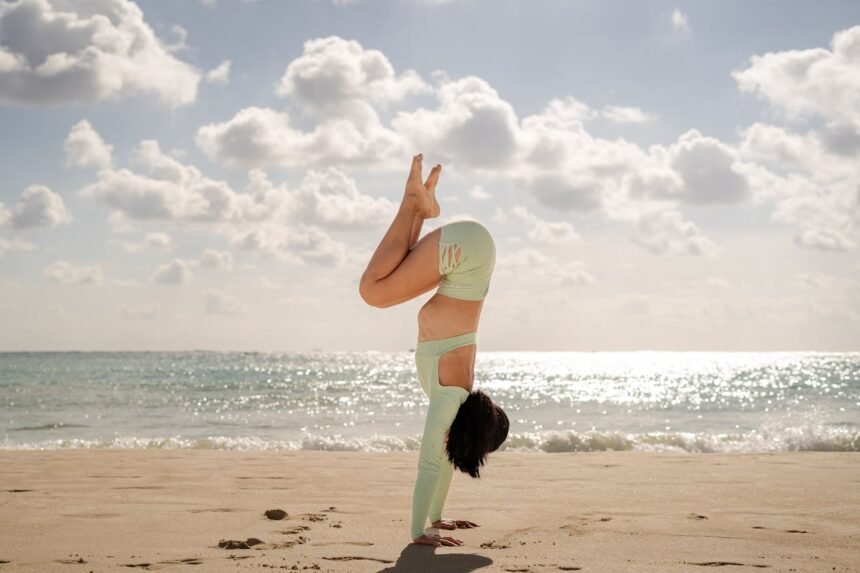
Designing an evidence-based beach wellness routine for beginners requires more than just walking on the sand. It blends circadian-aligned movement, breathwork, stress regulation, and low-impact conditioning into a structured protocol that benefits both mind and body. As highlighted in clinical reviews on physical activity and mental health by the World Health Organization, consistent movement, sunlight exposure, and nature contact significantly improve mood, sleep, and cardiometabolic risk profiles.
Below are ten expert-backed tips that translate current exercise science and behavioral health research into a practical, data-informed framework you can apply on any coastline.
1. Start with a 10–15-minute beach Acclimation Walk
For true novices, the safest entry point into a beach wellness routine for beginners is a low-intensity acclimation walk on firm sand near the waterline. According to guidance on low-impact sand walking intensity from the American College of Sports Medicine, starting on packed sand reduces joint loading while still increasing energy expenditure compared to asphalt.
- Walk at a conversational pace for 10–15 minutes.
- Use a neutral foot strike and avoid over-striding.
- If you have knee or hip issues, follow joint-friendly beach walking recommendations from the Arthritis Foundation.
This phase functions as a neuromuscular warm-up, allowing the ankle stabilizers, hip abductors, and intrinsic foot muscles to adapt to the uneven surface before transitioning into deeper sand work.
2. Morning Beach Yoga for a Stiff Back
Morning beach yoga for stiff back pain leverages spinal mobility, core activation, and breath regulation against a low-friction surface. As research on yoga for chronic low back pain summarized by the National Institutes of Health shows, structured yoga programs consistently improve pain scores and functional status compared with usual care.
A basic sunrise protocol:
- 5 minutes of cat–cow and gentle standing forward folds.
- 5–10 minutes of low-load poses (sphinx, cobra, child’s pose) on a towel.
- Finish with 3–5 minutes of diaphragmatic breathing in supine.
For pose progression and spine-safe cues, reference the clinical back-care yoga guidelines published by the American Academy of Orthopaedic Surgeons.
3. Simple Beach Meditation for Anxiety Relief
A simple beach meditation for anxiety relief exploits the ocean’s consistent auditory input as a natural “white noise” track. Structured mindfulness and breathwork programs have been shown to reduce anxiety scores in meta-analyses summarized by the American Psychological Association’s overview of mindfulness-based interventions.
A minimal viable protocol (5–10 minutes):
- Sit facing the water, eyes softly closed.
- Inhale through the nose for 4 seconds, exhale for 6 seconds.
- Anchor your attention to the sound of the waves; when distracted, label the thought and return to the sound.
For more structured scripts, follow evidence-based mindfulness practices outlined by the National Center for Complementary and Integrative Health.
4. Low-Impact Beach Workout for Seniors
A low impact beach workout for seniors should prioritize stability, controlled tempo, and fall risk reduction over maximal intensity. As detailed in the older adult physical activity recommendations from the Centers for Disease Control and Prevention, combining balance drills, low-impact cardio, and light resistance work reduces fall incidence and improves functional capacity.
Sample 20-minute low-impact circuit:
- 5 minutes: flat-sand walk with gentle arm swings.
- 5 minutes: tandem stance, heel-to-toe walk, and lateral stepping.
- 10 minutes: sit-to-stand from a beach chair, wall (or railing) push-ups, and standing calf raises.
For safety and progression principles tailored to aging populations, review the senior fitness and fall-prevention guidelines provided by the National Institute on Aging.
5. Progressive Bodyweight Beach Conditioning
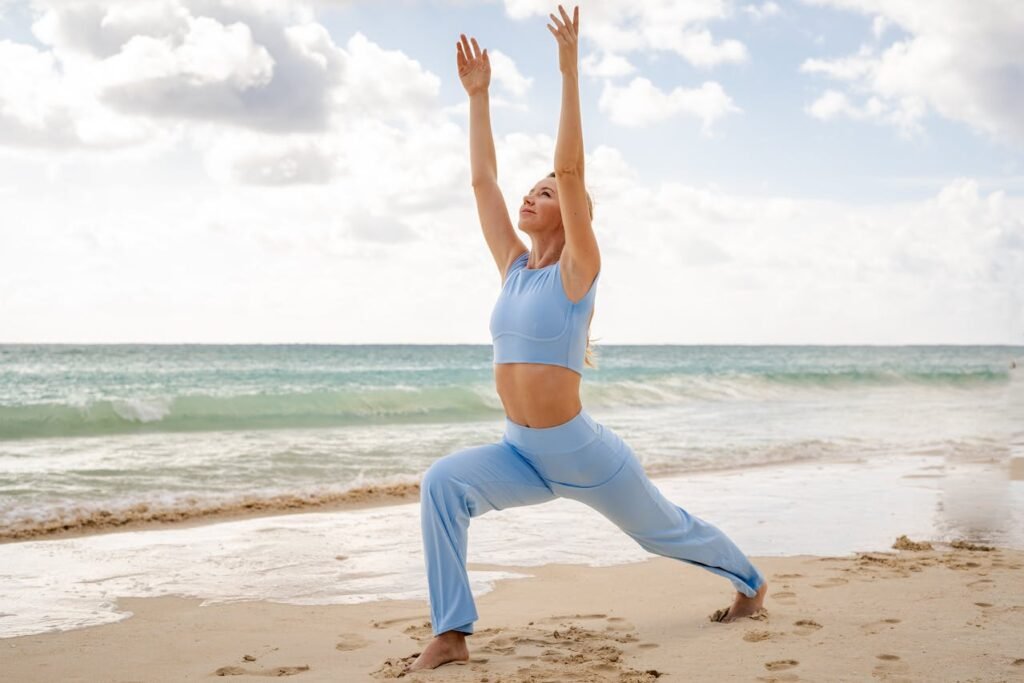
Once basic tolerance is established, you can layer in progressive bodyweight strength work in shallow sand. Training on an unstable surface increases neuromuscular demand, particularly at the ankle and hip. A beginner-friendly seaside circuit described by BetterMe’s 30‑minute bodyweight beach workout emphasizes time-based intervals (e.g., 45 seconds work, 15 seconds rest) targeting large muscle groups.[1]
A simple circuit:
- Squats or supported squats to chair.
- Incline push-ups against a bench or rail.
- Glute bridges or hip lifts on a towel.
Always monitor form deterioration; as highlighted in the functional training recommendations from the National Strength and Conditioning Association, instability should never compromise spinal alignment or joint integrity.
6. Integrate Breath, Heart Rate, and RPE Monitoring
To keep your beach wellness routine for beginners safe and scalable, regulate intensity via heart rate and perceived exertion (RPE). The Physical Activity Guidelines for Americans from the U.S. Department of Health and Human Services recommend accumulating at least 150–300 minutes of moderate-intensity activity weekly, defined in part by heart rate and breathing response.
Practical monitoring cues:
- Moderate intensity: you can talk but not sing.
- Use the 0–10 RPE scale; target 3–5 for most sessions.
For evidence on intensity domains and cardiorespiratory benefits, consult the cardio training zones explained by the American Heart Association.
7. Hydration, Sun Exposure, and Heat Management
Beach environments introduce thermal and ultraviolet load that can quietly undermine recovery. As emphasized in the heat-illness prevention guidelines from the Mayo Clinic, even mild dehydration can impair cognitive function and physical performance.
Key controls:
- Hydrate 2–3 hours pre-session and sip during activity.
- Train in early morning or late afternoon to avoid peak UV and heat.
- Use broad-spectrum SPF and reapply according to skin protection best practices from the Skin Cancer Foundation.
This environmental risk management is non-negotiable, especially for seniors or individuals with cardiovascular or metabolic conditions.
8. Combine Mobility Drills With Short Sand Intervals
For intermediate users, alternating mobility work with short, controlled sand intervals can enhance joint range of motion and aerobic capacity simultaneously. The simple on-sand exercise ideas described by Iberostar’s guide to great and simple exercises to practice on the beach illustrate how soft sand can increase muscular recruitment while reducing impact.[2]
Suggested structure:
- 30–60 seconds of ankle circles, hip openers, and thoracic rotations.
- 1–2 minutes of brisk walking or light jogging on firm sand.
For additional low-impact programming concepts, see practical vacation beach workout guidance from Vitacost’s beach workout routine article.[4]
9. Layer in Mind–Body Practices: Journaling and Reflection
For comprehensive mind and body benefits, combine physical activity with cognitive and emotional processing. The National Academy of Sports Medicine’s insights on prepping body and mind for beach season recommend journaling emotions, values, and behavior patterns alongside movement to deepen self-awareness and adherence.[6]
Implementation suggestions:
- After your session, jot down a 3–5 line reflection on energy, mood, and pain levels.
- Track sleep, perceived stress, and recovery quality.
For broader habit-formation strategies, consult the behavior-change and habit science resources summarized by the American Psychological Association’s lifestyle and health section.
10. Periodize Your Week: A Simple 7-Day Template
To move from random sessions to a true beach wellness routine for beginners, apply basic periodization: intentionally varying intensity and focus across the week. The holistic training approach promoted by AFPA’s tips to get beach body ready emphasizes mixing strength, NEAT (non-exercise activity), and recovery for sustainable progress.[3]
Sample 7-day framework:
- 2 days: strength-focused beach bodyweight circuits.
- 2–3 days: low-intensity walks plus simple beach meditation for anxiety relief.
- 1–2 days: morning beach yoga for stiff back and mobility-dominant sessions.
For additional beginner progression examples in a seaside context, reference the beginner beach body guidance from the Two River Times beach body beginner’s guide.[7]
Resources & References
- World Health Organization – physical activity and mental health overview
- American College of Sports Medicine – sand walking and low-impact training position statements
- Arthritis Foundation – joint-safe walking and low-impact workout recommendations
- National Institutes of Health – yoga for low back pain evidence summary
- American Academy of Orthopaedic Surgeons – clinical back-care and spine-safe exercise guidance
- American Psychological Association – mindfulness-based intervention research
- National Center for Complementary and Integrative Health – meditation and integrative health resources
- Centers for Disease Control and Prevention – older adult physical activity guidelines
- National Institute on Aging – senior fitness and fall-prevention guidance
- BetterMe – 30-minute bodyweight beach workout for beginners[1]
- National Strength and Conditioning Association – functional and instability training principles
- U.S. Department of Health and Human Services – Physical Activity Guidelines for Americans
- American Heart Association – cardio training zones and intensity classification
- Mayo Clinic – hydration and heat-illness prevention guidelines
- Skin Cancer Foundation – evidence-based sun safety and UV protection advice
- Iberostar – great and simple exercises to practice on the beach[2]
- Vitacost – practical beach workout routine concepts[4]
- National Academy of Sports Medicine – tips to get your body and mind ready for the beach[6]
- AFPA – integrated training concepts in their beach body preparation tips[3]
- Two River Times – beginner-oriented beach body strategy overview[7]