In a world that constantly demands speed, productivity, and high-intensity movement, the idea of holding a single yoga pose for five minutes might seem counterintuitive. However, for those seeking lasting flexibility and joint mobility, slowing down may be the most effective strategy available. Enter Yin Yoga.
Unlike dynamic yoga styles that focus on building heat and muscular strength, Yin Yoga targets the body’s deep connective tissues. It is a meditative, passive practice that offers profound physical and mental benefits. Whether you are an athlete looking to improve recovery or someone struggling with chronic stiffness from a sedentary lifestyle, incorporating Yin into your routine can be transformative.
If you are new to the mat, you might want to explore our guide on yoga for beginners to understand the basics before diving deep. Below, we explore the physiological mechanisms of Yin Yoga, how it differs from other forms of stretching, and why it is considered the gold standard for improving deep tissue flexibility.
What Is Yin Yoga?
Yin Yoga is a slow-paced style of yoga with roots in Taoist philosophy and Traditional Chinese Medicine (TCM). While modern yoga often focuses on “Yang” tissues—the muscles and blood—Yin focuses on “Yin” tissues—the ligaments, joints, deep fascial networks, and bones.
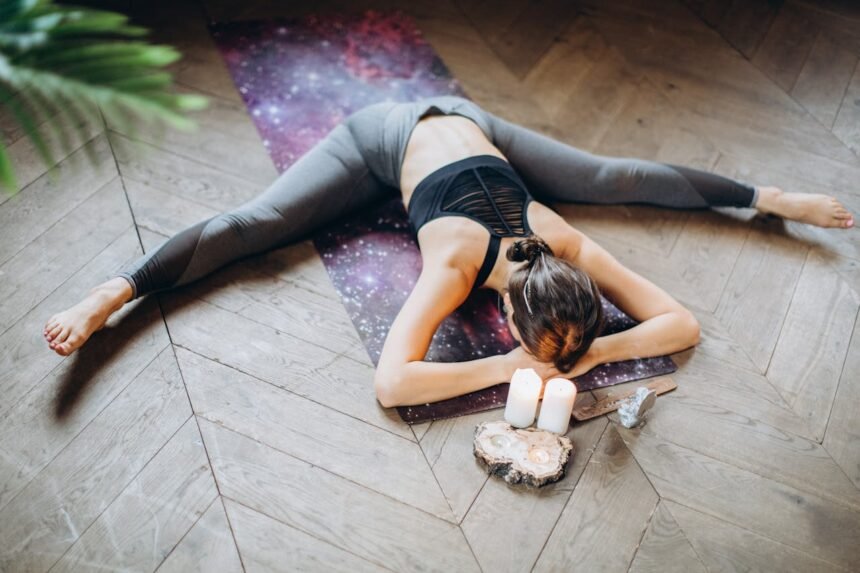
In a typical Vinyasa flow or Hatha class, you move rhythmically to engage muscles. In Yin, you assume a shape and relax the muscles entirely, allowing gravity to do the work. Poses are held for anywhere from three to five minutes, sometimes longer. This long-held, static stress on the tissues is what stimulates change in the body’s architecture.
According to the National Center for Complementary and Integrative Health (NCCIH), yoga is a proven modality for stress management and physical well-being. Yin specifically bridges the gap between physical stretching and mindfulness meditation.
The Science of Flexibility: Muscles vs. Fascia
To understand why Yin Yoga is superior for flexibility, one must understand the difference between elasticity and plasticity. Muscles are elastic; they stretch and recoil like a rubber band. This is why dynamic stretching warms you up but doesn’t necessarily result in permanent length.
Connective tissue, however, is plastic. It requires slow, sustained pressure to lengthen. The primary target in Yin Yoga is fascia, the web of connective tissue that encases our muscles and organs. For a deeper dive, read our overview on what is fascia and why it matters for pain relief.
The Role of Hyaluronic Acid
Research published in the Journal of Bodywork and Movement Therapies suggests that immobility causes the hyaluronic acid between fascial layers to become sticky and viscous, leading to stiffness. Long-held static stretches help to “melt” this substance, turning it from a gel-like state to a more fluid state (a process known as thixotropy), thereby allowing layers of tissue to glide smoothly over one another.
Top 5 Physical Benefits of Yin Yoga
While the experience is often relaxing, the physical benefits are active and structural. Here is how Yin enhances your physical health:
1. Increased Range of Motion
By safely stressing the ligaments and fascia, Yin Yoga encourages the body to remodel these tissues to be slightly longer and stronger. Over time, this results in significant improvements in range of motion, particularly in the hips, pelvis, and lower spine.
2. Improved Joint Health
It is a common misconception that we shouldn’t exercise our joints. While we shouldn’t grind joints, we do need to stress them safely to stimulate the production of synovial fluid. This fluid acts as a lubricant and shock absorber. Without movement, joints can degenerate. Yin Yoga acts as a “WD-40” for the body, which is vital for long-term joint health.
3. Fascial Release and Hydration
As mentioned, the sustained hold allows for the rehydration of tissues. A study found in ScienceDaily highlights that stretching connective tissue can reduce inflammation and improve mobility, making it an essential practice for aging bodies.
4. Better Circulation
When you release a long-held pose, there is often a rush of energy or fluid sensation. This “rebound” effect flushes fresh blood and oxygen through the tissues that were being compressed, aiding in cellular repair and circulation.
5. Stress Relief and Parasympathetic Activation
Yin is not just physical; it is deeply neurological. Holding poses for minutes at a time forces the body to slow down, shifting the nervous system from the sympathetic (fight-or-flight) to the parasympathetic (rest-and-digest) state. This helps in cortisol management, reducing the stress hormones that cause inflammation.
Yin Yoga vs. Restorative Yoga: What’s the Difference?
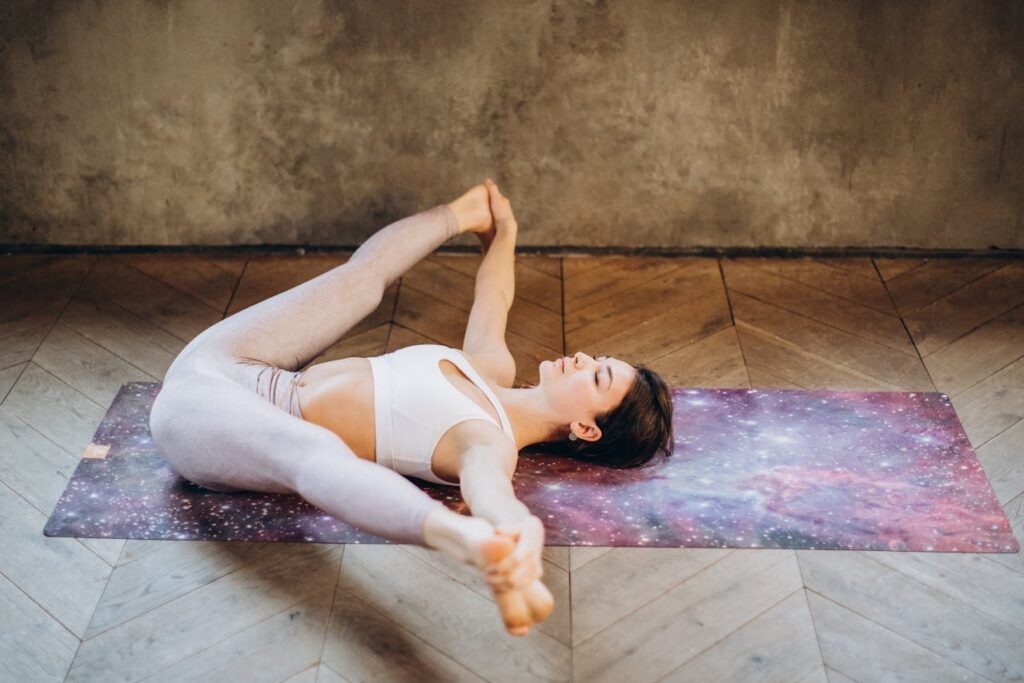
Many people confuse Yin with Restorative Yoga, but they have distinct goals. Restorative Yoga uses props to support the body fully so there is no stretch or effort; the goal is pure relaxation. Yin Yoga, conversely, seeks a “goldilocks” level of sensation—not pain, but a distinct stretching pressure.
If you are recovering from an injury or illness and need zero strain, you might prefer restorative yoga benefits. If you are looking to increase flexibility and open tight hips, Yin is the better choice.
How to Practice Yin Yoga Safely
Because Yin targets ligaments and joints, safety is paramount. You are working with tissues that do not heal as quickly as muscles. To practice effectively, follow the three “Tattvas” (principles) of Yin Yoga:
- Find Your Edge: Move into the pose to a point where you feel significant resistance, but not pain. On a scale of 1 to 10, aim for a 4 or 5.
- Resolve to Be Still: Once you find that edge, try not to fidget. Muscular engagement protects the joints, but in Yin, we want to relax the muscles to access the deeper tissues.
- Hold for Time: Time is the magic ingredient. Beginners should aim for 1–3 minutes per pose, while advanced practitioners may hold for 5 minutes or more.
According to the American Council on Exercise (ACE), listening to your body is crucial. If you feel sharp, shooting, or electrical pain, back out immediately.
3 Essential Yin Poses for Flexibility
Ready to try it? These three foundational poses target the areas where most people hold tension: the hips and spine.
1. Butterfly Pose (Baddha Konasana)
This pose targets the inner thighs and lower back. It is excellent for those looking for hip opening stretches.
- Sit on the floor and bring the soles of your feet together.
- Slide your feet away from you to form a diamond shape.
- Round your spine forward, allowing your head to hang heavy toward your feet.
- Hold for 3–5 minutes.
2. Sphinx Pose (Salamba Bhujangasana)
A gentle compression for the lower back, Sphinx helps counteract the hunching caused by sitting at desks. It can provide significant lower back pain relief.
- Lie on your belly.
- Prop yourself up on your forearms, elbows under shoulders.
- Relax your glutes and legs completely.
- Hold for 3 minutes.
3. Dragon Pose (Low Lunge)
This is a deep hip flexor stretch, vital for runners and cyclists.
- Step your right foot forward between your hands.
- Lower your back knee to the ground (use a blanket for padding).
- Allow your hips to sink forward and down.
- Hold for 2–3 minutes per side.
Always use props like blocks or bolsters to support your body. If you don’t have yoga gear, check out our guide on essential yoga props you can find at home.
The Mental and Emotional Impact
The physical stillness of Yin Yoga inevitably leads to mental confrontation. When the body becomes still, the mind often becomes loud. This practice teaches resilience and the ability to sit with discomfort—a skill that translates off the mat into daily life.
Research from Harvard Health indicates that yoga modulates the stress response systems, decreasing physiological arousal. Furthermore, a study in Frontiers in Psychology suggests that yoga interventions can significantly reduce symptoms of anxiety and depression.
By focusing on the breath during these long holds, you are essentially practicing mindfulness meditation. You learn to observe sensations without reacting to them.
Who Should Avoid Yin Yoga?
While generally safe, Yin is not for everyone. Those with Ehlers-Danlos Syndrome (EDS) or hypermobility should be cautious. Because their connective tissue is already loose, holding static stretches can destabilize joints. According to the Mayo Clinic, protecting joints from overextension is critical for those with connective tissue disorders.
Additionally, if you have acute injuries, recent surgeries, or severe osteoporosis, consult a healthcare provider or a certified yoga therapist before starting. For pregnant women, the hormone relaxin already loosens ligaments, so care must be taken not to overstretch.
The Bottom Line
Yin Yoga offers a necessary counterbalance to our busy, “Yang” lifestyles. By targeting the deep connective tissues—fascia, ligaments, and joints—it provides a unique pathway to flexibility that dynamic exercise cannot achieve alone.
Beyond the physical benefits of increased range of motion and joint health, Yin serves as a sanctuary for mental health, helping to lower cortisol levels and foster mindfulness. Whether you are an elite athlete or a desk worker, dedicating 20 minutes a week to this slow practice can lead to profound changes in how your body moves and feels.
Always consult with a medical professional before beginning a new exercise regimen, especially if you have pre-existing joint conditions.
Additional Resources
- PubMed: The effects of yoga on flexibility and balance
- World Health Organization: Physical Activity Guidelines
- Nature: Yoga and connective tissue research
- ACSM: The Health Benefits of Yoga