For many, the transition from sleep to wakefulness is a sluggish struggle. You might rely on the snooze button or immediately reach for a cup of coffee to shake off the mental fog. However, relying solely on caffeine can lead to midday crashes and jitteriness. A more sustainable, physiological approach to waking up involves engaging the body and breath through movement.
Yoga, an ancient practice now validated by modern sports medicine, offers a gentle yet effective way to signal to your body that the day has begun. A short, 15-minute sequence can stimulate circulation, regulate cortisol levels, and enhance mental clarity without the need for intense cardio immediately upon waking.
This article outlines a medically reviewed, accessible 15-minute yoga routine designed specifically to boost morning energy, improve flexibility, and set a positive tone for the day ahead.
The Physiology of Morning Movement
Understanding why you feel groggy—a state known as sleep inertia—can help explain why yoga is an effective antidote. When you wake, your body temperature is rising, and your cortisol levels are spiking as part of the Cortisol Awakening Response (CAR). This is a natural biological process intended to alert the brain.
However, sedentary behavior immediately after waking can prolong feelings of fatigue. Engaging in low-impact movement like yoga increases blood flow to the muscles and brain, delivering essential oxygen and nutrients. According to circadian rhythm research, exposure to light and physical activity are the two strongest “zeitgebers” (time cues) that help synchronize your internal body clock.
Furthermore, stretching influences the autonomic nervous system. While high-intensity interval training (HIIT) might spike adrenaline, gentle yoga balances the sympathetic (fight or flight) and parasympathetic (rest and digest) systems. This balance provides a sense of “calm energy”—alertness without anxiety.
Before You Begin: Setting the Stage
You do not need a dedicated studio to reap the benefits of a morning practice. However, creating a conducive environment is key to consistency.
- Hydrate First: Before rolling out your mat, drink a glass of water. The body loses hydration during sleep, and dehydration is a common cause of fatigue.
- Equipment: A non-slip yoga mat is recommended for safety. If you have tight hamstrings, have two yoga blocks handy.
- Attire: Wear comfortable clothing that allows for a full range of motion.
- Mindset: Approach this 15-minute window as a non-negotiable appointment with your health.
The 15-Minute Energy Sequence
This routine is designed to move the spine in all directions (flexion, extension, twisting, and lateral stretching), which is essential for maintaining spinal health and waking up the central nervous system.
Minutes 0–3: Grounding and Awakening (The Warm-Up)
1. Child’s Pose (Balasana)
Start by kneeling on your mat, touching your big toes together and spreading your knees wide. Sit back on your heels and extend your arms forward, resting your forehead on the mat. This pose gently stretches the hips, thighs, and ankles while calming the brain. Take 5 deep breaths here, focusing on expanding the back of your ribcage.
2. Cat-Cow (Marjaryasana-Bitilasana)
Transition to a tabletop position on your hands and knees. Ensure your wrists are under your shoulders and knees under your hips.
- Inhale (Cow): Drop your belly, lift your chin and chest, and gaze up.
- Exhale (Cat): Draw your belly to your spine and round your back toward the ceiling like a stretching cat.
Repeat this flow for 1 minute. This dynamic movement warms up the spine and stimulates the abdominal organs. According to the Mayo Clinic, connecting breath with movement is a core component of yoga that aids in stress reduction.
Minutes 3–8: Building Heat and Circulation
3. Downward-Facing Dog (Adho Mukha Svanasana)
From tabletop, tuck your toes and lift your hips high and back. Keep a slight bend in your knees if your hamstrings are tight. Press firmly through your hands. This mild inversion places your head below your heart, utilizing gravity to boost blood flow to the brain, which can help alleviate morning brain fog.
Pedal your feet out (“walking the dog”) to stretch the calves. Hold for 5 to 10 breaths.
4. Forward Fold (Uttanasana)
Walk your feet toward your hands at the front of the mat. Let your upper body hang heavy. Grasp opposite elbows and sway gently side to side (Ragdoll variation). This pose releases tension in the lower back and neck.
5. Half Sun Salutations (Ardha Surya Namaskar)
Stand tall in Mountain Pose.
- Inhale: Sweep arms overhead.
- Exhale: Fold forward.
- Inhale: Lift halfway up with a flat back.
- Exhale: Fold.
- Inhale: Rise all the way up, arms overhead.
Repeat this cycle 3 times. The rhythmic nature of Sun Salutations builds internal heat and improves cardiovascular efficiency, as noted in studies on yoga for heart health by Johns Hopkins Medicine.
Minutes 8–12: Strength and Expansion
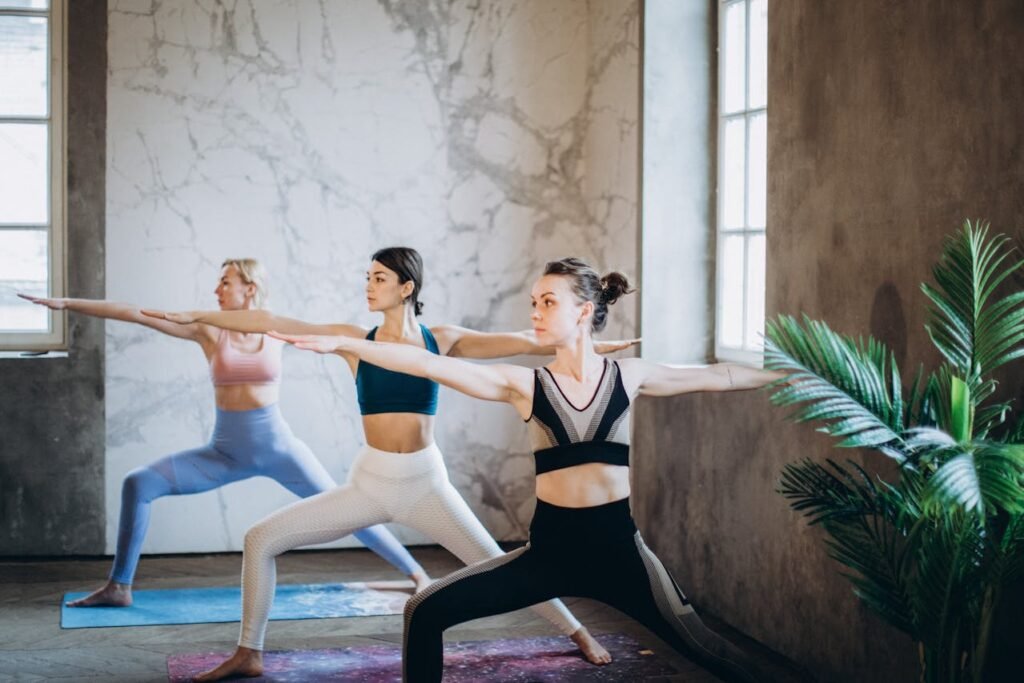
6. Warrior II (Virabhadrasana II)
Step your right foot back about 3 to 4 feet. Turn your right foot out 90 degrees and bend your left knee so it stacks over your ankle. Extend arms parallel to the floor. Gaze over your left hand.
Hold for 5 breaths. This pose builds stamina and concentration. It engages the large muscle groups of the legs, which increases metabolic rate.
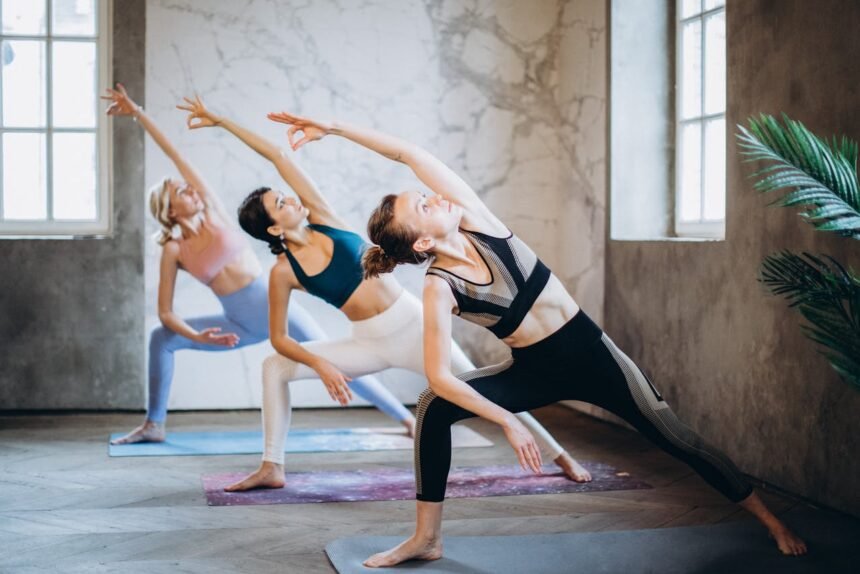
7. Reverse Warrior
Keep the legs as they are. Flip your front palm and sweep it up and back, lightly resting your back hand on your back leg. This creates a lateral stretch, opening the intercostal muscles between the ribs to improve lung capacity.
8. Flow and Switch
Cartwheel your hands down, step back to Downward Dog, and repeat Warrior II and Reverse Warrior on the left side.
Minutes 12–15: Balance and Integration
9. Tree Pose (Vrksasana)
Stand tall. Shift weight to your left foot. Place your right foot on your left ankle, calf, or inner thigh (avoid the knee joint). Bring hands to the heart center. Focus your gaze on a fixed point.
Balance poses require intense focus, which helps sharpen mental acuity for the day. According to Harvard Health, balance training is crucial for functional mobility and proprioception.
10. Seated Spinal Twist (Ardha Matsyendrasana)
Sit on the mat. Extend legs. Bend the right knee and place the foot outside the left thigh. Twist to the right, hooking the left elbow outside the right knee. Hold for 5 breaths, then switch sides. Twists are believed to aid digestion, a concept supported by research into gut motility and movement.
11. Moment of Stillness
Sit comfortably cross-legged. Close your eyes. Take 10 conscious, deep breaths. Set an intention for your day (e.g., “I am energized,” “I am focused”).
The Role of Breath (Pranayama) in Energy
The physical poses (asanas) are only half of the equation. The way you breathe determines the energy effect. For morning energy, focus on deep, diaphragmatic breathing.
Research from the National Center for Complementary and Integrative Health (NCCIH) suggests that controlled breathing can significantly reduce stress markers. Try to maintain Ujjayi Breath (Victorious Breath) throughout the practice: constrict the back of your throat slightly to create an ocean-like sound, inhaling and exhaling through the nose. This technique warms the air before it enters the lungs and increases oxygen uptake.
Safety and Modifications
While yoga is generally safe, it is important to listen to your body to prevent injury.
- Back Pain: If you suffer from chronic back issues, keep your knees bent in forward folds and avoid deep twists. See our guide on yoga for back pain for specific modifications.
- High Blood Pressure: If you have unmedicated high blood pressure, avoid holding your breath and move slowly when transitioning from the floor to standing to prevent dizziness.
- Pregnancy: Pregnant individuals should avoid deep twists and lying on the belly. Consult the American College of Obstetricians and Gynecologists guidelines or a prenatal yoga instructor.
Making It a Habit
Consistency is more important than intensity. Doing 15 minutes of yoga daily is often more beneficial than a single 90-minute class once a week. To build this habit, consider “habit stacking”—attaching your yoga practice to an existing habit, like brushing your teeth.
According to research published in the journal regarding habit formation, it can take anywhere from 18 to 254 days to form a new habit, so patience is essential. If you miss a day, simply resume the next morning without judgment.
Benefits Beyond Energy
While the immediate goal is morning energy, a regular morning yoga practice offers cumulative health benefits:
- Improved Mental Health: Regular practice is linked to lower levels of anxiety and depression. See exercise and mental health.
- Better Posture: Strengthening the core and back muscles helps counteract the effects of sitting at a desk all day.
- Enhanced Immunity: Moderate exercise stimulates the immune system. The CDC recommends regular physical activity to reduce the risk of chronic disease.
- Joint Health: Moving joints through their full range of motion preserves cartilage and prevents degeneration. Read more on maintaining joint mobility.
The Bottom Line
A 15-minute morning yoga routine is a powerful, low-barrier tool for enhancing vitality. By combining breathwork with dynamic movement, you stimulate the cardiovascular, nervous, and muscular systems, effectively shaking off sleep inertia.
Unlike chemical stimulants, the energy derived from yoga is sustainable and comes with the added benefits of improved flexibility, mental focus, and stress resilience. Start with this simple sequence tomorrow morning, and observe how it shifts the trajectory of your day.
Always consult with a healthcare professional before starting a new exercise regimen, especially if you have pre-existing health conditions or concerns.