If you live with anxiety, you know that it is a visceral experience. It isn’t just “worrying” in your mind; it is a racing heart, shallow breathing, tight shoulders, and a nervous system that feels like it is constantly stuck in the “on” position. For those who experience panic attacks, the sensation can be terrifying, often mimicking the physical symptoms of a heart attack or a medical emergency.
While medication and therapy are foundational treatments for generalized anxiety disorder (GAD) and panic disorder, somatic (body-based) practices are gaining significant recognition in the medical community. Among these, yoga stands out as a powerful, evidence-based tool for regulating the nervous system.
Yoga is not merely about flexibility or touching your toes. It is a practice of interoception—awareness of what is happening inside your body. By combining physical postures (asanas), controlled breathing (pranayama), and meditation, yoga offers a holistic approach to managing the physiological and psychological grip of anxiety.
The Science: How Yoga Rewires the Anxious Brain
To understand why yoga helps, we must look at the nervous system. Anxiety and panic attacks are largely driven by the sympathetic nervous system, often referred to as the “fight, flight, or freeze” response. When triggered, your body floods with stress hormones like cortisol and adrenaline.
Yoga functions as a manual override for this system. Research suggests that regular yoga practice increases the activity of the parasympathetic nervous system—the “rest and digest” mode. This is largely achieved through the stimulation of the vagus nerve, which regulates heart rate and digestion.
Boosting GABA Levels
One of the most compelling biological links between yoga and anxiety reduction involves a neurotransmitter called gamma-aminobutyric acid (GABA). GABA acts as your brain’s “brake pedal,” calming neural activity. Low levels of GABA are frequently associated with anxiety and mood disorders.
According to a study published in the Journal of Alternative and Complementary Medicine, yoga practitioners showed significantly higher levels of GABA compared to those who participated in other forms of exercise, such as walking. This suggests that the specific combination of movement and mindfulness in yoga offers unique neurological benefits.
Yoga vs. Panic Attacks: The Grounding Effect
A panic attack is an acute surge of intense fear or discomfort that reaches a peak within minutes. During an attack, you may feel detached from reality (derealization) or detached from yourself (depersonalization). This is where the concept of “grounding” becomes essential.
Grounding techniques bring your focus back to the physical reality of the present moment. Yoga provides a structured framework for this by forcing you to pay attention to:
- The sensation of your feet connecting with the floor.
- The rhythm and depth of your breath.
- The engagement of specific muscle groups.
By shifting focus from catastrophic thoughts to physical sensations, you can interrupt the feedback loop of panic. Recognizing panic attack symptoms early and engaging in a gentle pose can sometimes prevent the escalation of an episode.
Best Types of Yoga for Anxiety
Not all yoga is created equal when it comes to mental health. While a high-intensity power yoga class might be great for fitness, it could potentially overstimulate an already sensitized nervous system. If you are dealing with high stress, look for these styles:
1. Hatha Yoga
Hatha is a general term for physical yoga, but in a studio setting, it usually denotes a slower-paced class. You hold poses for a few breaths, allowing you to focus on alignment and mental clarity. It is an excellent entry point for beginners looking to reap Hatha yoga benefits.
2. Restorative Yoga
Restorative yoga is about active relaxation. It uses props like bolsters, blankets, and blocks to support the body in poses held for 5 to 20 minutes. The goal is completely letting go of tension without muscular effort. This style is highly effective for lowering cortisol levels and inducing deep relaxation.
3. Yin Yoga
Similar to restorative, Yin involves long holds, but it targets the deep connective tissues (fascia) rather than just muscles. The intensity of the stretch can be challenging, which teaches you to sit with discomfort and breathe through it—a valuable skill for managing anxiety triggers.
5 Essential Poses for Anxiety Relief
You do not need a 60-minute class to feel better. These five poses can be done individually to help reset your mood.
1. Child’s Pose (Balasana)
This resting pose creates a sense of safety and protection. By folding forward, you physically shield your vital organs, which sends a signal of safety to the brain.
How to do it: Kneel on the floor, touching your big toes together. Sit back on your heels and separate your knees about hip-width apart. Exhale and lay your torso down between your thighs. Rest your forehead on the mat or a block.
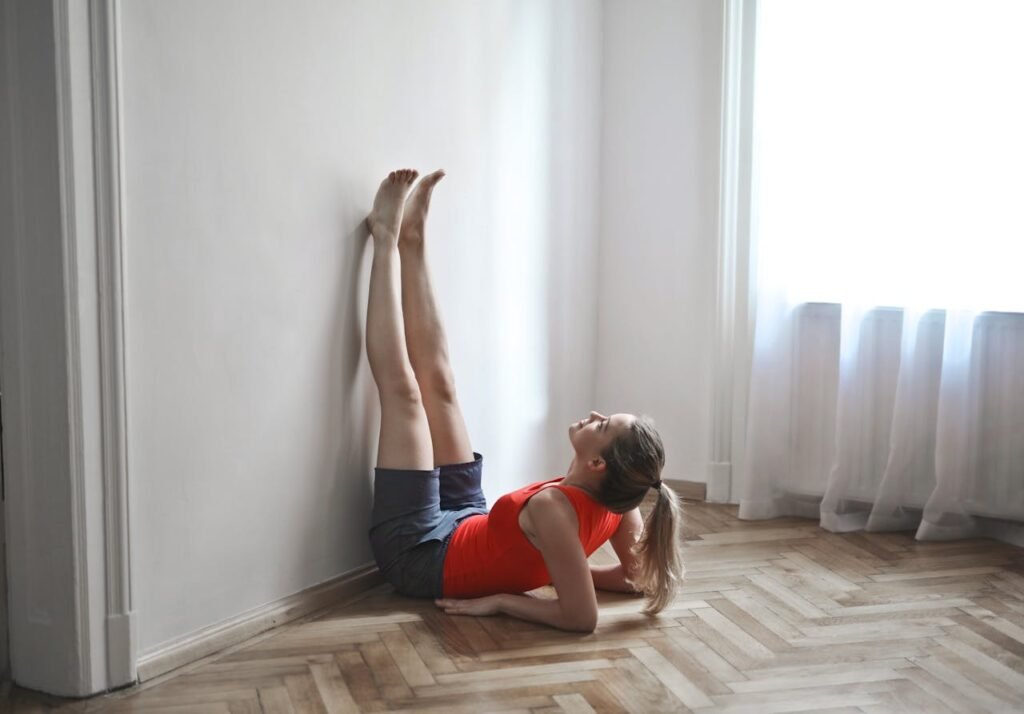
2. Legs-Up-The-Wall (Viparita Karani)
This inversion is famous for its ability to calm the nervous system and improve circulation. The Mayo Clinic notes that yoga poses like this can help reduce stress and lower blood pressure.
How to do it: Sit sideways next to a wall. Gently swing your legs up the wall as you lie back on the floor. Rest your arms by your sides. Close your eyes and breathe deeply.
3. Tree Pose (Vrksasana)
Balancing poses require intense focus. You cannot worry about the future when you are trying not to fall over in the present. This single-pointed concentration (Dharana) helps quiet the “monkey mind.”
4. Cat-Cow Stretch (Marjaryasana-Bitilasana)
This flow links breath with movement, which is essential for emotional regulation. It also relieves tension in the spine and neck, where many people hold stress.
5. Corpse Pose (Savasana)
Often considered the most difficult pose, Savasana requires you to lie still and do nothing. It is the practice of conscious relaxation. For those with insomnia remedies on their mind, practicing Savasana before bed can improve sleep quality.
The Power of Pranayama (Breathwork)
In yoga philosophy, the breath (prana) is the bridge between the mind and body. When you are anxious, you likely breathe rapidly into your upper chest. This signals danger to the brain. Shifting to diaphragmatic breathing signals safety.
Research from Frontiers in Psychiatry highlights that breathwork can significantly lower anxiety scores.
Technique: 4-7-8 Breathing
- Inhale through the nose for a count of 4.
- Hold the breath for a count of 7.
- Exhale forcibly through the mouth (making a whoosh sound) for a count of 8.
Practicing specific breathing exercises like this twice a day can lower your baseline anxiety levels over time.
Yoga Nidra: The Ultimate Reset
If physical movement feels too overwhelming, consider Yoga Nidra, or “yogic sleep.” This is a guided meditation usually done lying down. It guides you through a detailed body scan and visualization.
Studies suggest that Yoga Nidra can be effective in reducing both anxiety and stress. The Sleep Foundation highlights its efficacy in helping the body enter deep states of relaxation that mimic sleep, helping to restore energy depleted by chronic anxiety.
Building a Routine: Consistency Over Intensity
When starting yoga for mental health, consistency is more important than the difficulty of the poses. A 10-minute daily practice is often more effective for nervous system regulation than a sporadic 90-minute class.
Tips for Success
- Create a Safe Space: Dedicate a small corner of your home to your practice. Keep your mat visible.
- Start Small: Begin with a morning routine of just 3 poses.
- Listen to Your Body: If a pose causes pain or emotional distress, back out of it.
- Use Apps: There are many high-quality apps and videos available if you cannot attend a studio.
According to the National Center for Complementary and Integrative Health (NCCIH), regular yoga practice is associated with better stress management, mental/emotional health, and healthy eating/activity habits.
Safety and Trauma-Informed Yoga
For some, silence and body awareness can trigger traumatic memories. This is why “Trauma-Informed Yoga” is a growing field. These classes prioritize agency and choice, allowing you to opt out of physical adjustments or close your eyes only if you feel comfortable.
If you have a history of trauma, it is vital to approach body-based therapies with care. Read more about trauma informed care to understand what to look for in a class or instructor. The American Psychological Association emphasizes the importance of addressing the somatic components of trauma for complete healing.
When to Seek Professional Help
While yoga is a powerful tool, it is a complementary therapy, not a replacement for medical treatment. If your anxiety interferes with your daily life, work, or relationships, or if you experience frequent panic attacks, it is crucial to consult a healthcare professional.
Yoga works best when integrated into a broader treatment plan that may include cognitive behavioral therapy (CBT), medication, or other lifestyle changes. Organizations like the National Institute of Mental Health (NIMH) provide resources for finding qualified mental health support.
Furthermore, if you have physical limitations, chronic pain, or are pregnant, consult your doctor before starting a new exercise regimen. You may also want to explore yoga poses for stress specifically modified for your physical needs.
The Bottom Line
Yoga offers a sanctuary for the anxious mind. By combining movement, breath, and mindfulness, it provides a practical toolkit for navigating the storms of anxiety and panic. It teaches us that while we cannot always control the stressors in our lives, we can control how our bodies respond to them.
Whether you are lying on the floor in Child’s Pose or focusing on your breath during a commute, the principles of yoga are accessible to you anytime, anywhere. Start slowly, be compassionate with yourself, and remember: the goal is not to be “good” at yoga, but to be good to yourself.