In a culture that often equates productivity with self-worth, the concept of “doing nothing” can feel counterintuitive, if not downright uncomfortable. Yet, chronic stress has become a pervasive public health issue. When the body remains in a constant state of high alert, known as the “fight or flight” response, it wreaks havoc on your physical and mental well-being.
If you are feeling the early signs of burnout, high-intensity exercise might not always be the answer. Sometimes, the most productive thing you can do is slow down. This is where a restorative yoga sequence for stress relief becomes a vital tool in your wellness toolkit.
Unlike athletic styles of yoga, restorative yoga is not about stretching deep or building muscle. It is the practice of active relaxation. By using props to support the body completely, you create an environment where the nervous system can shift from sympathetic dominance (stress) to parasympathetic dominance (relaxation). This article outlines a medically reviewed, evidence-based sequence designed to lower cortisol levels and restore balance to your body and mind.
What Is Restorative Yoga?
Restorative yoga is a contemplative practice derived from the teachings of B.K.S. Iyengar. It utilizes props—such as bolsters, blankets, blocks, and straps—to support the body in positions of ease and comfort. The goal is to hold poses for longer durations, typically 5 to 20 minutes, with zero physical effort.
According to research published by the National Institutes of Health (NIH), yoga interventions specifically targeting the stress response have been shown to significantly reduce anxiety and improve autonomic nervous system function. By minimizing muscle engagement, you signal to your brain that you are safe, triggering the “Relaxation Response.”
The Physiology of Relaxation
When you are stressed, your body releases hormones like adrenaline and cortisol. Your heart rate increases, digestion slows, and muscles tense. Restorative yoga counters this by stimulating the vagus nerve, the main component of the parasympathetic nervous system. This stimulation results in:
- lowered heart rate and blood pressure.
- Improved digestion as blood flow returns to the visceral organs.
- Reduced muscle tension and chronic pain signals.
- Enhanced immune function and tissue repair.
Preparing for Your Practice
Before beginning this sequence, it is essential to curate your environment. The efficacy of restorative yoga relies heavily on your ability to let go. Distractions, cold temperatures, or uncomfortable clothing can inhibit the relaxation process.
Essential Props
You do not need expensive studio equipment. Household items work perfectly:
- Bolster substitutes: Firm couch cushions or rolled-up sleeping bags.
- Block substitutes: Thick hardcover books or sturdy boxes.
- Blankets: Heavy wool or cotton blankets are best for support and warmth.
- Eye covering: An eye pillow or a folded washcloth to block out light.
Set up in a quiet, dim room. You may wish to play soft, ambient music or use guided meditation audio to help anchor your mind.
A 6-Pose Restorative Yoga Sequence for Stress Relief
Perform this sequence in order. Aim to stay in each pose for 5 to 10 minutes. Focus on deep, diaphragmatic breathing throughout the practice.
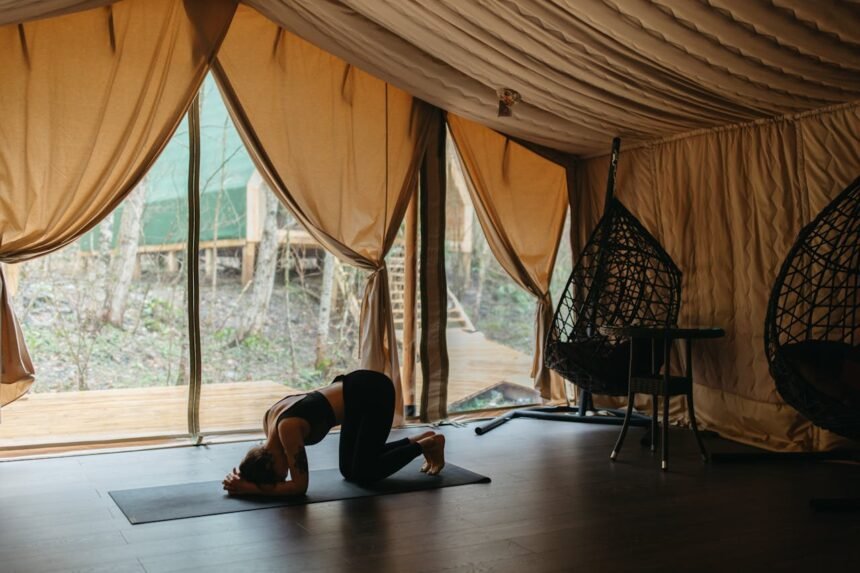
1. Supported Child’s Pose (Salamba Balasana)
This pose is a gentle forward fold that quiets the mind and gently stretches the lower back. It creates a sense of safety and containment, making it an excellent starting point for those dealing with anxiety.
How to do it:
- Place a bolster or a stack of firm pillows lengthwise in the center of your mat.
- Kneel on the floor with your big toes touching and knees slightly wider than your hips.
- Slide the bolster between your thighs.
- Slowly fold forward, draping your torso over the bolster. Your belly and chest should be fully supported.
- Turn your head to one side, resting your cheek on the bolster. Close your eyes.
- Rest your arms alongside the bolster, palms facing down.
Why it works: The gentle pressure on the abdomen can help stimulate digestion and soothe the nervous system. If you have tight hips, this is also a mild hip opener that releases stored tension in the pelvic region.
2. Legs-Up-The-Wall (Viparita Karani)
Often considered the “gold standard” of restorative poses, this inversion is renowned for its ability to refresh the circulatory system and calm a racing mind. According to the Cleveland Clinic, this pose aids in venous return, helping blood flow back to the heart with less effort.
How to do it:
- Sit sideways next to a wall, with your hip touching the wall.
- Swing your legs up the wall as you lie back on the floor. Your buttocks should be as close to the wall as comfortable.
- If your hamstrings are tight, slide your hips a few inches away from the wall or place a folded blanket under your sacrum for elevation.
- Let your arms rest by your sides, palms facing up to open the chest.
Why it works: This pose is particularly effective for reducing edema (swelling) in the legs and feet. It also facilitates deep, rhythmic breathing, which is essential for managing anxiety symptoms.
3. Supported Bridge Pose (Setu Bandha Sarvangasana)
While active backbends can be stimulating, a supported backbend opens the chest and lungs passively. This counteracts the hunched “tech neck” posture many of us adopt during the workday.
How to do it:
- Lie on your back with your knees bent and feet flat on the floor, hip-width apart.
- Press into your feet to lift your hips slightly.
- Slide a yoga block (on the low or medium setting) or a firm cushion under your sacrum (the flat bone at the base of your spine, not your lower back).
- lowly lower your hips onto the support. Ensure you feel stable.
- You can keep your knees bent or, for a deeper opening, extend your legs straight out.
Why it works: This pose gently stretches the hip flexors and intercostal muscles, allowing for fuller breaths. It is often recommended for mild lower back pain relief when done with proper support.
4. Reclined Bound Angle Pose (Supta Baddha Konasana)
This posture is deeply restorative for the reproductive and digestive systems. It opens the inner thighs and groin while keeping the spine neutral.
How to do it:
- Sit in front of your bolster (positioned lengthwise behind you). Ensure the bolster touches your sacrum.
- Bring the soles of your feet together and let your knees fall open to the sides.
- Support your outer thighs with rolled-up blankets or blocks so you feel no strain in the groin.
- Lie back onto the bolster. Support your head with an extra folded blanket if your chin is tilting up.
- Rest your hands on your belly or out to the sides.
Why it works: Research from Harvard Health suggests that yoga practices involving hip openers and controlled breathing can modulate stress response systems. This pose is particularly beneficial for improving digestion and relieving menstrual discomfort.
5. Supported Supine Twist (Jathara Parivartanasana)
Twists are known for their “wringing out” effect, helping to release tension along the spine and massage the abdominal organs.
How to do it:
- Lie on your back with your knees bent.
- Shift your hips slightly to the right.
- Drop both knees to the left. Place a bolster or pillow between your knees or under the bottom knee for support.
- Open your arms into a “T” shape. Keep both shoulders grounded.
- Hold for 3 to 5 minutes, then switch sides.
Why it works: Gentle twisting hydrates the spinal discs and releases tension in the paraspinal muscles. It is a soothing transition before the final resting pose.
6. Basic Relaxation Pose (Savasana) with Weight
Savasana is the most important pose of the sequence. It allows the body to integrate the benefits of the previous postures. Adding weight can enhance the sense of grounding.
How to do it:
- Lie flat on your back. Place a bolster or rolled blanket under your knees to release tension in the lower back.
- Cover your body with a blanket. If possible, place a folded blanket specifically over your hips or abdomen for grounding weight.
- Cover your eyes with an eye pillow.
- Let your feet splay open and your palms face up.
- Release all control of the breath. Rest here for 10 to 20 minutes.
Why it works: This pose mimics the physiological state of sleep while you remain conscious. It helps lower brainwave frequency from Beta (active) to Alpha or Theta (meditative), promoting profound restoration. For those struggling with sleep issues, this is a key component of natural insomnia treatments.
Scientific Evidence and Safety Considerations
The efficacy of restorative yoga is backed by a growing body of clinical research. A study published in the American Psychological Association (APA) highlights how stress affects every system in the body, from musculoskeletal to cardiovascular. Interventions like restorative yoga interrupt this cycle.
Furthermore, the Mayo Clinic notes that yoga can reduce risk factors for chronic diseases, such as heart disease and high blood pressure. However, while restorative yoga is generally safe, it is important to listen to your body.
Contraindications
If you have recent spinal injuries, herniated discs, or severe osteoporosis, consult a healthcare provider before starting. Pregnant individuals should avoid lying flat on their back after the first trimester and should modify twists to be open rather than closed. For more guidance, refer to resources from the National Center for Complementary and Integrative Health (NCCIH).
Tips for Deepening Your Practice
- Focus on the Exhale: Lengthening your exhalation activates the parasympathetic nervous system. Try inhaling for a count of 4 and exhaling for a count of 6 or 8.
- Stay Warm: As your heart rate drops, your body temperature will decrease. Keep socks on and use plenty of blankets.
- Be Consistent: Even 15 minutes of restorative yoga a few times a week is more beneficial than a sporadic 90-minute session.
- Seek Mental Health Support: While yoga is a powerful tool, it is complementary. If you are experiencing severe anxiety or depression, explore professional mental health resources alongside your practice.
The Bottom Line
Stress is an inevitable part of modern life, but its accumulation in the body is not irreversible. A dedicated restorative yoga sequence for stress relief offers a scientifically supported method to downregulate your nervous system, improve sleep, and enhance overall resilience.
By taking the time to be still, you are not being lazy; you are engaging in a sophisticated physiological process of repair. According to the Sleep Foundation, these practices are essential for long-term health maintenance. Roll out your mat, grab your pillows, and give your body the permission it needs to rest.