In our fast-paced society, quality rest often feels like a luxury rather than a biological necessity. Yet, the foundation of good health—both mental and physical—is firmly rooted in how well we sleep. If you find yourself tossing and turning, waking up unrefreshed, or struggling to maintain focus throughout the day, your sleep habits (or “hygiene”) may require scrutiny.
This is where a sleep hygiene assessment tool becomes invaluable. It is not merely a checklist; it is a structured method to evaluate the behaviours, environmental factors, and physiological patterns that influence your slumber. By utilising these tools, we can identify the specific disruptors preventing you from achieving the restorative rest you deserve.
In this comprehensive guide, we will explore what sleep hygiene assessment tools are, why they are critical for your wellbeing, and how you can use them to combat insomnia symptoms effectively.
What Is Sleep Hygiene?
Before diving into assessment tools, it is crucial to clarify what we mean by “sleep hygiene”. Contrary to what the name might suggest, it has little to do with personal cleanliness. Instead, sleep hygiene refers to the set of behavioural and environmental practices that are necessary for normal, quality nocturnal sleep and full daytime alertness.
Good sleep hygiene involves consistency. It encompasses everything from your bedroom environment and daily routine to your dietary choices and stress management techniques. When these factors are optimised, they signal to your brain that it is time to wind down, allowing your natural circadian rhythms to take over.
According to the NHS, establishing a regular routine is one of the most effective ways to programme your body for better sleep. However, without assessing your current habits, it is difficult to know which changes will be most effective.
Why You Need a Sleep Hygiene Assessment
Many of us endure poor sleep for years, accepting fatigue as a normal part of modern life. We might attribute our tiredness to work stress or ageing, failing to realise that specific, modifiable habits are the culprits. A sleep hygiene assessment tool acts as a diagnostic mirror.
By systematically reviewing your habits, you can pinpoint issues such as:
- Inconsistent Schedules: Going to bed and waking up at vastly different times.
- Stimulant Misuse: Consuming caffeine or sugar too close to bedtime.
- Environmental Disruptors: Issues with light, noise, or temperature in the bedroom.
- Psychological Barriers: Racing thoughts or anxiety regarding sleep itself.
Using an assessment tool is often the first step in Cognitive Behavioural Therapy for Insomnia (CBT-I), the gold standard treatment for sleep disorders recommended by health authorities worldwide.
Core Components of a Sleep Hygiene Assessment Tool
Whether you are using a clinical questionnaire provided by a GP or a digital app, a robust assessment tool will evaluate four primary pillars of sleep health. Understanding these pillars will help you interpret your results accurately.
1. The Bedroom Environment
Your sleeping quarters should be a sanctuary. Assessments will query the temperature, noise levels, and lighting of your room. In the UK, where summer evenings stay light until late, blackout curtains are often essential. The assessment will also consider your comfort, including the quality of your mattress and bedding.
If your assessment highlights discomfort as a major factor, you may need to investigate orthopaedic pillows or supportive mattresses to alleviate physical strain.
2. Lifestyle and Dietary Habits
What you consume during the day has a delayed effect on your night. A thorough assessment will track your intake of caffeine, alcohol, and heavy meals. While alcohol may help you drift off, it severely fragments sleep quality later in the night.
Furthermore, the tool will assess your physical activity levels. Regular exercise promotes deep sleep, but timing is key. Exercising too late can leave your body temperature too high for sleep onset. For more on this, read about the ideal caffeine cutoff times.
3. The Bedtime Routine
This section of the tool evaluates how you prepare for bed. Do you have a wind-down period? Are you exposing yourself to blue light from screens? The Sleep Foundation highlights that blue light suppresses melatonin, the hormone responsible for regulating your sleep-wake cycle.
4. Mental and Emotional State
Stress and sleep have a bidirectional relationship. High stress leads to poor sleep, and poor sleep increases stress sensitivity. Assessment tools often include questions related to racing thoughts, worry, or the inability to switch off. Addressing these often requires managing anxiety alongside physical sleep habits.

Types of Assessment Tools Available
There is no single “correct” tool, but rather a spectrum of methods ranging from self-help diaries to clinical scales.
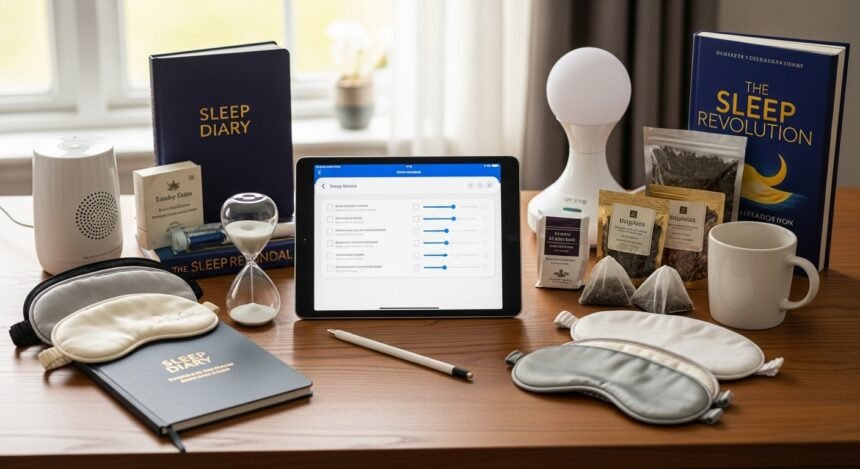
The Sleep Diary
This is the most common preliminary tool used by sleep specialists. For two weeks, you record the time you went to bed, the time you fell asleep (latency), how often you woke up, and how you felt in the morning. This data provides a clear picture of your sleep efficiency.
Clinical Questionnaires
Professionals often use standardised scales such as the Pittsburgh Sleep Quality Index (PSQI) or the Epworth Sleepiness Scale. These provide a numerical score that indicates the severity of sleep deprivation. Information on these scales can often be found through resources like PubMed.
Wearable Technology
Modern smartwatches and fitness trackers act as automated assessment tools. They monitor heart rate variability and movement to estimate sleep stages. While not perfectly accurate compared to a lab study, they offer useful trends over time regarding your circadian rhythms.
How to Perform a Self-Assessment
You do not always need a specialist to begin assessing your sleep hygiene. You can conduct a preliminary audit using the following checklist. Be honest with your answers to ensure the results are useful.
The DIY Sleep Hygiene Checklist
- Regularity: Do I wake up at the same time every day, even on weekends?
- Napping: Do I nap for longer than 20 minutes or after 3 pm?
- Stimulants: Do I drink tea, coffee, or energy drinks after 2 pm?
- Environment: Is my bedroom dark, cool (around 16-18°C), and quiet?
- Screen Time: Do I stop using phones and tablets at least one hour before bed?
- Bed Association: Do I use my bed only for sleep and intimacy (not work or TV)?
- Light Exposure: Do I get natural daylight exposure within the first hour of waking?
If you answered “No” to the positive habits or “Yes” to the negative ones (like late caffeine), you have identified clear areas for improvement.
Interpreting Your Results
Once you have completed an assessment, the next step is interpretation. A few flagged items on a checklist are normal; however, a consistent pattern of poor hygiene scores correlates strongly with chronic fatigue.
If your assessment reveals that your environment and habits are perfect, but you still cannot sleep, you may be dealing with a medical sleep disorder such as sleep apnoea or Restless Legs Syndrome. In this scenario, hygiene improvements alone may not be sufficient.
According to Mind, persistent sleep problems that do not respond to hygiene changes should be discussed with a healthcare professional to rule out underlying mental health conditions.
Actionable Steps to Optimise Sleep Hygiene
Based on the common findings from these assessment tools, here are authoritative strategies to reclaim your night’s rest.
1. Stabilise Your Biological Clock
Our bodies crave predictability. Set a strict wake-up time. This anchors your circadian rhythm. Even if you have slept poorly, wake up at the set time to build “sleep pressure” for the following night.
2. Curate Your Light Exposure
Light is the primary zeitgeber (time-giver) for the human body. Get bright light in the morning and dim the lights in your home two hours before bed. This encourages natural melatonin production without the need for supplements.
3. The 20-Minute Rule
If you cannot fall asleep within roughly 20 minutes, get out of bed. Go to another room and do something relaxing in dim light, such as reading a book. Return to bed only when you feel sleepy. This prevents your brain from associating the bed with frustration.
For more detailed guidance on behavioural changes, the Royal College of Psychiatrists offers excellent fact sheets on sleeping well.
4. Manage the “Worry Window”
If anxiety keeps you awake, schedule “worry time” earlier in the evening. Write down your concerns and a simple plan for each. This allows you to mentally “close the file” on the day before your head hits the pillow.
When to Seek Professional Help
While a sleep hygiene assessment tool is a powerful self-help mechanism, it is not a replacement for medical advice. You should consult a GP if:
- Your sleep problems have persisted for more than three months.
- You snore loudly or gasp for air during sleep.
- You fall asleep inadvertently during the day (e.g., while driving).
- You experience physical pain or restless sensations in your legs at night.
Organisations such as the British Snoring & Sleep Apnoea Association provide specific resources for those dealing with breathing-related sleep disorders.
The Bottom Line
Sleep is not a passive state; it is an active, restorative process that requires the right conditions to flourish. A sleep hygiene assessment tool serves as your personal roadmap to better rest. By objectively evaluating your bedroom environment, lifestyle choices, and routines, you can make targeted changes that yield significant improvements in your quality of life.
Remember, improving sleep hygiene is a journey, not a quick fix. Small, consistent adjustments often lead to sustainable, long-term benefits. Prioritise your sleep today, and your health will thank you tomorrow.
For further reading on national guidelines regarding sleep disorders, you can visit the NICE website. Additionally, The Sleep Charity offers extensive support for families and individuals struggling with sleep issues across the UK.
Understanding the link between work stress and sleep is also vital; Mental Health UK provides resources on maintaining balance. Finally, for broader public health advice, GOV.UK outlines the impact of health on work performance.