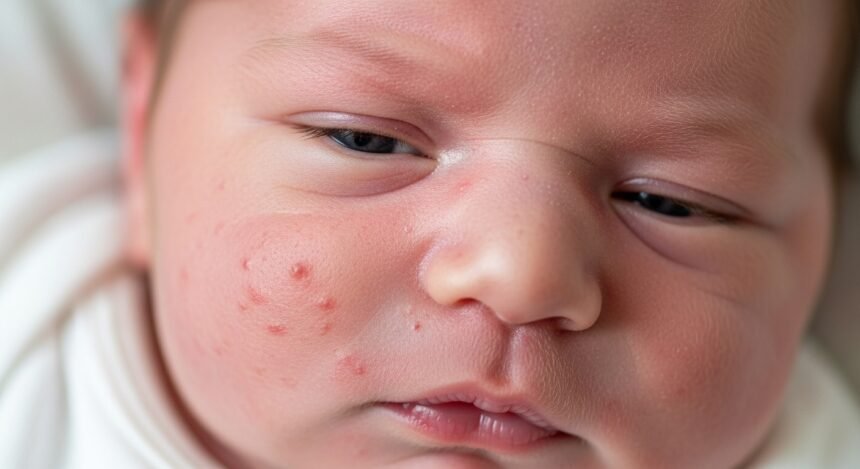
Bringing a new baby home is a whirlwind of emotions, from overwhelming love to sleep-deprived anxiety. As you spend hours gazing at your little one’s face, you might notice small red bumps or whiteheads appearing on their cheeks, nose or forehead. It can be alarming to see spots on a newborn face, but rest assured, this is likely baby acne.
It is incredibly common and usually harmless. However, distinguishing between innocent neonatal acne and other skin conditions is essential for your peace of mind and your baby’s comfort. This comprehensive guide will explore exactly what baby acne is, why it happens, and how to care for your infant’s sensitive skin.
What is Baby Acne?
Baby acne is a general term often used to describe two distinct conditions: neonatal acne* and *infantile acne. Understanding the difference is crucial as they appear at different times and require different levels of attention.
Neonatal Acne
Most commonly, when parents talk about baby acne, they are referring to neonatal acne. This condition typically appears within the first month of life, often around two to four weeks of age. It affects approximately 20% of newborns.
According to the NHS, these spots usually clear up on their own within a few weeks or months without any scarring. It is generally not a cause for concern and does not cause the baby any discomfort or itching.
Infantile Acne
Infantile acne causes are slightly more complex. This type appears later, usually between three and six months of age. It is far less common than neonatal acne and can sometimes be more severe, presenting with yellow-headed spots (pustules) or deep cysts.
Unlike the fleeting nature of neonatal acne, infantile acne can persist for months or even years and carries a higher risk of scarring. Experts at DermNet suggest that while rare, severe cases might require investigation by a paediatrician to rule out underlying hormonal imbalances.
Identifying the Symptoms: What Does It Look Like?
Baby acne often looks very similar to teenage acne. You might observe:
* Small red bumps (papules): These are the most common sign.
* Whiteheads (pustules): Tiny white tips on the bumps.
* Redness: The skin surrounding the bumps may appear inflamed or pink.
Location:** It predominantly appears on the cheeks, but you might also find *baby acne on the chest, forehead, chin and back.
Crucially, neonatal acne treatment rarely involves medication because the condition is cosmetic and painless. If your baby seems unsettled, scratches the area, or if the skin is dry and scaly, it might not be acne at all.
Causes: Why Does My Baby Have Spots?
The exact cause of neonatal acne is still debated among medical professionals, but there are several leading theories.
1. Maternal Hormones
Towards the end of pregnancy, maternal hormones pass through the placenta to the baby. These hormones stimulate the baby’s oil-producing (sebaceous) glands. After birth, this lingering hormonal activity can cause the glands to produce excess sebum (oil), clogging the pores and leading to spots. This is a primary factor in spots on a newborn face.
2. Yeast Colonisation
Some studies suggest that a common yeast found on the skin, Malassezia, may play a role in neonatal acne. This is why the condition is sometimes referred to as neonatal cephalic pustulosis. It is an inflammatory reaction to the yeast rather than a bacterial infection like teenage acne.
3. Medications
Occasionally, certain medications taken by the mother while breastfeeding, or given directly to the baby, can trigger acne-like breakouts.

Differential Diagnosis: Is It Acne or Something Else?
Before searching for the best cream for baby acne, it is vital to ensure you aren’t dealing with a different condition. New parents often confuse acne with other common rashes.
Baby Acne vs Milk Rash
“Milk rash” is a non-medical term often used to describe food sensitivities or contact dermatitis. If the rash appears shortly after feeding or is accompanied by digestive issues, consult your Health Visitor.
Baby Acne vs Eczema
Eczema (atopic dermatitis) is very different from acne.
* Texture: Eczema is dry, scaly and rough.
* Sensation: Eczema is extremely itchy and will likely distress your baby.
* Location: While acne stays on the face and chest, eczema often appears in skin creases, elbows and knees.
For a detailed comparison, the National Eczema Society provides excellent resources on signs of baby eczema vs acne.
Milia
If you see tiny pearly-white bumps that don’t look inflamed or red, this is likely Milia. These are blocked sweat pores and are incredibly common on a newborn’s nose and cheeks. Whiteheads on baby nose are classic Milia and will disappear without treatment.
Erythema Toxicum
This sounds frightening but is a harmless, common newborn rash. It presents as blotchy red patches that can appear anywhere on the body and often fade within hours or days. You can view examples on the British Association of Dermatologists website.
Treatment and Home Care
The golden rule for treating neonatal acne is: less is more.
It can be tempting to try and “fix” your baby’s skin, but harsh chemicals and over-washing can damage their delicate skin barrier. Here is a guide on how to manage the condition safely.
1. Keep It Clean (Gently)
Washing baby face with water is usually sufficient. Use lukewarm water and a soft cotton ball or cloth to gently cleanse their face once a day. Avoid soap or perfumed washes on the affected area.
2. Avoid Oily Products
Do not use adult acne creams, heavy lotions or oils. Even natural oils can block pores further. While some parents search for coconut oil for baby acne, it is generally better to avoid applying oils to active acne as it can exacerbate the clogging. Stick to oil-free moisturisers if the skin is dry elsewhere.
3. Breast Milk
One of the most popular home remedies for baby spots is applying breast milk. Many mothers swear by dabbing a little breast milk on the spots. While scientific evidence is limited, breast milk contains lauric acid, which has antibacterial and anti-inflammatory properties. It is safe and harmless to try.
4. Patience
How long does baby acne last? Typically, it clears up within a few weeks, though it can linger for a few months. If it persists beyond 3-4 months, it transitions into the territory of infantile acne, which requires a doctor’s opinion.
> “Do not pick, squeeze or scrub the spots. This can cause infection and scarring. Treat your baby’s skin with the utmost gentleness.” — Mayo Clinic
When to See a Doctor
While neonatal acne is benign, there are times when you should seek professional advice from your GP or Health Visitor.
Age: If the acne starts *after 6 weeks of age (suggesting infantile acne).
* Severity: If there are large cysts, blackheads, or signs of infection (yellow crusting, weeping fluid).
* Other Symptoms: If your baby has a fever, is feeding poorly, or seems lethargic.
* Virilisation: In very rare cases, severe acne can be a sign of hormonal abnormalities. Look out for signs like excessive hair growth or rapid growth spurts.
For peace of mind, you can consult a newborn skin rash chart provided by trusted sources like BabyCentre UK to compare your baby’s symptoms.
Prevention Tips
You cannot prevent neonatal acne caused by maternal hormones, but you can prevent it from getting worse:
* Clean up spills: Gently wipe away milk or saliva from your baby’s face to prevent irritation.
* Soft fabrics: Ensure bedsheets and clothing touching the baby’s face are washed in non-bio, fragrance-free detergent.
* Avoid heat: Overheating can make acne and heat rash appear worse. Keep your baby cool.
Conclusion
Seeing spots on your beautiful baby’s face can be disheartening, but remember that baby acne is a temporary and natural part of their development. It is not a reflection of your hygiene or care. By resisting the urge to over-treat and simply keeping the area clean with water, you are doing the best thing for your little one.
If you are ever unsure, knowing when to see a health visitor for skin concerns is key. They are there to support you. For now, enjoy those newborn snuggles—spots and all.
Frequently Asked Questions
1. Can I use Sudocrem on baby acne?
It is generally not recommended to use thick barrier creams like Sudocrem on baby acne. These creams are designed for nappy rash and contain zinc oxide in a heavy base that can clog delicate pores on the face, potentially making the acne worse. Stick to washing baby face with water and keeping it dry.
2. Does breast milk help baby acne?
Many parents find breast milk for baby acne to be an effective natural remedy. Breast milk contains antimicrobial components that may help reduce inflammation. Simply dab a little on the affected area and let it air dry. It is safe and costs nothing to try.
3. Is baby acne itchy for the newborn?
No, typical neonatal acne is not itchy or painful. If your baby is scratching their face, rubbing against bedding, or seems distressed by the skin condition, it is likely not acne. It could be eczema or an allergic reaction. Check resources from the American Academy of Dermatology or Healthline for comparisons.
4. How long does baby acne take to clear up?
Parents often ask how long does baby acne last. Neonatal acne usually clears up within a few weeks to three months. Infantile acne, which starts later (after 3 months), can last longer—sometimes up to a year—and requires medical supervision.
5. Should I change my diet if breastfeeding a baby with acne?
There is usually no need to change your diet. Neonatal acne is primarily caused by hormones passed during pregnancy, not by the quality of your breast milk. However, if the rash looks more like hives or eczema (dry, red patches on the body), it might be a cow’s milk protein allergy. Consult sources like Allergy UK or Great Ormond Street Hospital for advice on allergies.
Additional Resources
* NCT – Skin care for babies
* Patient.info – Rashes in babies
* What to Expect – Baby Acne
* Cleveland Clinic – Baby Acne