Have you ever felt that your eyes are fighting against each other? Perhaps you experience headaches after reading, or you struggle to focus on a computer screen for long periods. You might assume that if you have ’20/20′ sight, your vision is perfect. However, seeing clearly is only one part of the picture. How your brain processes what you see is just as important.
This is where vision therapy comes in. Often described as physical therapy for the eyes and brain, this non-surgical programme is designed to correct visual issues that glasses alone cannot fix. Whether you are a parent concerned about a child’s reading struggles or an adult facing eye strain, understanding this therapy could be the key to better visual health.
What is Vision Therapy?
Vision therapy is a doctor-supervised programme of visual activities designed to improve the coordination and efficiency of the visual system. Unlike standard glasses, which compensate for refractive errors (like short-sightedness), vision therapy aims to ‘teach’ the visual system to correct itself.
This field is often referred to as behavioural optometry. It operates on the principle of neuroplasticity—the brain’s ability to change and reorganise itself by forming new neural connections. Just as you can learn to play the piano by practising finger movements, you can retrain your brain to control your eye muscles more effectively.
Sight vs. Vision
It is crucial to distinguish between ‘sight’ and ‘vision’.
* Sight is the ability to see small letters on a chart from a distance (visual acuity).
* Vision is the process of deriving meaning from what you see. It involves eye teaming, focusing, tracking, and visual processing.
A person can have perfect 20/20 sight but still suffer from binocular vision dysfunction symptoms like double vision, dizziness, or difficulty reading.
Conditions Treated by Vision Therapy
Vision therapy is not a ‘cure-all’, but it is highly effective for specific functional vision problems. Here are the most common conditions treated.
1. Convergence Insufficiency
This is one of the most common reasons people seek therapy. Convergence insufficiency (CI) occurs when your eyes struggle to turn inward together to focus on a nearby object, such as a book or smartphone. This can lead to eye strain, headaches, and double vision.
Fortunately, CI is one of the most well-researched conditions in this field. Specific convergence insufficiency exercises can train the eyes to work together comfortably, often eliminating symptoms entirely. Research funded by the National Eye Institute has shown that office-based vision therapy is significantly more effective than home-based exercises alone for this condition.
2. Amblyopia (Lazy Eye)
Amblyopia occurs when the brain favours one eye over the other, causing the ‘weaker’ eye to wander or have poor acuity. Traditionally, patching the good eye was the only treatment. However, modern research suggests that lazy eye treatment for adults and older children is possible and effective.
Newer approaches focus on amblyopia in adults by using binocular activities (using both eyes together) rather than just patching. This encourages the brain to fuse the images from both eyes, potentially restoring 3D vision even later in life. For more on standard treatments, you can visit the NHS Lazy Eye page.
3. Strabismus (Squint)
Strabismus is a misalignment of the eyes, where one eye may turn in, out, up, or down. While surgery is sometimes necessary to align the muscles physically, strabismus exercises can be used pre- or post-surgery to help the brain control that alignment. In some cases of intermittent strabismus, therapy alone can teach the patient to keep their eyes straight without surgery. You can read more about the medical management of squints at the American Association for Pediatric Ophthalmology and Strabismus.
4. Traumatic Brain Injury (TBI)
Concussions, strokes, and other brain injuries can disrupt the visual pathways. Post concussion vision problems often include light sensitivity, motion sickness, and difficulty reading.
Neuro-optometric rehabilitation is a specialised branch of vision therapy dedicated to helping these patients. It focuses on stabilising the visual system to reduce dizziness and improve balance. Charities like Headway provide excellent resources on how brain injury affects sensory processing.
5. Learning-Related Vision Problems
There is a strong link between vision and learning. Children who skip lines while reading, have poor handwriting, or struggle to copy from the board may have a visual processing disorder. Eye tracking exercises for reading can help improve the smooth pursuit movements required to scan text efficiently.
> Note: Vision therapy does not cure dyslexia, which is a linguistic processing issue. However, it can resolve visual efficiency problems that make reading harder for a dyslexic child. Organisations like COVD (College of Optometrists in Vision Development) advocate for checking vision skills in struggling readers.
Common Vision Therapy Exercises
Therapy usually involves weekly in-office sessions combined with daily home practice. Here are some tools you might encounter:
The Brock String:** A simple white string with coloured beads. *Brock string exercises teach you to focus both eyes on a single bead at various distances, providing immediate feedback if one eye ‘turns off’ (suppression).
Pencil Push-ups:** One of the simplest *pencil push ups for eyes involves moving a pencil slowly towards your nose while keeping it single and clear. This builds convergence strength.
* Lens and Prism Flippers: These tools force the eyes to change focus or alignment rapidly, building flexibility and stamina.
Computer-Assisted Systems:** Modern clinics use software for *3D vision training, which can be more engaging for children.
Does It Work? The Evidence
The efficacy of vision therapy varies by condition.
* Strong Evidence: Convergence Insufficiency has high-level scientific backing (RCTs).
* Moderate Evidence: Strabismus and Amblyopia have good clinical success rates, especially when combined with other treatments.
* Debated: The use of VT for purely learning disabilities is debated. The American Academy of Ophthalmology often takes a more conservative view than behavioural optometrists.
In the UK, orthoptic treatment is the standard NHS route. Orthoptists are allied health professionals who specialise in diagnosing and treating eye movement defects. They work closely with ophthalmologists. Their exercises are evidence-based but tend to focus strictly on the eye muscles, whereas behavioural optometry takes a more holistic, brain-centred approach. You can find out more about orthoptists from the British and Irish Orthoptic Society.
Vision Therapy for Adults vs. Children
A common myth is that you cannot treat vision problems after a certain age. This is false. While children have higher neuroplasticity, making changes faster, vision therapy for adults UK providers are seeing excellent results.
Adults often have higher motivation, which helps with compliance. Whether you are looking for lazy eye treatment for adults or help with digital eye strain, the visual system remains plastic throughout life. Scientific American frequently publishes articles highlighting the brain’s ability to adapt well into adulthood.
Diagnosis and Costs in the UK
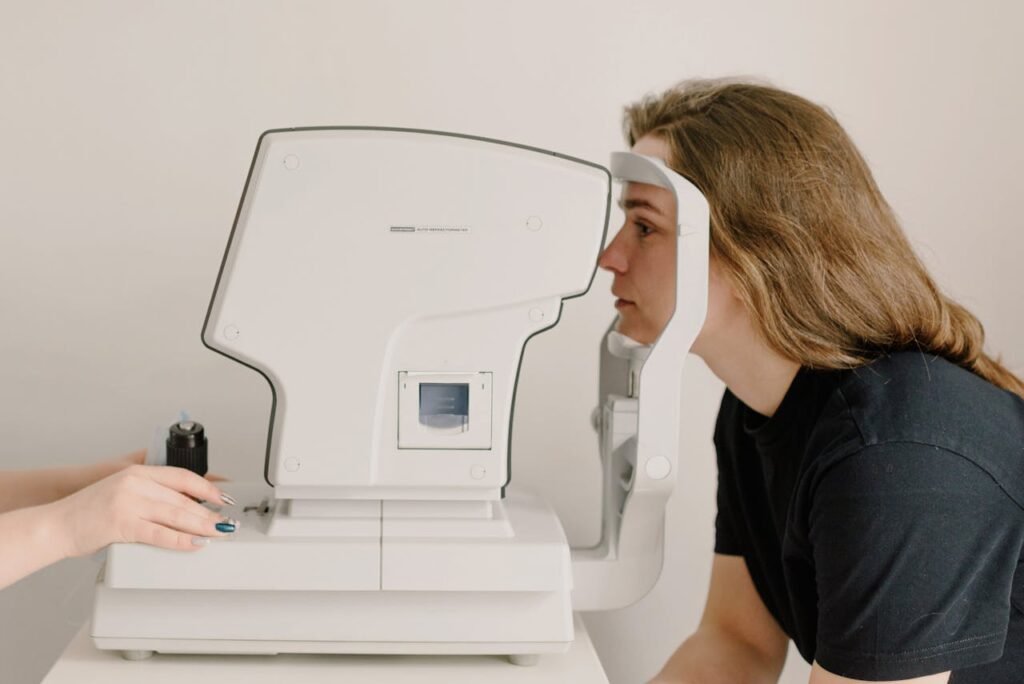
If you suspect you have a problem, the first step is a comprehensive exam. A standard high street eye test might miss these issues. You may need to request a specific visual processing disorder test or a binocular vision assessment.
NHS vs. Private
* NHS: The NHS covers eye tests and orthoptic treatment for children and some adults if there is a medical need (like a squint). However, comprehensive behavioural vision therapy is rarely available on the NHS.
* Private: Most behavioural optometry is private.
* Assessment: Expect to pay between £150 and £300 for an initial investigation.
* Therapy: Weekly sessions can range from £70 to £120, with programmes lasting 12 to 30 weeks.
To find a practitioner, you can look up the British Association of Behavioural Optometrists (BABO) or the College of Optometrists.
Conclusion
Vision therapy offers a pathway to better visual function for those whom glasses have failed. From resolving convergence insufficiency exercises* to advanced *neuro-optometric rehabilitation for brain injury survivors, the scope is vast. While it requires time, effort, and financial investment, the reward—a clear, comfortable, and efficient visual world—is often worth it.
Always consult with a qualified professional to determine if this therapy is right for you. Your eyes are your window to the world; ensuring they work in harmony is essential for a high quality of life.
—
Frequently Asked Questions (FAQ)
1. Can vision therapy cure a lazy eye in adults?
Yes, improvement is possible. While it was once believed that lazy eye (amblyopia) could only be treated in childhood, current research shows that amblyopia in adults can be treated. Therapy focuses on teaching the brain to use both eyes together, which can improve acuity and depth perception, although results may take longer than in children.
2. Is vision therapy available on the NHS?
Standard orthoptic treatment (exercises for squints and convergence issues) is available on the NHS. However, comprehensive behavioural optometry programmes, which include a wider range of perceptual and processing therapy, are generally not funded and must be accessed privately.
3. How long does a vision therapy programme last?
It varies depending on the severity of the condition. A typical programme for convergence insufficiency might last 12 to 24 weeks. More complex cases, such as post concussion vision problems or strabismus, may require 6 months or more of weekly office visits and daily home practice.
4. What are the symptoms of binocular vision dysfunction?
Common binocular vision dysfunction symptoms include headaches (especially near the forehead), eye strain, double vision, shadowing of text, dizziness, anxiety in large open spaces (like supermarkets), and a tendency to tilt the head to see clearly.
5. Can I do vision therapy exercises at home without a doctor?
While you can find pencil push ups for eyes online, self-diagnosing and treating is not recommended. If you use the wrong exercises, you might reinforce a bad visual habit or cause double vision (diplopia). A structured programme ensures that as your visual skills improve, the difficulty of the exercises is adjusted accordingly.