For many people, standard contact lenses or spectacles provide adequate vision correction. However, for those with irregular corneas, severe dry eye, or complex prescriptions, traditional methods often fall short. Enter scleral lenses: a revolutionary optical solution that has transformed the lives of thousands across the UK. Unlike standard rigid gas permeable (RGP) lenses that sit on the sensitive cornea, these specialised lenses rest on the white of the eye (the sclera), offering unparalleled stability and comfort.
Whether you are exploring corneal transplant alternatives or seeking relief from chronic discomfort, this guide covers everything you need to know about scleral lenses, from the fitting process to NHS funding.
What Are Scleral Lenses?
Scleral lenses are large-diameter gas permeable contact lenses designed to vault entirely over the cornea—the clear front window of the eye—and land gently on the sclera. The sclera is the tough, white outer layer of the eyeball. Because the sclera has significantly fewer nerve endings than the cornea, these lenses are often described as comfortable hard contact lenses, bridging the gap between the visual sharpness of rigid lenses and the comfort of soft ones.
The Fluid Reservoir Advantage
One of the defining features of a scleral lens is the space created between the back of the lens and the front of the cornea. This space is filled with preservative-free saline before insertion. This liquid cushion acts as a fluid reservoir contact lens system, which serves two critical functions:
- Optical Correction: It masks irregularities on the corneal surface, providing perfectly clear vision.
- Therapeutic Hydration:* It keeps the eye constantly bathed in fluid, making them excellent *scleral lenses for dry eyes UK patients often rely on.
> “Scleral lenses do not touch the cornea. They vault over it, creating a tear-filled vault that protects the ocular surface and provides sharp vision.”
Who Can Benefit from Scleral Lenses?
While anyone can theoretically wear them, they are medically necessary for specific conditions where soft lenses or spectacles fail to provide functional vision.
1. Keratoconus and Ectasia
Keratoconus contact lenses NHS specialists prescribe are often sclerals. In conditions like keratoconus, the cornea thins and bulges into a cone shape. A standard contact lens may rock or pop out, while glasses cannot correct the irregular astigmatism. Scleral lenses create a smooth optical surface, effectively bypassing the irregularity.
2. Severe Dry Eye Syndrome
For patients with Sjögren’s syndrome, graft-versus-host disease (GVHD), or Stevens-Johnson syndrome, the eyes can become painfully dry. The liquid reservoir in a scleral lens functions as a ‘liquid bandage’, protecting the eye from the friction of blinking and the environment. This makes them a vital Stevens-Johnson syndrome eye treatment option.
3. Post-Surgical Complications
Patients who have undergone a corneal transplant or have complications from refractive surgery (like LASIK) often find that scleral lenses vs RGP* (standard small rigid lenses) offer superior stability. They are often considered one of the best *corneal transplant alternatives for restoring vision without further invasive surgery.
4. High Astigmatism
Standard soft toric lenses can rotate, causing vision to blur. Scleral lenses for astigmatism are rotationally stable, ensuring the prescription axis remains locked in place for consistent clarity.
The Fitting Process: What to Expect
Fitting these lenses is a specialist skill. It is not as simple as walking into a high street optician and picking up a box. The scleral lens fitting cost UK practices charge reflects the complexity and chair time required.
Step 1: Topography and Profilometry
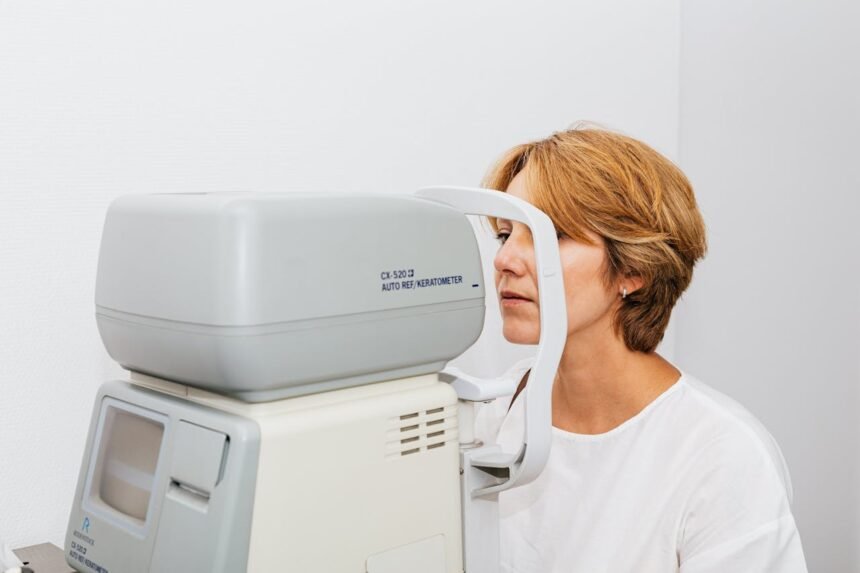
Your optometrist will use a corneal topographer to map the surface curvature of your eye. Advanced practices may use a corneo-scleral profilometer to measure the shape of the white of your eye, ensuring the landing zone of the lens aligns perfectly with your sclera.
Step 2: Diagnostic Fitting
Diagnostic trial lenses are placed on the eye. The optometrist evaluates the “vault” (clearance over the cornea) and the “landing” (how it sits on the white of the eye) using a slit lamp microscope. They will look for signs of compression or edge lift.
Step 3: Custom Manufacture
Based on these measurements, a custom lens is ordered. This process can take 2–4 weeks. Once received, you will have a dispensing appointment to check the fit and visual acuity.
For more on professional standards in fitting, you can visit The College of Optometrists.
Scleral Lenses Cost and NHS Availability
One of the most common queries involves the financial aspect: scleral lens fitting cost UK vs. NHS provision.
NHS Availability
Scleral lenses are available on the NHS for patients with a clinical medical need. This typically includes keratoconus, severe corneal distortion, or ocular surface disease where vision cannot be corrected by spectacles.
The Process:** You usually need a referral from your GP or high street optometrist to a hospital eye service (HES), such as *Moorfields Eye Hospital.
* The Cost: If eligible, you do not pay the full private cost. Instead, you pay the standard NHS contact lens charge (currently around £58.15 per lens as of recent guidelines), unless you are exempt (e.g., receiving certain benefits or under 19 in full-time education).
* The Wait: Waiting lists for hospital appointments can be long, often several months.
Private Costs
For those who do not qualify for NHS treatment or wish to bypass the waiting lists, private fitting is an option.
* Consultation & Fitting: Fees can range from £150 to £500+ depending on complexity.
* Lenses: The lenses themselves can cost between £250 and £500 per eye.
* Total: A complete package often falls between £800 and £1,500.
For advice on eye health entitlements, the RNIB offers excellent resources.
Daily Care and Handling
Proper hygiene is non-negotiable. Poor hygiene can lead to severe infections. Here is a simplified guide on how to insert scleral lenses and care for them.
Insertion
- Wash Hands: Use fragrance-free soap.
- Fill the Lens:* Overfill the lens bowl with *best saline for scleral lenses UK experts recommend (must be preservative-free, like AmiDose or saline vials).
- Position: Face parallel to the floor (chin to chest). Look straight down.
- Apply: Use a tripod finger method or a scleral plunger. Bring the lens up to the eye without spilling the saline. Press gently until you feel the liquid on your eye, then release the lids.
Removal
Removing scleral lenses plunger techniques are standard:
- Wet the small removal plunger.
- Place it on the bottom third of the lens (not the centre).
- Tilt the plunger up and out to break the suction.
Cleaning Solutions
Daily Cleaner:** Use a specific *scleral lens cleaning solution (non-abrasive cleaner).
* Disinfection: Store in a recommended case with a multi-purpose solution or a hydrogen peroxide system suitable for RGPs.
* NEVER use tap water: Tap water contains Acanthamoeba, a parasite that can cause blindness. Always rinse with saline.
For detailed patient leaflets, Gloucestershire Hospitals NHS Foundation Trust* and *Oxford University Hospitals provide comprehensive care guides.
Troubleshooting Common Issues
Even with a perfect fit, you might encounter minor issues.
Mid-Day Fogging
Some patients experience scleral lenses fogging up after a few hours. This is caused by debris accumulating in the fluid reservoir.
*Solution: Remove the lens, rinse it with preservative-free saline, refill, and re-insert.
Handling Difficulties
Learning to insert a large lens without bubbles takes practice. If you trap an air bubble, your vision will be blurry, and the lens may feel uncomfortable. You must remove and re-insert it.
Lifespan and Durability
A common question is regarding the rigid gas permeable lens lifespan*. Scleral lenses are durable and typically last *1 to 3 years with proper care. However, if your corneal shape changes (as with progressive keratoconus) or the surface becomes scratched, you may need replacements sooner.
Support and Resources
Living with a corneal condition can be isolating, but numerous UK organisations offer support:
* Keratoconus Group UK: Peer support and advocacy.
* British Contact Lens Association: Information on the latest lens technologies.
* Fight for Sight: Research into eye conditions.
* National Keratoconus Foundation: Extensive educational materials.
* Scleral Lens Education Society: Non-profit dedicated to scleral lens education.
* General Optical Council: Ensure your practitioner is registered.
* NHS Contact Lenses: Official health guidance.
Conclusion
Scleral lenses are more than just a visual aid; they are a prosthetic device that restores quality of life. Whether you are navigating keratoconus contact lenses NHS* pathways or seeking private care for dry eye, the stability and visual potential of these lenses are unmatched. While the learning curve for *how to insert scleral lenses can be steep, the reward of clear, comfortable vision is well worth the effort.
Frequently Asked Questions
1. Are scleral lenses comfortable to wear?
Yes, they are generally very comfortable, often more so than standard rigid lenses. Because they rest on the sclera (the white of the eye), which has fewer nerve endings than the cornea, and vault over the sensitive corneal tissue, most patients find them easy to wear for long periods once they adapt to the insertion process.
2. Can I get scleral lenses on the NHS?
Yes, but only if there is a medical necessity. Conditions like keratoconus, severe corneal scarring, or complex ocular surface diseases usually qualify. If you simply have a high prescription but healthy eyes, you will likely need to seek private correction. You should consult your GP or optometrist for a referral to a hospital eye clinic
3. How long do scleral lenses last?
With proper cleaning and handling, a pair of scleral lenses typically lasts between 1 and 3 years. Regular check-ups are essential to ensure the fit remains safe and the material has not warped or become heavily scratched.
4. Why do my scleral lenses get cloudy during the day?
This is known as “mid-day fogging.” It occurs when proteins, lipids, or mucus from your tear film migrate into the fluid reservoir beneath the lens. To fix this, you must remove the lens, rinse it thoroughly with saline, refill it, and re-insert it. Using a more viscous (thicker) preservative-free artificial tear in the bowl can sometimes help reduce this issue.
5. Can I sleep in my scleral lenses?
No. Unless specifically instructed by your ophthalmologist for a therapeutic reason (which is rare), you should never sleep in scleral lenses. Sleeping in them reduces oxygen supply to the cornea and increases the risk of sight-threatening infections.