If you have ever experienced a sudden, intense chill followed by a burning fever that disappears only to return two days later, you may be experiencing the classic malaria fever cycle. Malaria remains one of the world’s most significant health challenges, particularly for those travelling to tropical regions. Unlike a standard flu, the fever associated with malaria often follows a rhythmic pattern that reveals much about how the parasite is behaving inside your body.
Understanding this cycle is not just a matter of medical curiosity; it is a vital part of early diagnosis and successful recovery. In this guide, we will explore why these fevers occur in “waves,” the different stages of the parasite’s life cycle, and what you can do to protect yourself.
What Exactly Is the Malaria Fever Cycle?
The malaria fever cycle, often referred to by doctors as a “paroxysm,” is the clinical manifestation of the malaria parasite’s reproductive habits. When a person is infected, the Plasmodium parasites multiply inside the host’s red blood cells. When these cells eventually burst to release more parasites, the body reacts with an intense immune response, resulting in a spike in body temperature.
According to the World Health Organization, these cycles can occur every 48 to 72 hours, depending on the specific species of the parasite involved. This predictable pattern is one of the most distinctive features of the disease.
The Three Phases of a Malaria Paroxysm
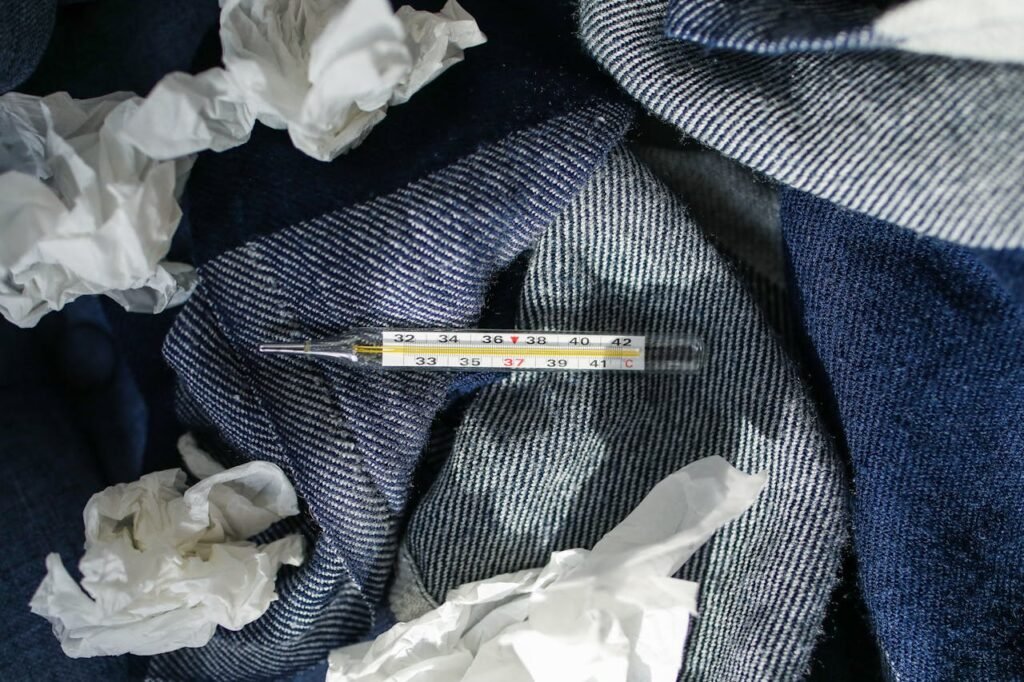
A typical malaria fever cycle consists of three distinct stages that usually last between 6 and 10 hours:
- The Cold Stage: This involves intense shivering and a feeling of extreme cold, even in a warm environment. Patients may experience “teeth-chattering” and rigours.
- The Hot Stage: As the shivering stops, the temperature skyrockets, sometimes reaching as high as 41°C (106°F). This stage often includes headaches, vomiting, and intense fatigue.
- The Sweating Stage: Finally, the fever breaks. The patient begins to sweat profusely, the temperature drops back to normal, and they often feel completely exhausted or fall into a deep sleep.
The Biological Trigger: The Erythrocytic Cycle
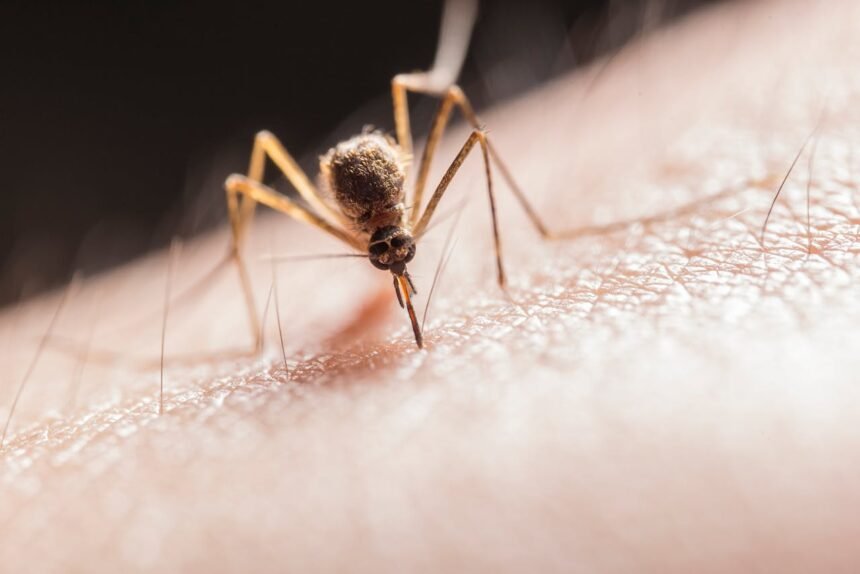
To understand the malaria fever cycle, we have to look at what is happening under the microscope. After an Anopheles mosquito bite, the parasites first travel to the liver to mature. This is known as the exo-erythrocytic stage. However, the fever doesn’t start until the parasites enter the bloodstream and begin the erythrocytic cycle.
During this stage, the parasite—now called a merozoite—invades red blood cells (RBCs). Inside the RBC, it transforms into a trophozoite and then a schizont. When the schizont is mature, the red blood cell ruptures, releasing a new batch of merozoites and metabolic waste into the blood. This sudden release of toxins triggers the immune system to produce pyrogens, causing the paroxysms we recognise as malaria fever.
Research published in Nature Reviews Microbiology highlights how the synchronisation of this rupture is a survival strategy for the parasite, helping it evade certain aspects of the host’s immune response.
Comparing Fever Cycles Across Plasmodium Species
Not all malaria is the same. There are five main species of Plasmodium that infect humans, and the malaria fever cycle varies between them. Recognising these patterns helps clinicians determine the likely culprit before blood film results are even back from the laboratory.
| Parasite Species | Type of Fever | Cycle Duration | Severity |
|---|---|---|---|
| P. falciparum | Sub-tertian (Irregular) | 36–48 hours | Very High (can be fatal) |
| P. vivax | Tertian | 48 hours | Moderate (risk of relapse) |
| P. ovale | Tertian | 48 hours | Low to Moderate |
| P. malariae | Quartan | 72 hours | Low (chronic) |
| P. knowlesi | Quotidian | 24 hours | Potentially High |
Why Timing Matters: Diagnosis and Blood Film
If you suspect you have malaria, timing is everything. Healthcare professionals at the Mayo Clinic suggest that doctors may need to take multiple blood samples over several days. This is because the density of parasites in the blood changes throughout the malaria fever cycle.
Diagnostic tools like the Rapid Diagnostic Test (RDT) or a microscopic examination of a thick and thin blood smear are the “gold standard.” These tests look for the presence of the parasite and can identify haemolysis (the destruction of red blood cells), which often leads to anaemia in chronic cases.
Common Misdiagnoses
Because the initial symptoms—fever, chills, and muscle aches—are so broad, malaria is often mistaken for:
- Influenza (The Flu)
- Dengue Fever
- Typhoid Fever
- Viral Hepatitis
This is why a detailed travel history is essential. Experts at The London School of Hygiene & Tropical Medicine emphasize that any fever following travel to an endemic area should be treated as malaria until proven otherwise.
Treatment and Managing the Cycle
Once diagnosed, the goal is to break the malaria fever cycle by eliminating the parasite. The choice of antimalarial medication depends on the species and the geographic area where the infection was acquired, as drug resistance is a growing concern.
Common treatments include:
- Artemisinin-based combination therapies (ACTs): The most effective treatment for P. falciparum.
- Chloroquine: Used for sensitive strains, though many areas now show resistance.
- Primaquine: Specifically used to target parasites hiding in the liver to prevent relapse in P. vivax and P. ovale infections.
For more on current treatment protocols, visit The Lancet’s latest clinical reviews on tropical diseases.
Prevention: Stopping the Cycle Before It Starts
The most effective way to deal with the malaria fever cycle is to prevent the transmission in the first place. This involves a multi-pronged approach often referred to as vector control.
If you are planning a trip, consider these steps:
- Chemoprophylaxis: Taking preventive medication before, during, and after your trip. Check TravelHealthPro for the latest advice for your destination.
- Insecticide-Treated Nets (ITNs): Sleeping under a net can reduce the risk of bites significantly.
- Indoor Residual Spraying: Utilising insecticides on walls where mosquitoes rest.
- Vaccination: Ground-breaking progress has been made with the R21/Matrix-M and RTS,S vaccines, as detailed by Oxford University researchers.
The Global Impact of Malaria
Malaria does not just affect individuals; it impacts entire economies and healthcare systems. Organisations like PATH and The Bill & Melinda Gates Foundation are working tirelessly to move towards total eradication. Through international cooperation and public health programmes, the number of deaths has decreased over the last two decades, though the threat remains high in sub-Saharan Africa.
Educational outreach from groups like UNICEF and the Red Cross focuses on distributing nets and ensuring that families recognise the malaria fever cycle early enough to seek life-saving care.
Frequently Asked Questions (FAQs)
Can you have malaria without a fever?
While the malaria fever cycle is a hallmark of the disease, some individuals—especially those with partial immunity from frequent past infections—may experience very mild symptoms or “asymptomatic” malaria. However, they can still transmit the parasite to others via mosquitoes.
How long does the incubation period last?
The incubation period usually ranges from 7 to 30 days. However, some strains can lie dormant in the liver for months or even years before triggering the first fever cycle. For more details on incubation, see the CDC’s biology page.
Is the malaria fever cycle contagious between humans?
No, malaria is not contagious through casual contact like sitting next to someone or shaking hands. It requires a biological vector (the mosquito) or, in rare cases, through blood transfusions, organ transplants, or from mother to child during pregnancy. Research at Imperial College London continues to study these transmission dynamics.
Why do I feel better between the fevers?
During the period between paroxysms, the parasites are largely hidden inside the red blood cells, maturing and replicating. Because fewer toxins are being released into the bloodstream at this point, your immune system relaxes, and the fever subsides temporarily until the next batch of cells ruptures.
For more information on staying healthy while abroad, visit Science Magazine’s latest reports on infectious diseases.