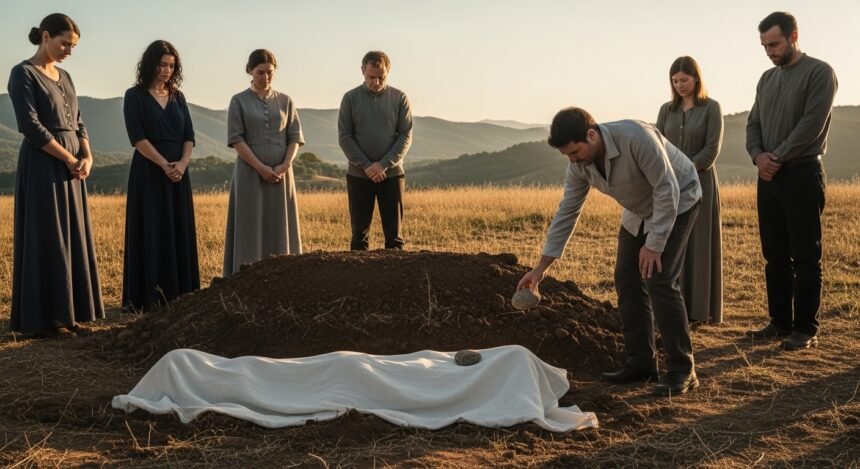
In an era where we strive to reduce our environmental impact in life, many of us are now looking at how we can do the same in death. A shroud burial is a return to a more ancient, simple, and sustainable end-of-life practice. By eschewing the traditional heavy casket and chemical embalming, this method allows the body to return to the earth naturally.
Whether you are planning for the future or looking for options for a loved one, understanding the nuances of a natural burial can provide comfort and clarity. In this guide, we explore how choosing a shroud burial can be a meaningful way to honour a life while protecting the planet.
The Basics: What Exactly Is a Shroud Burial?
A shroud burial involves wrapping the deceased in a biodegradable material, such as a linen shroud or cotton burial shroud, instead of placing them in a conventional coffin. The shrouded body is then placed directly into the grave or onto a wooden board (a trundle) to facilitate the process.
This practice is deeply rooted in many cultural and religious traditions, particularly in Islam and Judaism. However, it is gaining popularity across all backgrounds as people seek an eco-friendly funeral that avoids the high carbon footprint associated with traditional cremation and burial methods.
The Environmental Benefits
Traditional funerals often involve formaldehyde-based embalming fluids, which can leach into the soil. Furthermore, the manufacturing of metal caskets and concrete vaults consumes significant energy. A shroud burial eliminates these toxins and materials, favouring a process that supports conservation burial efforts.
According to research published in Nature, natural decomposition allows nutrients to be recycled back into the ecosystem, essentially turning the burial site into a living memorial.
Comparing Your Options: Shroud vs. Traditional Casket
To help you decide which path aligns with your values, here is a comparison of traditional and natural methods:
| Feature | Traditional Funeral | Shroud Burial |
|---|---|---|
| Container | Wood, Metal, or Plastic Casket | Linen shroud, cotton, or silk |
| Embalming | Often required for viewings | Rarely used (eco-friendly cooling used) |
| Environmental Impact | High (metals, chemicals, hardwoods) | Low (fully biodegradable material) |
| Cost | Typically higher (£4,000+) | Often lower and more flexible |
| Burial Site | Conventional Cemetery | Green cemetery or woodland burial site |
How to Prepare for a Shroud Burial
Organising a shroud burial requires a different approach to body preparation than what many modern funeral directors are used to. Here are the typical steps involved:
- Selecting the Material: You must choose a 100% natural fibre like hemp, wool, linen, or organic cotton. This ensures the shroud breaks down at the same rate as the body.
- The Ceremonial Wrapping: The process of ceremonial wrapping can be a deeply therapeutic act for the family. It involves gently swaddling the body, often with the addition of dried flowers or herbs.
- Skip the Embalming: To maintain the “green” status of the burial, embalming is avoided. Instead, the body is kept cool naturally or through specialised refrigeration.
- Transportation: The body is often placed on a simple wooden board or a wicker casket alternative for ease of movement and dignity during the service.
Many families find that a home funeral allows for a more intimate experience before moving to the green cemetery. You can find more information on managing grief during this process from the NHS.
Legal Considerations and Burial Laws in the UK
Is a shroud burial legal? In the United Kingdom, the answer is a resounding yes. However, there are specific burial laws UK residents must follow. According to GOV.UK, a body must be “decently covered,” and the burial must not pose a threat to public health or groundwater quality.
Key requirements include:
- The burial must take place at a depth where no part of the shroud is less than 3 feet from the surface.
- The site must be at least 50 metres away from any well, borehole, or spring.
- The landowner’s permission is required if you are considering a burial on private land.
For those looking for a dedicated site, a woodland burial ground is often the best choice. These locations are managed to promote local biodiversity, as noted by Greenpeace.
The Emotional and Psychological Impact
Choosing a shroud burial can significantly alter the grieving process. Traditional funerals often create a sense of distance between the living and the deceased. In contrast, the tactile nature of a shroud can foster a sense of closeness and acceptance.
Psychologists note that engaging in natural death practices can help mitigate “death anxiety.” You can read more about the psychological aspects of bereavement at Psychology Today and Mayo Clinic. The simplicity of the shroud often reflects a life lived with humility and a deep connection to the natural world.
Finding a Green Cemetery
Not every cemetery allows shroud burial. You will likely need to seek out a designated green cemetery or a conservation burial ground. These sites prioritise the preservation of the landscape over manicured lawns and headstones.
Resources such as the Natural Death Centre and the Green Burial Council provide directories of providers who specialise in these methods. Many of these sites are supported by organisations like WWF and Conservation International because they prevent urban sprawl and protect natural habitats, as highlighted in reports by National Geographic.
Frequently Asked Questions (FAQs)
Does a shroud burial smell or attract animals?
No. When performed at the correct depth (typically 3 to 4 feet), the soil acts as a natural filter. Decomposition is an aerobic process in these upper layers of soil, which prevents odours and ensures that the burial remains undisturbed by wildlife. This is a standard practice in woodland burial sites.
Is a shroud cheaper than a casket?
Generally, yes. While high-end silk shrouds can be expensive, a simple cotton burial shroud is significantly more affordable than a traditional casket. Furthermore, you avoid the costs of embalming and expensive grave liners. Many people choose to invest these savings into a donation to an environmental charity or a commemorative tree.
Can I have a shroud burial in a regular cemetery?
It depends on the cemetery’s regulations. Some traditional cemeteries have “green” sections that allow shrouds, while others require a rigid container. Always check with the local authority or cemetery manager beforehand. The BBC has reported on the increasing number of municipal cemeteries opening green sections to meet demand.
What happens to the body in a shroud burial?
Without the barrier of a casket or embalming chemicals, the body returns to the earth relatively quickly. Within a few months to a few years, the biodegradable material and the body integrate into the soil, providing nitrogen and other nutrients to the surrounding flora. This cycle is a cornerstone of sustainable end-of-life practices, as discussed in the The Guardian and the Evening Standard.