
When we think about our heart health, we usually picture our diet, our step count, or perhaps our blood pressure readings. However, there is an invisible factor that follows us every time we step outside—and often even inside our homes. Emerging research confirms that heart disease air is a very real public health crisis. The quality of the air you breathe is as fundamental to your cardiovascular health as the food you eat or the exercise you do.
In this guide, we explore the intricate connection between atmospheric pollutants and your heart, how fine particles enter your bloodstream, and what you can do to protect your pulse in an increasingly polluted world.
The Invisible Link: How Air Quality Affects the Heart
For years, medical professionals focused primarily on how pollution affects the lungs. However, the British Heart Foundation has highlighted that the majority of deaths linked to poor air quality are actually due to cardiovascular issues, such as heart failure and strokes. When we breathe in “heart disease air,” we aren’t just irritating our airways; we are introducing microscopic invaders into our circulation.
The primary culprit is particulate matter (PM2.5). These are tiny particles, roughly 1/30th the width of a human hair, that can bypass the lungs’ natural defences. Once they reach the deep tissues of the lungs, they cross into the bloodstream, triggering systemic inflammation and oxidative stress.
The Biological Impact of Pollutants
Research published in Nature suggests that exposure to these particles causes the body to react as if it is under attack. This leads to several dangerous physiological changes:
- Arterial stiffness: The blood vessels become less flexible, making it harder for the heart to pump blood.
- Blood pressure spikes: Even short-term exposure to urban environments with high pollution can lead to elevated blood pressure.
- Plaque instability: Pollution can cause fatty deposits in the arteries to rupture, leading to a heart attack risk.
- Increased clotting: Air pollutants can make the blood “stickier,” increasing the likelihood of thrombosis.
Common Pollutants and Their Cardiovascular Effects
Understanding what is in the “heart disease air” around you is the first step toward mitigation. Pollutants vary by location, but the following table outlines the most common threats to your heart.
| Pollutant | Common Sources | Impact on Heart Health |
|---|---|---|
| PM2.5 (Fine Particles) | Vehicle exhausts, wood burners, industrial sites | Triggers systemic inflammation and coronary artery disease. |
| Nitrogen Dioxide (NO2) | Diesel engines, power stations | Linked to increased heart failure hospitalisations. |
| Carbon Monoxide (CO) | Faulty heaters, heavy traffic | Reduces oxygen delivery to the heart muscle. |
| Ozone (O3) | Sunlight reacting with exhaust fumes | Can trigger irregular heartbeats and oxidative stress. |
Who Is Most at Risk?
While heart disease air affects everyone, certain individuals are more vulnerable to the effects of poor cardiovascular health triggers. According to the NHS, those with pre-existing conditions need to be particularly vigilant. Vulnerable groups include:
- Older Adults: As we age, our cardiovascular system becomes less resilient to oxidative stress.
- Children: Their smaller lungs and faster breathing rates mean they inhale more pollutants relative to their size.
- People with Pre-existing Conditions: Those already diagnosed with coronary artery disease or diabetes are at a significantly higher risk of complications.
- Pregnant Women: High pollution levels are linked to gestational hypertension and other risks.
The European Society of Cardiology emphasises that even those who appear healthy can experience sub-clinical changes in their arterial stiffness when exposed to high-traffic areas over long periods.
Improving Your Air: Practical Steps for Protection
You cannot always control the air in your city, but you can take steps to reduce your personal exposure to heart disease air. Proactive management is essential for long-term health.
Monitor the Air Quality Index (AQI)
Before heading out for a run or a walk, check the local Air Quality Index (AQI). Most weather apps now include this data. If the levels are “unhealthy” or “hazardous,” it is best to move your workout indoors. The UK Government Clean Air Strategy provides resources for monitoring local pollution hotspots.
Address Indoor Air Pollution
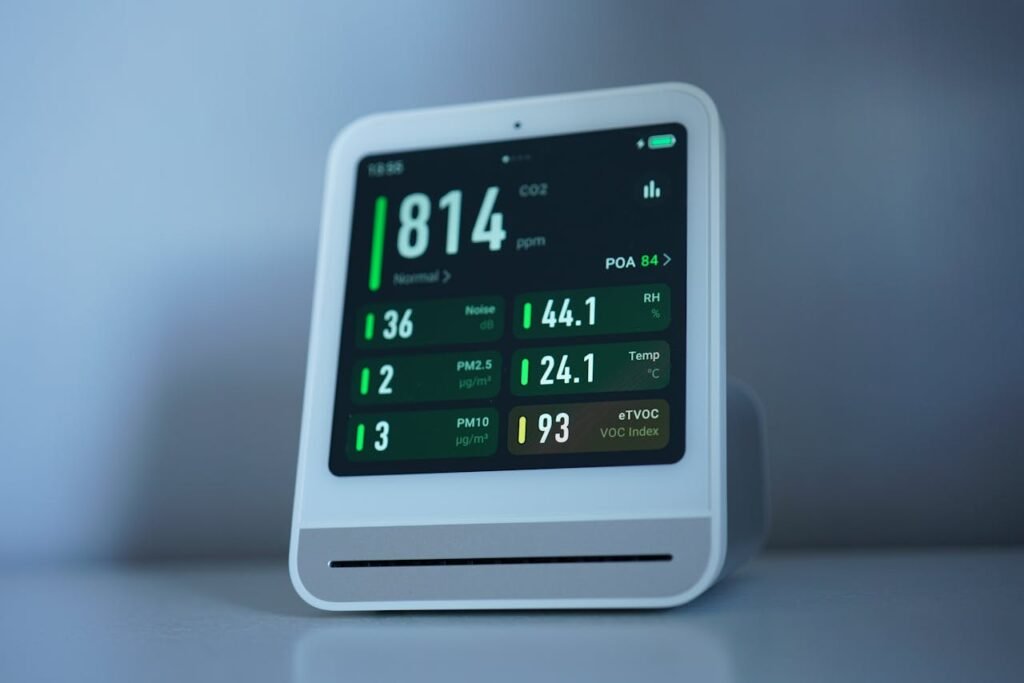
We often assume we are safe once we close the front door, but indoor air pollution can be just as damaging. Sources include cooking fumes, cleaning chemicals, and tobacco smoke. To improve your indoor environment:
- Utilise high-quality HEPA filters in your living spaces.
- Ensure proper ventilation while cooking.
- Avoid using wood-burning stoves, which are significant sources of fine particles.
- Keep indoor plants that help naturally oxygenate the centre of your home.
Strategic Urban Living
If you live in a bustling city, try to choose “green routes” for your commute. Walking through a park rather than along a main road can reduce your intake of nitrogen dioxide significantly. Research from Imperial College London suggests that even moving one street away from a major traffic artery can lower your exposure levels.
The Global Perspective on Heart Health
The World Health Organization (WHO) considers air pollution the single largest environmental risk to health. Addressing heart disease air requires both individual action and systemic change. While we wait for better urban planning and stricter emission laws, focusing on your personal cardiovascular health through diet and antioxidant-rich foods can provide a secondary line of defence.
Studies found in The Lancet indicate that diets high in Vitamin C and E may help mitigate some of the oxidative stress caused by breathing in urban environments. Additionally, the American Heart Association notes that maintaining a healthy weight and regular exercise (in clean air) improves the heart’s resilience against external stressors.
Frequently Asked Questions (FAQs)
Can air pollution cause a sudden heart attack?
Yes. Short-term exposure to high levels of particulate matter (PM2.5) can trigger an acute heart attack risk, especially in individuals who already have underlying coronary artery disease. The pollutants cause immediate inflammation and can lead to the rupture of arterial plaques.
Do face masks help protect my heart from air pollution?
Standard surgical masks do very little to filter out fine particles. However, well-fitted N95 or FFP3 respirators can filter out a significant portion of harmful matter. For those in highly polluted urban environments, these can be a useful tool, though they do not filter out gases like nitrogen dioxide.
How do HEPA filters improve my cardiovascular health?
HEPA filters (High-Efficiency Particulate Air) are designed to capture 99.97% of particles that are 0.3 microns in diameter. By removing these fine particles from your home, you reduce the systemic inflammation your body experiences, thereby lowering the long-term strain on your heart and reducing the risk of heart failure.
Final Thoughts
While the concept of “heart disease air” may feel overwhelming, knowledge is your best protection. By monitoring the Air Quality Index (AQI), improving your indoor air pollution levels, and staying informed through authoritative sources like Mayo Clinic and Harvard Health, you can breathe easier. Your heart is a resilient organ, but it deserves an environment that supports, rather than hinders, its vital work. For more information on environmental health risks, consult the King’s College London Air Quality research group or the Asthma + Lung UK foundation for broader air quality advice. For academic deep dives, visit ScienceDirect to explore the latest peer-reviewed studies on environmental cardiology.