There is something deeply satisfying about capturing the essence of late summer in a glass jar. Whether you have inherited a garden full of Victoria plums or you have stumbled upon a fantastic deal at the local market, mastering plum jam basics is a rewarding skill that combines culinary art with a touch of kitchen science. Plums are among the most versatile stone fruits, offering a natural tartness and rich deep colour that makes for a world-class preserve.
In this guide, we will explore the essential techniques for creating a stable, delicious jam, from understanding the chemistry of the gel structure to ensuring your pantry remains safe from spoilage. Let’s dive into the fundamentals of home preserving.
The Essential Ingredients
At its heart, jam making is about the relationship between fruit, sugar, acid, and pectin. When you understand these four pillars, you can move beyond following recipes and start creating your own signature blends. For those managing seasonal gluts, batch cooking is the most efficient way to ensure nothing goes to waste.
- Fruit: For the best results, use a mix of slightly under-ripe and fully ripe fruit. Under-ripe fruit is higher in natural pectin, while ripe fruit provides the best flavour.
- Sugar: Sugar does more than sweeten; it acts as a preservative by binding water. While low-sugar alternatives exist, they often require different thickening agents.
- Acid: Citric acid (often from lemon juice) is vital. It helps extract pectin from the fruit and prevents the growth of bacteria.
- Pectin: This is a natural fibre found in plant cell walls. Since plums are moderately high in pectin, you can often achieve a great set without adding commercial thickeners.
Understanding Your Ingredients and Equipment
Before you turn on the stove, having the right setup is crucial for success and safety. Using the correct sugar-to-fruit ratio—typically 1:1 by weight for traditional jams—ensures the jam reaches the correct setting point without overcooking the delicate fruit flavours.
| Factor | Requirement | Why It Matters |
|---|---|---|
| Preserving Sugar | Large crystals | Dissolves slowly and produces less froth (scum) than granulated sugar. |
| Pan Choice | Stainless steel | Avoids metallic tastes; heavy bottoms prevent scorching during the boil. |
| Acidity Level | pH 2.8 – 3.5 | Ensures the fruit pectin strands bond together correctly. |
| Jar Hygiene | Heat-sterilised | Essential for preventing mould and bacterial growth. |
The Process: From Orchard to Jar
The journey of plum jam basics begins with preparation. Wash your fruit thoroughly and remove the stones. Unlike some fruits, plum skins soften beautifully during cooking and provide much of the jam’s characteristic tartness and vibrant hue.
Step 1: Sterilising Your Jars
Never skip sterilising jars. Wash them in hot soapy water, rinse, and place them in an oven at 140°C (120°C fan) for at least 20 minutes. According to the Food Standards Agency, maintaining high hygiene standards is the only way to ensure your preserves remain shelf-stable for months.
Step 2: Maceration and Initial Cook
Place your chopped plums in the pan with a splash of water or lemon juice. Simmer gently until the skins are soft. This step is vital because once you add the sugar, the skins will toughen and won’t soften further.
Step 3: Reaching the Setting Point
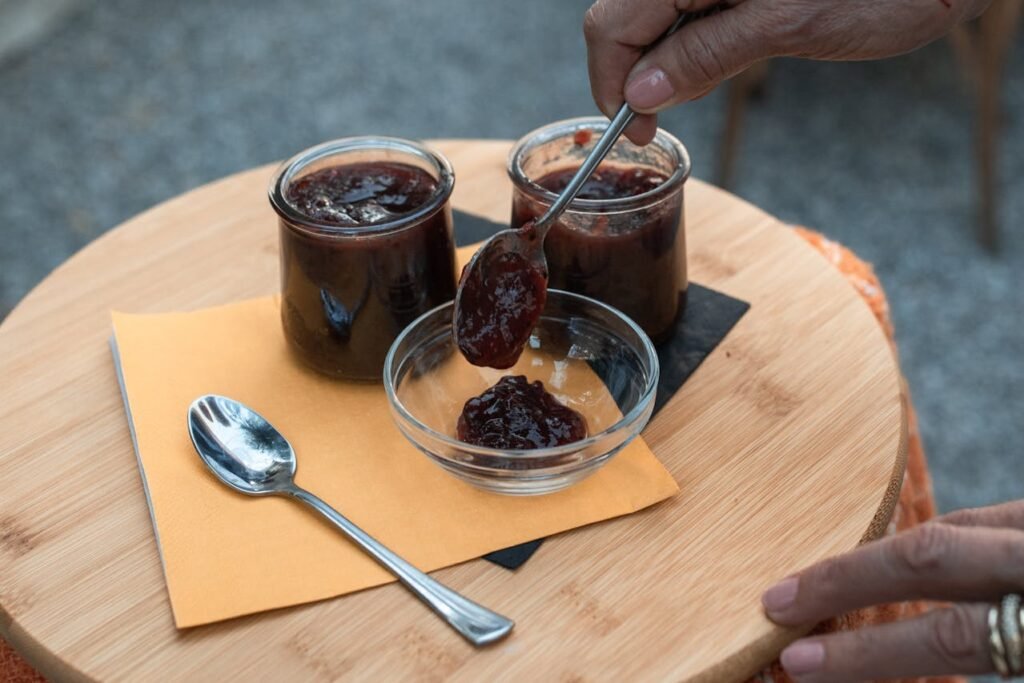
Add your preserving sugar and stir over low heat until every crystal has dissolved. Increase the heat to a rapid, rolling boil. To check if your jam is ready, use the wrinkle test: place a small spoonful of jam on a chilled saucer, wait 30 seconds, and push it with your finger. If it wrinkles, it has set.
Safety First: Storage and Preservation
While home-made jam is a delight, safety is paramount. High-sugar preserves are generally safe, but poor technique can lead to spoilage. To ensure botulism prevention, always use clean equipment and follow a trusted processing method, such as water bath canning, if you intend to store the jam in a warm pantry.
The National Center for Home Food Preservation recommends that jars be processed in boiling water to create a vacuum seal. This prevents air—and the microbes it carries—from entering the jar. For more on general food safety, the NHS provides excellent resources on maintaining a healthy and safe kitchen environment.
Health Considerations
Plums are nutritional powerhouses, rich in vitamins and antioxidants. Research published in Medical News Today highlights that plums contain phenols which may provide anti-inflammatory benefits. However, jam is high in added sugar. The British Heart Foundation reminds us to enjoy sugary treats in moderation as part of a balanced diet.
For those watching their glycemic index, consider recipes that utilise more fruit and less sugar, though be aware this will significantly shorten the shelf life. Consult the World Health Organization guidelines for daily sugar intake recommendations.
Helpful Resources for Home Preservers
To further refine your plum jam basics, explore these authoritative guides on gardening, nutrition, and food science:
- Learn about different plum varieties at the Royal Horticultural Society.
- Understand the impact of sugar on health via the Harvard T.H. Chan School of Public Health.
- Discover the history of food preservation at Britannica.
- Check out the nutritional profile of plums on Healthline.
- Explore technical canning guides from Penn State Extension.
- Learn about the risks of foodborne illness at the Mayo Clinic.
- Find Master Food Preserver resources at University of California ANR.
Frequently Asked Questions (FAQs)
How long does home-made plum jam last?
If stored in a cool, dark place and properly sealed in sterilising jars, your plum jam should last for up to 12 months. Once opened, keep it in the fridge and consume it within 4 to 6 weeks to maintain the best flavour and colour.
Why did my plum jam not set?
A failed set usually happens if there wasn’t enough citric acid or pectin, or if the setting point temperature (usually 104.5°C) wasn’t reached. You can often fix this by re-boiling the jam with a little extra lemon juice or commercial pectin.
Can I make plum jam without sugar?
While you can make fruit spreads without sugar, they technically aren’t “jam” in the traditional sense and won’t have the same gel structure. Without sugar, the preserve will not be shelf-stable and must be kept in the freezer or eaten immediately to avoid spoilage.