Every year, across the cool, clear rivers of the northern hemisphere, a remarkable feat of engineering takes place beneath the water’s surface. If you have ever wandered near a riverbank in autumn and noticed patches of clean, bright gravel, you have likely seen salmon redds. These are not merely piles of stones; they are the sophisticated nests of anadromous fish, designed to protect the next generation of one of the world’s most iconic species.
Understanding salmon redds is essential for anyone interested in river health, conservation, or the fascinating migratory patterns of these resilient fish. In this guide, we will explore how these nests are built, why they are vital for wild salmon populations, and the challenges they face in an ever-changing environment.
What Exactly Are Salmon Redds?
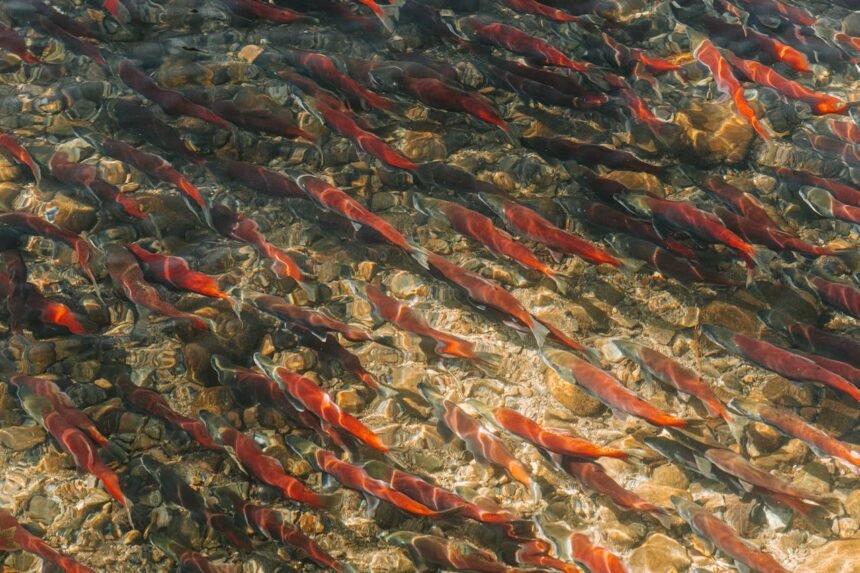
A “redd” is the term used for the spawning nest of a salmonid. When female salmon return from the ocean to their ancestral spawning grounds, their primary mission is to find the perfect location to deposit their eggs. To do this, they utilise their tails to vigorously disturb the riverbed gravel, creating a depression in the stream bed.
This process of female salmon behaviour is both exhausting and precise. By flapping her tail against the river floor, the female clears away fine sediment and silt, leaving behind a pocket of clean stones. Once the eggs are laid and fertilised by the male, the female moves slightly upstream to dig again, allowing the current to carry fresh gravel over the eggs, burying them safely away from predators.
The Architecture of a Redd
A typical salmon redd consists of three main parts:
- The Pit: The deepest part of the nest where the eggs are initially deposited.
- The Tailspill: The mound of gravel that accumulates immediately downstream of the pit, which provides the protective covering for the eggs.
- The Pot: The actual depression left in the gravel after the female has finished her work.
Why Location is Everything for Egg Incubation
Salmon are incredibly picky about where they build their homes. They require very specific conditions to ensure successful egg incubation. The quality of the freshwater ecosystems they inhabit directly impacts the survival rate of the offspring.
For a redd to be successful, it needs a constant flow of oxygenated water. Because the eggs are buried under several inches of gravel, they rely on the “interstitial flow”—water moving through the gaps between the stones—to bring them oxygen and carry away metabolic waste. If the water is stagnant or the gravel is choked with mud, the embryos will suffocate.
Key Factors for Ideal Redds
- Gravel Size: The stones must be small enough for the female to move but large enough to remain stable during high water flows.
- Water Depth: Deep enough to protect from land predators but shallow enough to maintain high oxygen levels.
- Current Velocity: The water must move fast enough to prevent siltation risks but not so fast that it washes the gravel away.
Species Comparison: Who Builds What?
While the basic principles of building salmon redds are similar across species, there are notable differences in size and location preferences. For instance, the Atlantic salmon often chooses different stream sections compared to Pacific varieties.
| Species | Typical Redd Size | Preferred Gravel Type | Spawning Season |
|---|---|---|---|
| Atlantic Salmon | 1–3 metres long | Medium, clean cobble | October – January |
| Chinook (King) Salmon | Up to 10 metres long | Large, heavy gravel | August – November |
| Sockeye Salmon | 0.5 – 1.5 metres long | Fine to medium gravel | July – October |
The Lifecycle: From Gravel to Ocean
The journey of a salmon begins in the safety of the redd. After several weeks or months, depending on water temperature, the eggs hatch into “alevins.” These tiny creatures remain tucked within the riverbed gravel, living off a yolk sac attached to their bodies. This stage is critical for juvenile fry survival, as they are still too weak to swim against strong currents.
Eventually, they emerge as fry and begin their life in the freshwater ecosystems, eventually undergoing “smoltification” to prepare for their journey to the sea. The health of the salmon redds they started in determines their strength and resilience for this epic migration.
Threats to Salmon Redds
Despite the natural engineering that goes into these nests, wild salmon populations face significant hurdles. Human activity and environmental changes have made many traditional spawning grounds uninhabitable.
Siltation risks are perhaps the most immediate threat. When nearby land is cleared for construction or intensive farming, rain washes fine dirt into the river. This silt settles into the gaps in the gravel, blocking the flow of oxygenated water and literally choking the life out of the eggs. Furthermore, climate change is altering river temperatures and flow patterns, sometimes causing floods that scour the riverbed and wash away entire salmon redds.
How We Can Help: Conservation and Restoration
Protecting aquatic life requires a holistic approach to river management. Scientists and environmentalists are increasingly focusing on:
- Stream Restoration: Reintroducing natural gravel and woody debris to rivers to create better nesting sites.
- Riparian Zones: Planting trees along riverbanks to stabilise soil and provide shade, keeping water temperatures cool.
- Water Quality Monitoring: Tracking pollutants that can harm delicate embryos.
Authoritative bodies like the FAO and NOAA Fisheries emphasise that maintaining these habitats is vital for global biodiversity. You can learn more about habitat protection from organizations like WWF or Conservation International.
The Ecological Importance of Redds
Salmon are known as “keystone species,” meaning they have a disproportionately large impact on their environment. When salmon redds are successful, they don’t just produce more fish; they support an entire web of aquatic life. Nutrient-rich carcasses of spawned-out salmon provide food for bears, eagles, and even the very insects that the juvenile fry will eventually eat.
Research published in Nature and ScienceDirect highlights how the disturbance of gravel during redd building actually helps clean the riverbed, benefitting other species that rely on clear, healthy water. Even the Smithsonian notes that salmon are essentially “biological pumps” moving nutrients from the ocean back to the headwaters of our rivers.
Conclusion
Salmon redds are more than just holes in the ground; they are symbols of the incredible endurance and complexity of the natural world. By understanding the delicate balance required for egg incubation and the threats posed by siltation risks, we can better appreciate the need for stream restoration and the protection of our riparian zones.
Whether you are an angler, a nature lover, or simply a concerned citizen, advocating for the health of our freshwater ecosystems ensures that these remarkable anadromous fish will continue to return to our rivers for generations to come. For the latest news on environmental policy and river health, stay informed via the BBC News Science & Environment section or the Environment Agency.
Frequently Asked Questions (FAQs)
What is the best time of year to see salmon redds?
The best time to see salmon redds is typically during the autumn and early winter months, between October and January, depending on the specific species and local weather conditions. This is when most wild salmon populations return to their spawning grounds.
Can you walk in a river where salmon are spawning?
It is strongly advised to avoid walking in the river during spawning season. Stepping on a redd can crush the delicate eggs buried in the gravel, significantly reducing juvenile fry survival rates. Always observe from the bank to protect aquatic life. For more on river safety, visit USGS Water Science.
How deep are salmon eggs buried in a redd?
Depending on the size of the fish and the riverbed gravel, eggs are typically buried between 10 to 30 centimetres deep. This depth provides protection from predators and prevents the eggs from being washed away during minor floods, as researched by ScienceDaily and UNEP.