



Cyclospora symptoms can look like a stubborn stomach bug, but they behave differently. The main sign is watery diarrhea that comes and goes, and it can last for weeks if nobody treats it. Most people feel the first signs about a week after swallowing the parasite, usually through fresh produce or contaminated water.
This guide walks you through the full picture. You will learn the typical cyclospora symptoms onset, how long the illness lasts, and whether fever or itching is part of it. We also clear up a common mix-up: why antivirals do not help, and why a specific antibiotic does.
You will also find a side-by-side table comparing this infection with common fall allergies, plus simple home care tips, prevention steps, and clear signs that mean it is time to call a doctor.
Everything here is based on guidance from the CDC, MedlinePlus, WHO, and the FDA. Treat it as a starting point, then talk with your own doctor about your situation.
What Is Cyclospora, and What Does It Cause?
Cyclospora is a tiny parasite. You cannot see it without a microscope. Its full name is Cyclospora cayetanensis. When it infects your intestines, the illness is called cyclosporiasis.
People get infected by swallowing food or water that has been contaminated with stool carrying the parasite. That is why fresh produce, such as lettuce, herbs, and berries, shows up so often in outbreak reports.
Here is a detail that surprises many readers. The parasite is not usually passed straight from one person to another. After it leaves the body, it needs days to weeks in the environment before it becomes infectious. So sitting next to a sick person is not the usual risk. Eating contaminated food is.
Cyclospora is found around the world. It is more common in tropical and subtropical regions. In the United States, cases tend to rise in the warmer months, and travelers returning from affected areas are often among those diagnosed.
Knowing the basics makes the cyclospora symptoms easier to spot. Let us look at them next.
Common Cyclospora Symptoms: What to Watch For
The hallmark of this infection is diarrhea. It is usually watery, and it can strike often. Some people describe frequent and sudden bowel movements that make it hard to stray far from a bathroom.
But diarrhea is rarely the only problem. Other cyclospora symptoms can include:
- Watery diarrhea that may come and go
- Stomach cramps and pain
- Bloating and extra gas
- Nausea, and sometimes vomiting
- Loss of appetite
- Weight loss over time
- Tiredness that feels out of proportion
- Body aches in some people
- A low-grade fever in some people
Not everyone gets every symptom. Some people feel only mild stomach upset. Others feel very unwell. And some people who carry the parasite have no symptoms at all.
Diarrhea and Cramps
Diarrhea is the symptom that sends most people to the doctor. It can be mild at first, then build up. Cramping often comes with it, and it may ease after a bowel movement.
The pattern matters. With this infection, diarrhea can improve for a day or two, then return. That on-again, off-again rhythm is one clue that separates it from a quick 24-hour bug.
Bloating, Gas, and Nausea
Bloating and gas are very common. Your belly may feel full and tight, even when you eat little. Nausea can make food unappealing, which leads to the next symptom.
Appetite Loss, Weight Loss, and Fatigue
When food does not sound good and your gut is losing fluids, your body runs low on fuel. Over days and weeks, that can mean weight loss and deep tiredness. Fatigue is easy to dismiss, but it is a real part of the illness, and it can linger after the diarrhea settles.
Cyclospora Symptoms Onset: How Long for Cyclospora Symptoms to Show Up
This is one of the most searched questions, so let us answer it plainly. How long for cyclospora symptoms to show up after exposure? According to the CDC, the typical cyclospora symptoms onset is about one week. The range is wider, from about two days to two weeks.
That delay makes detective work hard. By the time you feel sick, the meal that caused it may be a distant memory. Many people cannot name one specific food. That is normal, and it is one reason outbreaks take time to trace.
A Simple Timeline
| When | What usually happens |
|---|---|
| Day 0 | You swallow contaminated food or water. You feel fine. |
| Days 2 to 14 | Symptoms begin. About one week is typical. |
| First week of illness | Watery diarrhea, cramps, bloating, and appetite loss build up. |
| Weeks 2 to 4 and beyond | Without treatment, symptoms may fade and return. Fatigue often lingers. |
| After treatment starts | Doctors expect improvement, though energy may take longer to return. |
Why Timing Matters for Your Doctor
When you see a doctor, tell them about your recent meals, trips, and any outbreak news in your area. Think back one to two weeks, not just the last few days. Details such as fresh salads, herbs, berries, or travel can help your doctor decide which tests to order.
How Long Do Cyclospora Symptoms Last?
Now for the other half of the timeline. How long for cyclospora symptoms to go away? Without treatment, the illness can last from a few days to a month or longer, based on CDC guidance. Some people feel better, then slide backward.
That relapsing pattern is a hallmark. You may have two good days and think the worst is over. Then the diarrhea and cramps return. This cycle can repeat several times.
With Treatment
With the right antibiotic, doctors generally expect symptoms to improve. Recovery still varies from person to person. Tiredness often outlasts the diarrhea, so give your body time.
Without Treatment
Without treatment, the illness can drag on for weeks. The longer it lasts, the higher the risk of dehydration and weight loss. That is why getting tested matters if diarrhea lasts more than a few days.
People With Weakened Immune Systems
If your immune system is weakened, the illness may last longer and may need longer treatment. Tell your doctor about any condition or medicine that affects your immunity.
Does Cyclospora Cause Itching?
Itching is not a typical sign of cyclosporiasis. The usual symptoms are digestive: diarrhea, cramps, bloating, nausea, and tiredness. If you are searching for an itch connection, here is what may be going on.
Skin Irritation From Frequent Diarrhea
Frequent loose stools can irritate the skin around the anus. That area can feel sore, raw, or itchy. This comes from the irritation of diarrhea itself, and it can happen with many stomach illnesses. Gentle cleaning, patting dry, and a barrier cream may help. Ask a pharmacist or doctor what suits you.
How Allergy Itch Is Different
Allergy itch usually shows up in the eyes, nose, throat, or ears. It often comes with sneezing, a runny nose, and watery eyes. Allergies do not cause watery diarrhea, ongoing cramps, or weight loss.
If you have an itchy rash or hives after eating, that points toward a food allergy or another cause. That needs a doctor, and severe reactions such as swelling of the lips or trouble breathing are emergencies.

Fever and Cyclospora Symptoms: How Common Is It?
Fever can happen, but it is not the star of the show. Some people with cyclosporiasis have a low-grade fever. Many have none at all. The illness is mostly about the gut.
That detail helps when you compare illnesses. A high fever, shaking chills, or blood in your stool suggests that something else may be going on. Other bacterial infections can cause that picture, and they need prompt medical care.
When Fever Is a Warning Sign
- A fever that is high or keeps climbing
- Fever with severe belly pain
- Fever with bloody or black stools
- Fever in a baby, an older adult, or someone with a weak immune system
If any of these apply, do not wait. Call your doctor or seek urgent care.
Cyclospora Symptoms vs Common Fall Allergies
Fall brings ragweed, mold, and dust. That makes common fall allergies a frequent guess when people feel off in autumn. But allergies and cyclosporiasis affect very different parts of the body. This table shows the main differences.
| Feature | Cyclospora infection | Common fall allergies |
|---|---|---|
| Main problem | Watery diarrhea and cramps | Sneezing, stuffy or runny nose |
| Itching | Not typical | Common: eyes, nose, throat, ears |
| Fever | Sometimes low-grade | No fever |
| Bloating and gas | Common | Not typical |
| Weight loss | Possible if it goes on | No |
| Fatigue | Common and deep | Mild, often from poor sleep |
| Trigger | Contaminated food or water | Pollen, mold, dust |
| Typical timing | Starts about a week after exposure | Starts soon after contact with the trigger |
| Treatment | Prescription antibiotic (TMP-SMX) | Antihistamines, nasal sprays, avoiding triggers |
A Quick Way to Tell Them Apart
Ask yourself where the symptoms are. If they sit in your nose, eyes, and throat, allergies are more likely. If they sit in your belly, with watery diarrhea that lasts, an infection is more likely.
Can you have both? Yes. Allergies and a stomach infection are separate problems, and one does not rule out the other.
When Antivirals Matter (and Why They Do Not Treat Cyclospora)
Many people ask whether antivirals can help. The short answer is no. Cyclospora is a parasite, not a virus. Antivirals work against viruses, so they do nothing against it.
The mix-up is understandable. Most stomach bugs people hear about are viral, such as norovirus. So it is easy to assume that any “stomach bug” needs an antiviral. In reality, most viral stomach illnesses have no specific antiviral at all. Rest and fluids are the treatment.
So When Do Antivirals Matter?
Antivirals matter when a doctor has diagnosed a virus that responds to them. Influenza is a well-known example, and those medicines work best when started early. That is a different illness with different symptoms, such as cough, body aches, and a higher fever.
What Treats Cyclospora Instead?
The standard treatment is an antibiotic combination called trimethoprim-sulfamethoxazole, often shortened to TMP-SMX. It is also sold under brand names such as Bactrim and Septra. Ordinary antibiotics that doctors use for other infections, and antivirals, are not the answer. This is why a stool test matters. It tells your doctor what you are really dealing with.
Never take leftover antibiotics or antivirals on your own. The wrong medicine will not help, and it can cause side effects.
Cyclospora Symptoms and Treatment: What Doctors Recommend
Let us bring cyclospora symptoms and treatment together. Once testing confirms the infection, your doctor will usually prescribe TMP-SMX. The CDC clinical guidance on cyclosporiasis names it as the recommended medicine. Your doctor sets the dose and length of treatment based on your age, health, and immune status.
Why Treatment Matters
Without treatment, cyclospora symptoms can last for weeks and may keep coming back. Treatment helps the body clear the parasite and gives you a better shot at a full recovery.
If You Are Allergic to Sulfa Drugs
TMP-SMX contains a sulfa drug. If you have a sulfa allergy, tell your doctor right away. According to CDC guidance, no other medicine has been shown to work as well. Your doctor may talk with an infectious disease specialist to choose the safest plan, and may focus on supportive care. Do not skip the conversation or switch medicines yourself.
Medicines to Ask Your Doctor About First
Over-the-counter anti-diarrhea medicines are tempting. Ask your doctor before using them. They are not right for everyone, especially if you have a fever or bloody stools. Your doctor can tell you what is safe in your case.
Treatment for People With Weak Immune Systems
If your immune system is weakened, treatment may need to last longer, and relapses can be more common. Close follow-up with your doctor is important.
Home Care and Hydration Tips
Medicine treats the parasite. Home care keeps you safe and comfortable while it works. Hydration is the top priority.
Stay Hydrated
Watery diarrhea drains fluids and salts fast. Replace them steadily.
- Sip water, clear broth, or an oral rehydration solution all day
- Take small sips often if you feel nauseated
- Avoid alcohol, which can worsen dehydration
- Go easy on sugary drinks and high-caffeine drinks
Eat Gently
Choose bland, easy foods as your appetite returns. Rice, bananas, toast, plain potatoes, and soups are common choices. Skip greasy, spicy, and very sugary foods until your gut settles. Eat small portions more often rather than big meals.
Rest and Recover
Fatigue is part of this illness. Do not push yourself back into a full schedule too soon. Sleep well, and return to normal activity as your energy improves.
Protect Others at Home
Person-to-person spread is unlikely, but good hygiene is still smart. Wash your hands with soap and water after using the toilet and before handling food. Clean bathroom surfaces regularly.
Signs of Dehydration
- Dark urine, or very little urine
- Dry mouth and extreme thirst
- Dizziness when standing
- A racing heartbeat
- Unusual sleepiness or confusion
These signs mean you need medical help soon.
Causes and Sources of Cyclospora Infection
Cyclospora spreads when people swallow food or water contaminated with the parasite. It is not caused by poor cooking skills or an unclean kitchen at home. The contamination usually happens long before the food reaches you.
Fresh Produce
Outbreaks in the United States have been linked to fresh produce, including leafy greens such as lettuce, fresh herbs such as basil and cilantro, and berries. These foods are often eaten raw, which gives the parasite no chance to be killed by heat.
Contaminated Water
Water used to irrigate crops or to wash produce can carry the parasite. Drinking untreated water, especially while traveling, is another route.
The 2026 Outbreak
In 2026, health agencies reported a large multistate cyclosporiasis outbreak linked to iceberg lettuce. The FDA later closed its investigation. You can read the latest details in the 2026 cyclosporiasis outbreak details from the CDC. Outbreak lists change, so check the CDC page for current numbers.
The takeaway is not to fear lettuce. It is to stay informed, follow food safety notices, and know the signs, because big outbreaks often send many people looking for cyclospora symptoms information at once.
How Doctors Diagnose Cyclosporiasis
You cannot diagnose this infection from symptoms alone. Many illnesses cause watery diarrhea. Diagnosis needs a lab test.
Stool Tests
Doctors usually order a stool sample. Labs look for the parasite under a microscope or use molecular tests. Here is a key point: a routine stool test for parasites may not look for Cyclospora unless the doctor specifically asks for it. If you suspect it, say so.
Repeat Samples
The parasite can be hard to spot. Your doctor may ask for more than one stool sample on different days. A single negative result does not always settle the question.
What to Tell Your Doctor
- When your symptoms started
- Any raw produce, herbs, or salads you ate in the past two weeks
- Recent travel, especially to tropical regions
- Any medicines you take and any allergies, including sulfa allergy
- Whether others who ate with you are sick
For a plain-language overview of the illness, see this plain-language cyclosporiasis overview from MedlinePlus.
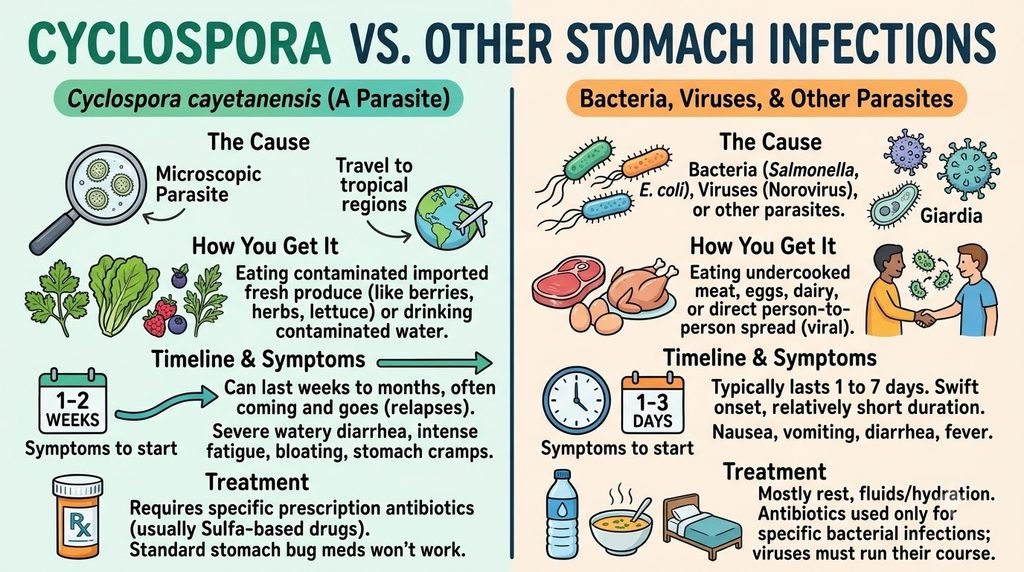
Cyclospora vs Other Stomach Infections
Diarrhea has many causes. Telling them apart by symptoms alone is difficult, even for doctors. Still, a few patterns can help you decide how urgently to seek care.
| Illness | Typical onset | Typical length | Clues |
|---|---|---|---|
| Cyclosporiasis | About 1 week (2 to 14 days) | Days to weeks, may relapse | Watery diarrhea, bloating, fatigue, weight loss |
| Norovirus | Within a day or two | Usually a few days | Sudden vomiting and diarrhea |
| Bacterial food poisoning | Hours to a few days | Days | Higher fever, sometimes bloody stools |
| Giardia | One to two weeks | Can last weeks | Greasy stools, gas, often linked to water |
Notice how the duration separates them. A stomach bug that fades in two days is probably not cyclosporiasis. Diarrhea that drags on, improves, then returns deserves a stool test.
Who Is at Higher Risk?
Anyone can get infected. But some people face more risk of exposure, and others face more risk of a harder illness.
Travelers
Cyclospora is more common in tropical and subtropical regions. Travelers who eat raw produce or drink untreated water can be exposed. Symptoms may start after you get home, which can make the link easy to miss. Tell your doctor about any trips in the past few weeks.
Children
Children can lose fluids quickly, so dehydration is the main worry. Watch for fewer wet diapers, no tears when crying, a dry mouth, and unusual sleepiness. Call a pediatrician early. Do not give medicines to a child without medical advice.
Older Adults
Older adults can become dehydrated faster and may have other health conditions or take medicines that make diarrhea riskier. Seek care sooner rather than later.
People With Weakened Immune Systems
People with conditions or treatments that weaken immunity may have longer, more severe illness. They may also need longer treatment and closer follow-up.
Pregnant Women
Dehydration and medicine choices need extra care during pregnancy. Talk to your doctor or midwife promptly if you have ongoing diarrhea.
How to Prevent Cyclospora Infection
There is no vaccine for cyclosporiasis. Prevention comes down to food and water habits. No method gives a perfect guarantee, but these steps lower your risk.
At Home
- Rinse fresh produce under running water, and rub firm items with a clean brush
- Dry produce with a clean cloth or paper towel
- Keep produce away from raw meat, and use separate cutting boards
- Wash your hands before preparing food
- Follow food recall notices and outbreak advisories
- Refrigerate cut produce promptly
A caution is worth stating plainly. Rinsing may not remove every parasite. Washing is still smart, because it removes dirt and some germs, but it is not a complete shield. Cooking food thoroughly is more reliable than rinsing.
While Traveling
- Choose cooked foods served hot over raw salads in high-risk areas
- Peel fruit yourself when possible
- Drink bottled or properly treated water
- Skip ice if you are unsure of the water source
- Be careful with fresh herbs and unwashed berries
The WHO shares broad guidance on safe eating at home and abroad in its global food safety basics.
Common Myths About Cyclospora Symptoms
Myth: “It Is Just a 24-Hour Bug”
Short stomach bugs exist, but this one can last weeks. If your diarrhea keeps going, get tested.
Myth: “Antivirals Will Fix It”
They will not. It is a parasite, and the treatment is a specific antibiotic. See the section above on antivirals.
Myth: “If I Feel Better, I Am Cured”
Not always. Relapses are a known feature. Finish the full course of any medicine your doctor prescribes, and call if symptoms return.
Myth: “Washing Produce Makes It 100% Safe”
Washing helps, but it does not remove every parasite. Combine washing with smart food choices.
Myth: “It Is Always Caused by Bad Hygiene”
No. Contamination often happens at the farm, in the water, or during handling, long before food reaches your kitchen. Anyone can get sick.

When to See a Doctor
Do not wait out ongoing diarrhea. Call your doctor if watery diarrhea lasts more than a few days, or if it keeps returning after brief breaks. Mention any recent travel or outbreak exposure.
Red-Flag Symptoms: Get Help Fast
- Signs of dehydration, such as dark urine, dizziness, or a racing heart
- Blood in your stool, or black, tarry stools
- A high or rising fever
- Severe or worsening belly pain
- Repeated vomiting that stops you keeping fluids down
- Confusion or extreme drowsiness
- Diarrhea in a baby, a young child, an older adult, or someone with a weak immune system
If you feel faint, cannot keep fluids down, or feel very unwell, seek urgent care or emergency help.
Questions to Ask at Your Appointment
- Should I be tested specifically for Cyclospora?
- Do I need more than one stool sample?
- Is TMP-SMX safe for me, given my allergies and other medicines?
- What should I do if my symptoms come back?
- When can I return to work or school?
A Week-by-Week View of Cyclospora Symptoms
Seeing the illness as a story helps you know what is normal. Here is a rough guide. Your own course may differ, so treat it as a map, not a promise.
Week One: The Start
Early cyclospora symptoms are often mild. You may feel a bit off, with a loose stomach and less appetite. Many people assume it is something they ate that day. Within a few days, the diarrhea tends to become more frequent and watery, and bloating and cramps join in.
Week Two: The Peak
This is often when people feel the worst. Fluid loss, poor appetite, and broken sleep add up. Fatigue deepens. If you have not seen a doctor yet, this is a good time to do it, because treatment is most useful when it starts early.
Weeks Three and Four: The On-Again, Off-Again Phase
Without treatment, the illness often turns uneven. You may enjoy a day or two of normal digestion, then feel the cramps and diarrhea return. Weight loss may become noticeable. Many people describe feeling worn down and discouraged at this stage.
After Four Weeks
Untreated illness can continue beyond a month. Longer illness raises the chance of dehydration, nutrient loss, and significant weight loss. This is why persistent diarrhea should never be brushed off, whatever the season.
Should You Get Tested? A Quick Checklist
Not every upset stomach needs a lab test. But consider asking your doctor about testing if several of these fit:
- Watery diarrhea has lasted more than a few days
- Diarrhea improved, then came back
- You have bloating, gas, and loss of appetite
- You are losing weight without trying
- You ate fresh produce, herbs, or salad in the past two weeks
- You traveled recently, especially to a tropical region
- Others who ate the same food are sick
- You live in an area with a current outbreak notice
The more boxes you tick, the stronger the reason to ask for a stool test that specifically checks for Cyclospora.
Mistakes to Avoid With Cyclospora Symptoms and Treatment
When people read about cyclospora symptoms and treatment, a few missteps come up again and again. Avoid these:
- Waiting too long. Hoping it clears alone can mean weeks of illness.
- Self-treating with leftover pills. The wrong medicine will not help and can harm.
- Assuming it is allergies. If your main symptom is diarrhea, allergies are not the likely cause, even in the middle of allergy season. Remember that common fall allergies affect the nose, eyes, and throat, not the gut.
- Skipping hydration. Fluids matter as much as medicine on the worst days.
- Stopping treatment early. Finish what your doctor prescribes, even if you feel better.
- Not mentioning allergies. Always tell your doctor about a sulfa allergy before taking TMP-SMX.
Why Early Recognition Helps Everyone
Knowing your cyclospora symptoms onset window and the main warning signs helps you act faster. It also helps public health teams. When many people report similar illness after eating the same food, officials can spot patterns and warn the public sooner. A short call to your doctor, and a stool test when advised, can protect more than just you.
Keep notes on what you ate and when your symptoms began. Even a few lines on your phone can help your doctor and, in an outbreak, help investigators work out the source.
Recovery: What to Expect After Treatment
Most people recover fully. Still, the road back can feel slow. Diarrhea usually eases first. Appetite returns next. Energy tends to be the last thing to come back.
Give yourself time. Eat regular small meals, drink plenty of fluids, and add activity gradually. If diarrhea returns after you finish treatment, tell your doctor. A relapse may need another look.
Also keep an eye on your weight and energy in the weeks after. If you are still losing weight or feeling drained, follow up with your doctor.
Frequently Asked Questions About Cyclospora Symptoms
What are the first cyclospora symptoms?
Usually watery diarrhea, often with cramps, bloating, gas, and loss of appetite. Some people feel nauseated or unusually tired first. The first cyclospora symptoms tend to build gradually.
How long for cyclospora symptoms to show up after eating contaminated food?
About one week is typical. The range is roughly two days to two weeks, so think back across that whole window when you try to trace the cause. That window defines the usual cyclospora symptoms onset.
How long for cyclospora symptoms to go away?
Without treatment, they can last from a few days to a month or longer, and may come and go. With treatment, doctors expect improvement, though fatigue can linger. If you wonder how long for cyclospora symptoms will last in your case, ask your doctor, since age, health, and treatment timing all matter.
What are the best options for cyclospora symptoms and treatment at home?
Medicine from your doctor is the core of treatment. At home, focus on hydration, rest, and gentle foods. This approach to cyclospora symptoms and treatment supports recovery but does not replace the antibiotic. Check with your doctor before using anti-diarrhea medicines.
Can antivirals treat cyclospora?
No. Cyclospora is a parasite, so antivirals do not work. TMP-SMX is the standard treatment.
Could my symptoms be common fall allergies instead?
If your main problems are sneezing, itchy eyes, and a stuffy nose, common fall allergies are more likely. If you have watery diarrhea, cramps, and bloating that last, think infection and get tested. The comparison table above can help you sort it out.
Key Takeaways
Watery diarrhea that lasts, comes and goes, and shows up about a week after a risky meal is the classic pattern of cyclospora symptoms. Itching and high fever are not typical, and antivirals do not help. A stool test confirms the diagnosis, and TMP-SMX is the usual treatment.
Stay hydrated, rest, and see a doctor if symptoms last more than a few days or if any red-flag sign appears. Wash produce, make smart food choices when you travel, and follow outbreak notices.