
Your home should be your sanctuary—a place to relax, unwind, and feel safe. However, many of us do not realise that the air inside our homes can sometimes be more polluted than the air outside.
From paint and cleaning products to synthetic building materials, modern homes often trap airborne toxins. This accumulation can lead to poor indoor air quality, which may impact your health and general well-being.
Fortunately, nature offers a solution that is both functional and beautiful. Introducing specific houseplants into your living space can help neutralise harmful chemicals and increase oxygen levels. While they are not a complete substitute for proper ventilation, they are a powerful supplementary tool for creating a healthier home environment.
In this article, we explore the science behind air-filtering plants, identify the most effective species for removing toxins, and provide actionable tips on how to care for them.
What are indoor air pollutants?
Before we dive into the greenery, it is essential to understand what exactly we are trying to filter out. Our homes are often tightly sealed to conserve energy, which inadvertently traps pollutants known as volatile organic compounds (VOCs).
These compounds are emitted as gases from certain solids or liquids. According to GOV.UK, indoor air pollution is a significant environmental health risk. The most common offenders found in residential spaces include:
- Formaldehyde: Found in carpets, upholstery, glues, and paint.
- Benzene: Found in plastics, synthetic fibres, lubricants, and pesticides.
- Trichloroethylene: Found in paint removers, rug cleaning solutions, and adhesives.
- Xylene: Found in printing rubber, leather, and industrial paint.
- Ammonia: Common in window cleaners and floor waxes.
Exposure to these chemicals can contribute to “sick building syndrome,” a condition highlighted by the NHS where occupants experience symptoms like headaches, dizziness, and respiratory irritation without a specific illness being identified.
The science: Do plants really clean the air?
The concept of using plants for air purification gained mainstream attention following the famous NASA Clean Air Study in 1989. NASA researchers were looking for ways to detoxify the air in space stations. They discovered that certain houseplants could remove up to 87% of air toxins in 24 hours.
While your living room is not a sealed space station, subsequent scientific evidence suggests that plants can still play a meaningful role in reducing indoor contaminants. They absorb particulates from the air at the same time that they take in carbon dioxide, which is then processed into oxygen through photosynthesis. Furthermore, microorganisms in the potting soil also aid in cleaning the air.
7 Top houseplants for air filtering
Here is a curated list of the most effective plants for filtering indoor air, based on their ability to remove specific pollutants and their ease of care.
1. Spider Plant (Chlorophytum comosum)
If you are new to gardening, the Spider Plant is the perfect starting point. It is incredibly resilient and thrives in indirect sunlight. It is particularly effective at battling formaldehyde and xylene.
Why we love it:
- Safe for pets: It is non-toxic to cats and dogs.
- Propagation: It produces “spiderettes” (baby plants) that are easy to re-pot.
- Hardiness: It tolerates occasional neglect and varying temperatures.
According to the Royal Horticultural Society, this plant is robust and adaptable, making it a staple for British homes.
2. Snake Plant (Dracaena trifasciata)
Also known as “Mother-in-Law’s Tongue,” this architectural plant is famous for its ability to survive in low light and drought conditions. Unlike most plants, the Snake Plant releases oxygen at night, making it an ideal companion for the bedroom to help improve indoor air quality while you sleep.
Key benefits:
- Filters: Formaldehyde, trichloroethylene, benzene, and xylene.
- Watering: Requires very little water; prone to rot if overwatered.
- Style: Adds a modern, vertical aesthetic to any room.
3. Peace Lily (Spathiphyllum)
Peace Lilies are one of the few air-purifying plants that also flower, bringing a touch of elegance to your decor. They are renowned for breaking down neutralising toxic gases like carbon monoxide and formaldehyde.
However, a word of caution: the Peace Lily is toxic to pets if ingested. Keep it well out of reach of curious cats and dogs.
Care tips:
- Light: Prefers partial shade.
- Water: Needs regular watering; the leaves will droop significantly to let you know it is thirsty.
- Humidity: Enjoys a regular misting.
4. Rubber Plant (Ficus elastica)
With its thick, glossy, burgundy or green leaves, the Rubber Plant is a statement piece. It is a powerhouse for removing toxins, particularly formaldehyde, which is common in cleaning supplies and furniture.
Expert garden experts suggest wiping the leaves with a damp cloth periodically to keep the pores open for optimal air filtering.
5. English Ivy (Hedera helix)
English Ivy is a classic climber that is surprisingly effective indoors. It has been shown to reduce airborne faecal-matter particles and is excellent for absorbing mould spores in the air. This makes it a fantastic choice for damp areas like bathrooms.
Features:
- Growth: Vigorous climber or trailing plant.
- Light: Likes bright, indirect light but tolerates shade.
- Caution: Highly aggressive grower; ensure it stays contained in its pot.
6. Devil’s Ivy (Epipremnum aureum)
Commonly referred to as Pothos, this plant is nearly indestructible. It is effective at tackling a wide variety of pollutants, including benzene and xylene. Its trailing vines make it perfect for hanging baskets or high shelves.
Why choose Pothos:
- Forgiving: Can survive in very low light conditions.
- Speed: Grows quickly, providing immediate greenery.
- Variety: Available in many leaf patterns and colours.
7. Bamboo Palm (Chamaedorea seifrizii)
For those with a bit more space, the Bamboo Palm adds a tropical feel while filtering benzene and trichloroethylene. It also acts as a natural humidifier, releasing moisture into the air which can be beneficial during dry winters.
This plant scores highly on the Healthline list of air-purifying favourites due to its pet-friendly nature and high transpiration rate.
Comparison: Plant care and toxicity
Choosing the right plant involves balancing your lifestyle, your home’s lighting, and the safety of your household members. Use the table below to compare the options.
| Plant Name | Key Pollutants Targeted | Pet Safe? | Light Requirements | Difficulty |
|---|---|---|---|---|
| Spider Plant | Formaldehyde, Xylene | Yes | Bright, indirect | Easy |
| Snake Plant | Benzene, Formaldehyde | No | Low to bright | Very Easy |
| Peace Lily | Ammonia, Benzene | No | Shade to partial | Moderate |
| Rubber Plant | Carbon Monoxide, Formaldehyde | No | Bright, indirect | Moderate |
| English Ivy | Mould spores, Faecal particles | No | Bright to shade | Moderate |
| Devil’s Ivy | Xylene, Benzene | No | Low to bright | Easy |
| Bamboo Palm | Formaldehyde, Trichloroethylene | Yes | Bright, filtered | Moderate |
Tips for maximising air purification
To truly benefit from the air-cleaning properties of these plants, placement and care are critical. One small plant in a large house will not make a significant difference. Here is how to optimise your green setup:
- Quantity matters: NASA recommends roughly one plant per 100 square feet (approximately 9 square metres) of floor space. For an average-sized living room, aim for 2 to 3 medium-sized plants.
- Keep them healthy: A dying plant cannot filter air effectively. Ensure you are watering correctly and providing appropriate drainage to prevent root rot.
- Clean the leaves: Dust accumulates on leaves, blocking the tiny pores (stomata) where gas exchange happens. Wipe them down gently every few weeks.
- Choose the right soil: Using organic potting mixes can help reduce the introduction of new pesticides into your home. The microorganisms in the soil are partners in the purification process.
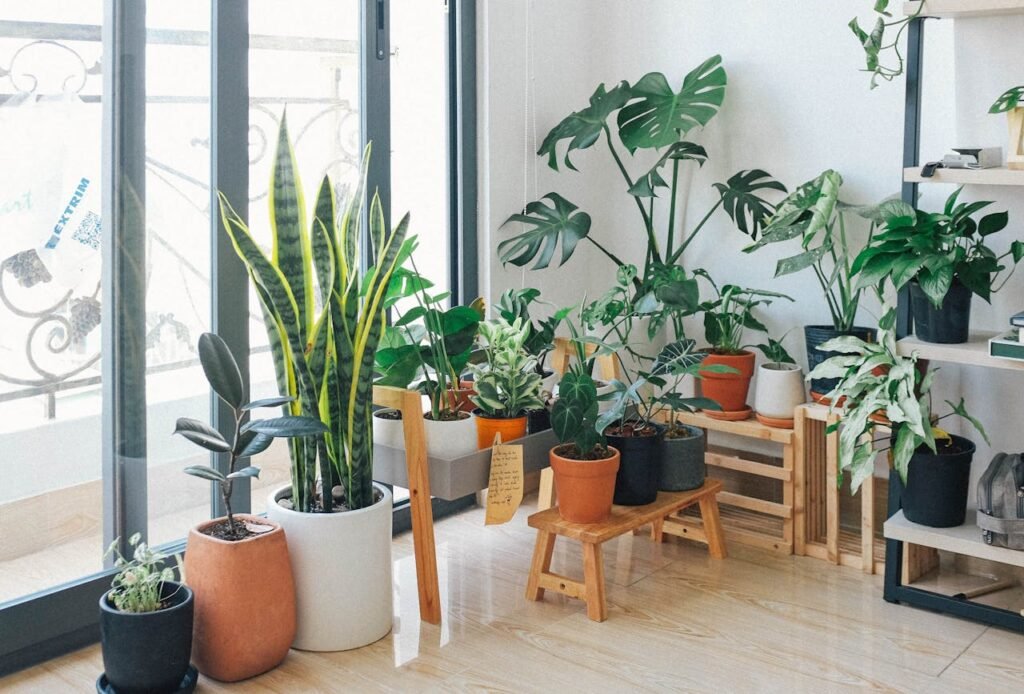
- Group plants together: Creating “plant clusters” can increase local humidity and create a microclimate that boosts transpiration and air turnover.
Improving your environment isn’t just about physical health; studies from charities like Mind show that being around nature significantly boosts mental well-being, reducing stress and anxiety.
Frequently Asked Questions
1. Are air-purifying plants safe for bedrooms?
Yes. While most plants release a small amount of carbon dioxide at night, the amount is negligible and harmless to humans. Plants like the Snake Plant actually release oxygen at night, making them excellent bedroom companions.
2. How many plants do I need to see a difference?
While exact numbers vary based on room size and airflow, the general consensus is that more is better. Aim for at least two good-sized plants per room to maximise the air-filtering potential.
3. Do plants remove dust from the air?
Plants do not “suck up” dust like a vacuum. However, by increasing humidity, they can help dust settle out of the air faster, and plants like English Ivy can reduce airborne mould particles.
4. Can these plants replace an electric air purifier?
Not entirely. If you live in a highly polluted area or have severe allergies, a mechanical HEPA filter is more effective for rapid purification. Plants are best viewed as a complementary, natural long-term strategy.
The bottom line
Incorporating houseplants into your decor is a scientifically supported way to reduce indoor air pollutants like volatile organic compounds (VOCs). Species such as the Spider Plant, Snake Plant, and Peace Lily are not only aesthetically pleasing but also functional tools for a healthier home.
While plants alone cannot cure “sick building syndrome” or replace proper ventilation, they offer a low-cost, natural method to improve indoor air quality. Beyond the physical benefits, the act of caring for living things provides a mental health boost, making your home feel calmer and more alive.
Start with one or two resilient varieties, ensure they are safe for your pets, and enjoy the fresher air.
Read this next: Allergy UK on managing indoor allergens.