For many, the quest for voluminous hair feels like an eternal battle against gravity. You leave the house with a perfectly styled blowout, only to catch your reflection two hours later and see flat, lifeless strands clinging to your scalp. If this resonates with you, you are likely dealing with fine, straight hair structure. The good news? The struggle is optional.
Learning how to add volume to fine straight hair is less about changing your DNA and more about understanding the physics of hair styling, product chemistry, and the right maintenance routine. This comprehensive guide will walk you through the structural realities of fine hair and provide actionable, expert-backed strategies to achieve that coveted lift.
Understanding the Architecture of Fine Hair
Before diving into solutions, it is crucial to distinguish between “fine” hair and “thin” hair. These terms are often used interchangeably, but they refer to different characteristics.
- Fine Hair: Refers to the diameter of the individual hair strand. Fine hair has a smaller circumference than coarse hair and often lacks the medulla (the innermost layer of the hair shaft). Because it is lighter, it is easily weighed down by oils and products.
- Thin Hair: Refers to the density of the hair follicles on the scalp (how many strands you have).
You can have fine hair but a thick density (lots of fine strands), or fine hair and low density. According to the structure of the hair shaft, fine hair lacks the structural rigidity to hold itself up, which is why mechanical and chemical assistance is necessary.
1. The Foundation: Washing and Care
Volume starts in the shower. If you start with a heavy residue, no amount of backcombing will save your style.
The “Reverse Washing” Technique
For those with exceptionally limp strands, the traditional shampoo-then-condition routine might be the culprit. Conditioners are designed to smooth cuticles, but they can leave heavy deposits.
Try Reverse Washing: Apply conditioner first (focusing only on the mid-lengths to ends), rinse, and then shampoo. This ensures you get the moisture benefits without the weight. Beauty experts at L’Oréal Paris suggest this method can significantly improve texture for fine hair types.
Choosing the Right Chemistry
Avoid products labeled “smoothing,” “silky,” or “hydrating,” as these often contain heavy silicones. Instead, look for clear formulas rather than creamy, pearlescent ones. Occasional use of clarifying shampoos is essential to remove product buildup and excess sebum production, which is the number one enemy of volume.
2. The Cut: Strategic Scissoring
The geometry of your haircut dictates how much natural lift you can achieve. Long, one-length hair is heavy; gravity pulls it down, flattening the roots.
The Blunt Bob
According to style reports from Vogue, the blunt bob remains a top contender for fine hair. A blunt line at the bottom creates the illusion of thickness and density.
Ghost Layers
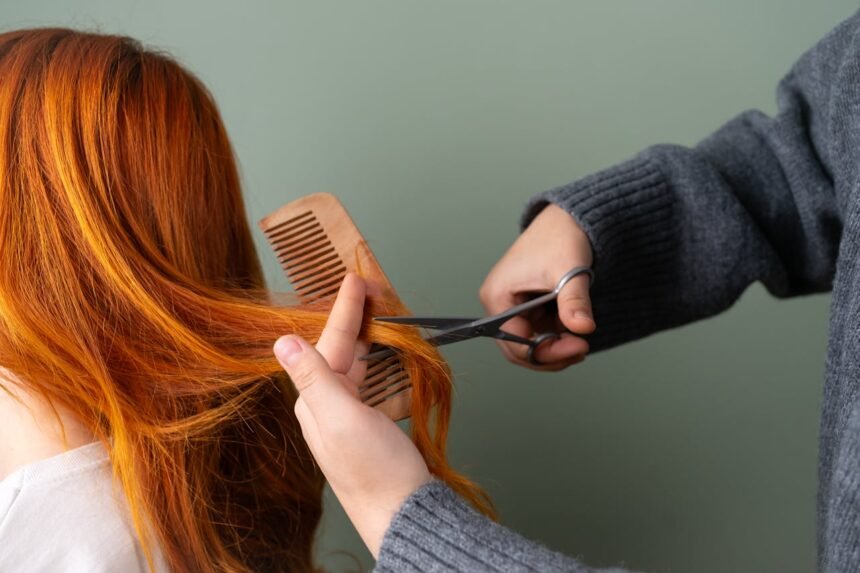
If you prefer length, ask your stylist for “ghost layers” or internal layering. This technique involves cutting shorter layers underneath the top layer of hair. These shorter hairs act as a scaffold, propping up the longer strands without looking choppy.
3. Styling Techniques: Mechanical Lift
Once the hair is clean and cut correctly, the drying process is where the magic happens.
The Upside-Down Blow Dry
It is the oldest trick in the book because it works. Flip your head upside down and rough dry until the hair is 80% dry. This forces the roots to dry standing up away from the scalp. When you flip back over, use a round brush to smooth the ends.
Velcro Rollers
Heat tools are effective, but Velcro rollers are the secret weapon for long-lasting volume.
- Blow-dry a section of hair warm.
- Immediately roll it onto a large Velcro roller while hot.
- Allow it to cool completely on the roller (cooling sets the hydrogen bonds in the hair).
- Remove gently for a massive root lift.
Teasing (Done Right)
Aggressive backcombing caused damage in the 80s, but gentle teasing at the crown is safe if done correctly. Use a fine-tooth comb and push the hair down towards the scalp once, then lock it in with hairspray. Allure magazine recommends using a soft bristle brush to smooth the top layer over the teased section to hide the mechanics.
4. Product Arsenal: Choosing Your Weapons
Not all volumizers are created equal. The table below breaks down which products serve which purpose for fine straight hair.
Volumizing Product Comparison Guide
| Product Type | Best Application Stage | Primary Benefit | Expert Tip |
|---|---|---|---|
| Volumizing Mousse | Damp hair (Roots to ends) | Adds grip and structural thickness to strands. | Look for alcohol-free versions to prevent drying out fragile ends. |
| Root Lift Spray | Damp hair (Roots only) | Targeted lift directly at the scalp. | Lift a section of hair and spray directly onto the skin/root, not just the hair surface. |
| Dry Shampoo | Dry hair (Anytime) | Absorbs oil and adds grit. | Apply before your hair gets greasy (e.g., right after blow-drying) to prevent oil proactively. |
| Texture Powder | Dry hair (Roots) | intense friction for massive lift. | A little goes a long way. Sprinkle sparingly to avoid a sticky residue. |
| Sea Salt Spray | Damp or Dry | Creates messy, beachy waves. | Can be drying; avoid daily use if your hair is brittle. |
5. Color and Chemistry
Surprisingly, a little damage can be good for fine hair. Virgin hair (hair that has never been colored) has a very smooth cuticle, which makes it “slippery” and flat.
Highlights and Balayage
Hair dye, specifically bleach used in highlights, roughens the cuticle slightly. This added texture increases the diameter of the hair shaft and allows strands to grip each other better, creating a fuller appearance. However, chemical processing requires maintenance. Ensure you balance this with heat protection to prevent breakage.
6. Internal Health: The Long Game
While styling offers immediate gratification, the quality of hair growth relies on internal health. If your hair is thinning rather than just naturally fine, consult a dermatologist.
The American Academy of Dermatology notes that excessive shedding can be linked to stress or nutrient deficiencies. Ensuring a diet rich in proteins, iron, and Omega-3 fatty acids supports strong follicle health. Supplements containing biotin and keratin are popular, though they should be taken under medical advice.
Conclusion
Mastering how to add volume to fine straight hair is a combination of the right cut, a strategic wash routine, and the intelligent use of styling products. You do not need to resign yourself to flat hair. By switching to a reverse washing routine, utilizing the cooling power of Velcro rollers, and selecting lightweight, gritty products like texture powder, you can defy gravity.
Start by changing one element of your routine this week—perhaps the reverse wash or the upside-down blow dry—and observe the difference. Full, bouncy hair is not just for the thick-haired elite; with these expert tips, it is well within your reach.
Have you tried any of these volumizing techniques? Share your favorite fine hair hacks in the comments below!