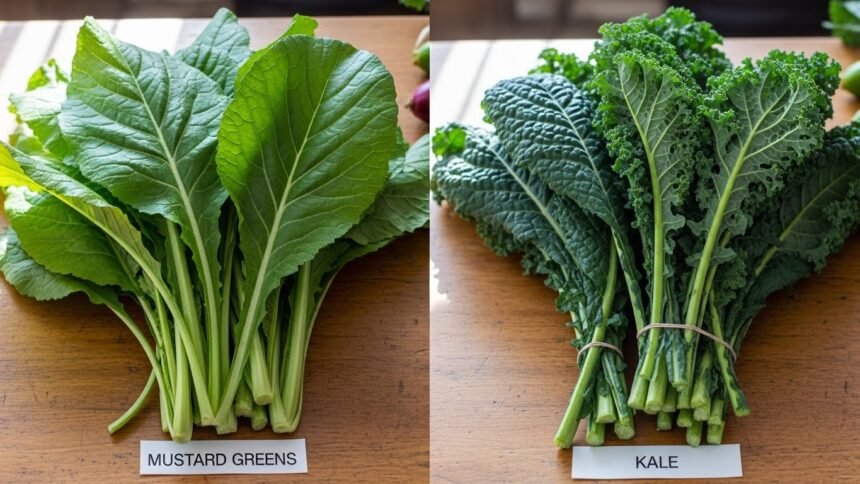
If you are looking to improve your diet, adding leafy green vegetables is one of the most effective steps you can take. Among the vast array of greens available in the supermarket, kale has long held the title of ‘superfood’ royalty. However, mustard greens are a potent contender that often flies under the radar.
Both vegetables belong to the Brassica genus, making them cruciferous cousins to broccoli, cauliflower, and cabbage. They share many similarities, yet they possess distinct nutritional profiles, flavours, and culinary uses.
When comparing mustard greens vs kale, the decision often comes down to specific health goals and taste preferences. This article analyses the science behind these two powerhouses to help you decide which one deserves a prime spot on your plate.
Nutritional Breakdown
To truly understand the differences, we must look at the hard data. Both vegetables are low in calories and high in fibre, but their micronutrient contents differ slightly.
Below is a comparison of 100 grams (approximately 3.5 ounces) of raw kale versus raw mustard greens.
| Nutrient | Kale (Raw) | Mustard Greens (Raw) |
|---|---|---|
| Calories | 35-49 kcal | 27 kcal |
| Carbohydrates | 8.8 g | 4.7 g |
| Fibre | 3.6 g | 3.2 g |
| Protein | 2.9 g | 2.9 g |
| Vitamin K | 388% of DV | 250% of DV |
| Vitamin C | 134% of DV | 78% of DV |
| Vitamin A | 20% of DV | 12% of DV |
| Calcium | 15% of DV | 10% of DV |
| Iron | 9% of DV | 9% of DV |
(Note: DV = Daily Value. Exact figures may vary slightly depending on soil quality and variety.)
While kale generally packs a slightly higher punch in terms of raw vitamin counts, mustard greens are lower in calories and carbohydrates, making them an excellent choice for those on strict low-carb or ketogenic diets.
The Vitamin K Factor
Both greens are exceptional sources of Vitamin K1 (phylloquinone). Vitamin K is critical for blood clotting and bone metabolism. Just one cup of either vegetable provides far more than your daily requirement.
According to the National Institutes of Health, adequate Vitamin K intake is linked to improved bone density and a reduced risk of fractures. Kale is the clear winner here by sheer volume, but mustard greens still provide an abundance of this nutrient.
Health Benefits of Kale
Kale has dominated the wellness industry for over a decade, and for good reason. It is nutrient-dense and versatile.
1. Antioxidant Powerhouse
Kale is loaded with powerful antioxidants like quercetin and kaempferol. These substances help counteract oxidative damage by free radicals in the body.
Oxidative stress is believed to be a leading driver of ageing and many chronic diseases, including cancer. The flavonoids found in kale have anti-inflammatory, anti-viral, and heart-protective effects.
2. Supports Eye Health
Kale is rich in lutein and zeaxanthin, carotenoid antioxidants that accumulate in the retina. Studies suggest that consuming adequate amounts of these nutrients can significantly lower the risk of macular degeneration and cataracts, two common eye disorders.
For more on the benefits of cruciferous vegetables, you can read this detailed guide on Healthline.
3. Cholesterol Reduction
Kale contains bile acid sequestrants, which can lower cholesterol levels. This mechanism may lead to a reduced risk of heart disease over time. Steaming kale dramatically increases the bile acid binding effect, making it even more potent than when eaten raw.
Health Benefits of Mustard Greens
Mustard greens may not have the same marketing budget as kale, but they are equally impressive in the nutritional arena. They offer a distinct, peppery flavour and a unique set of benefits.
1. Rich in Glucosinolates
Like other brassicas, mustard greens are high in glucosinolates. When you chop or chew these greens, glucosinolates are converted into isothiocyanates.
Research published on PubMed indicates that isothiocyanates may inhibit the growth of cancer cells and promote their destruction. Mustard greens are particularly rich in sinigrin, a glucosinolate associated with anti-inflammatory properties.
2. Liver and Blood Health
Mustard greens have a long history in traditional medicine for supporting liver function. Their high chlorophyll content helps detoxify the blood by binding to heavy metals and toxins, facilitating their removal from the body.
3. Immune System Support
Although slightly lower than kale, mustard greens are still an excellent source of Vitamin C. This water-soluble vitamin is essential for immune defence. According to the NHS, Vitamin C also helps protect cells and keeps them healthy, while maintaining healthy skin, blood vessels, bones and cartilage.
Taste and Culinary Uses
The most immediate difference between mustard greens vs kale is the flavour profile. This is often the deciding factor for home cooks.
Kale: Earthy and Robust
Kale has a fibrous, tough texture and an earthy, slightly bitter taste. Because the leaves are sturdy, they hold up well to cooking methods that would turn other greens to mush.
- Raw: Best when ‘massaged’ with olive oil and lemon juice to break down the cellulose fibres.
- Chips: Bakes into crispy chips, a popular healthy snack alternative.
- Smoothies: Its strong structure blends well, though the taste can be overpowering if not balanced with fruit.
Mustard Greens: Peppery and Spicy
As the name implies, mustard greens have a sharp, peppery bite, similar to horseradish or wasabi. This spiciness diminishes significantly when cooked.
- Sautéed: Cooking with garlic and healthy fats (like olive oil) mellows the heat.
- Soups and Stews: They add depth of flavour to broths.
- Pickled: Popular in Asian cuisine, pickling preserves the crunch and modifies the spice.

Potential Downsides and Risks
While highly nutritious, both greens contain compounds that certain individuals should monitor.
Vitamin K and Blood Thinners
Because both vegetables are incredibly high in Vitamin K, sudden changes in intake can interfere with blood-thinning medications like warfarin.
Consistency is key. The American Heart Association advises that patients on anticoagulants should maintain a consistent intake of Vitamin K rather than avoiding it entirely.
Oxalates
Kale and mustard greens contain oxalates, though in lower amounts than spinach. Oxalates can bind to calcium and potentially contribute to kidney stones in susceptible individuals.
If you are prone to calcium-oxalate stones, staying hydrated and consulting the National Kidney Foundation guidelines on diet is advisable.
Goitrogens
Cruciferous vegetables contain goitrogens, which may interfere with thyroid function if consumed in very large amounts, particularly in those with iodine deficiency. Cooking the vegetables deactivates the enzyme responsible for the goitrogenic effect. The British Thyroid Foundation notes that for most people, the benefits of eating these vegetables far outweigh the potential risks.
Practical Tips for Selection and Storage
To get the most out of your greens, proper selection and storage are vital.
Buying Tips:
- Kale: Look for firm, deeply coloured leaves with hardy stems. Avoid yellowing or brown leaves.
- Mustard Greens: Choose crisp, vibrant green leaves. Avoid those that look slimy or wilted.
Storage:
- Do not wash greens until you are ready to use them, as moisture promotes spoilage.
- Store them in the refrigerator in a plastic bag with a paper towel to absorb excess moisture.
- Kale can last up to a week, while mustard greens are more delicate and should be used within 3 to 4 days.
The Bottom Line
When weighing up mustard greens vs kale, there is no single loser. Both are nutritional superstars that offer profound health benefits, from cancer-fighting antioxidants to essential vitamins for bone and eye health.
Choose Kale if:
- You want the highest concentration of Vitamin K, A, and C.
- You prefer a milder, earthy taste or need a green that holds up in smoothies and baking.
- You are looking for a vegetable with a longer shelf life.
Choose Mustard Greens if:
- You enjoy spicy, peppery flavours.
- You are looking for a lower-calorie option.
- You want to diversify your antioxidant intake with different glucosinolates.
Ultimately, the best approach to a healthy diet is variety. Rotating between kale, mustard greens, and other leafy vegetables ensures you receive a broad spectrum of nutrients and keeps your meals exciting.
For more guidance on building a balanced diet, resources like Harvard T.H. Chan School of Public Health offer comprehensive advice on vegetable intake.
Before making significant changes to your diet, especially if you have underlying health conditions, it is always wise to consult with a healthcare professional or a registered dietitian. You can check the USDA FoodData Central for exact nutrient breakdowns of specific varieties available in your region.