Finding snacks and meals that satisfy your sweet tooth without derailing your health goals can be a frustrating challenge. Many of us find ourselves stuck in a cycle of craving sugary treats, only to feel guilty immediately after indulging.
However, nature offers incredible alternatives that are both delicious and nutritionally dense. Enter the guava.
This tropical superfruit is not only bursting with a unique, fragrant flavour but is also remarkably low in calories. Integrating healthy guava recipes into your weekly rotation can provide the sweetness you crave while delivering a massive boost of Vitamin C and dietary fibre.
Whether you are looking to manage your weight, improve your digestion, or simply diversify your palate, guava is a versatile ingredient that deserves a spot in your kitchen.
In this article, we will explore the nutritional power of this fruit and provide actionable, low-calorie recipes to help you maintain a balanced diet.
Why Guava is a Nutritional Powerhouse
Before diving into the kitchen, it is helpful to understand why dietitians and nutritionists often recommend guava.
Unlike many other tropical fruits which can be high in natural sugars, guava has a remarkably low glycaemic index. This means it releases sugar into the bloodstream slowly, preventing the sharp insulin spikes that lead to fat storage and energy crashes.
Key Nutritional Benefits
- High Fibre Content: A single guava contains about 3 grams of fibre. According to the British Nutrition Foundation, increasing fibre intake is crucial for digestive health and can help lower the risk of heart disease.
- Vitamin C: Guavas are one of the richest sources of Vitamin C, containing four times more than oranges. This is vital for immune function and skin health.
- Low Calorie: One medium guava contains roughly 37 calories, making it an ideal volume food for weight management.
Furthermore, guavas are rich in antioxidants. These compounds help combat oxidative stress in the body. A study highlighted by Medical News Today suggests that the antioxidant activity in guava leaf extract may even have anti-diabetic effects, though eating the whole fruit is the best way to gain nutritional benefits.
Including guava contributes towards your daily fruit and vegetable targets. The NHS 5 A Day guide emphasises that a variety of fruits is essential for a complete nutritional profile.
4 Low-Calorie Guava Recipes for a Healthy Diet
Here are four distinct ways to prepare guava that maximise flavour while keeping the calorie count low. These healthy guava recipes cover breakfast, lunch, and snack time.
1. Zesty Guava and Spinach Green Smoothie
Smoothies are often calorie bombs disguised as health foods. This recipe uses water and vegetables to keep it light, relying on the guava for creaminess and sweetness.
Ingredients:
- 2 medium guavas, seeded and chopped
- 1 large handful of fresh spinach
- 1/2 cucumber, sliced
- 200ml coconut water (unsweetened)
- 1 tsp chia seeds
- Ice cubes
Method:
- Wash the guavas thoroughly. You can leave the skin on for extra fibre, but ensure the hard seeds are removed if your blender is not high-powered.
- Combine the guava, spinach, cucumber, and coconut water in a blender.
- Blend on high until completely smooth.
- Stir in the chia seeds at the end and let sit for two minutes to thicken slightly.
Why it works:
The spinach adds iron without altering the taste, while the chia seeds provide omega-3 fatty acids. Hydration is key to weight loss, and coconut water adds electrolytes. For more on healthy hydration, check the GOV.UK Eatwell Guide.
2. Spicy Thai-Style Guava Salad
In many Asian cultures, guava is eaten savoury rather than sweet. This salad is crunchy, spicy, and has zero fat.
Ingredients:
- 3 firm guavas (slightly under-ripe is best for crunch)
- 1 red chilli, finely chopped (deseeded for less heat)
- 1 tbsp lime juice
- 1 tsp light soy sauce or tamari
- Fresh coriander leaves
- A pinch of pink Himalayan salt
Method:
- Slice the guavas into thin wedges or matchsticks.
- In a small bowl, whisk the lime juice, soy sauce, and chilli.
- Toss the guava in the dressing until evenly coated.
- Garnish generously with fresh coriander and a sprinkle of salt.
Why it works:
Capsaicin in chillies may slightly boost metabolism. This dish satisfies the need for a crunchy snack, replacing crisps or crackers. The British Heart Foundation recommends swapping processed savoury snacks for fruit and vegetable alternatives to reduce salt intake.
3. Poached Guava in Vanilla and Cinnamon
If you need a dessert that feels indulgent but fits a low-calorie plan, poaching fruit is a classic technique.
Ingredients:
- 4 ripe guavas, peeled and halved
- 500ml water
- 1 cinnamon stick
- 1 vanilla pod (or 1 tsp vanilla extract)
- 1 tbsp stevia or erythritol (optional)
- Zest of 1 lemon
Method:
- Bring the water, cinnamon, vanilla, sweetener, and lemon zest to a gentle simmer in a saucepan.
- Add the guava halves carefully.
- Poach on low heat for 10–15 minutes until the fruit is tender but not falling apart.
- Serve warm with a dollop of 0% fat Greek yoghurt.
Why it works:
Cinnamon helps regulate blood sugar levels. Using spices like vanilla adds perceived sweetness without actual sugar. This is consistent with advice from Diabetes UK, which suggests using fruit and spices to manage cravings.
4. Guava and Mint Salsa
This versatile salsa pairs perfectly with grilled fish or chicken, adding moisture and flavour without heavy sauces.
Ingredients:
- 2 guavas, diced finely
- 1/2 red onion, finely chopped
- 1/2 red pepper, diced
- Juice of 1 lime
- Fresh mint leaves, chopped
- Black pepper to taste
Method:
- Combine all solid ingredients in a bowl.
- Squeeze the lime juice over the mixture and toss well.
- Let the salsa rest in the fridge for 30 minutes to allow flavours to meld.
Why it works:
Traditional sauces like mayonnaise or ketchup are calorie-dense. A fruit-based salsa creates flavour complexity for a fraction of the energy cost. Finding creative ways to cook from scratch is supported by BBC Good Food as a pillar of long-term health.
Nutrient Comparison: Guava vs. Common Fruits
To visualise why guava is such a strong choice for weight loss, compare it to other common household fruits. Note the significantly higher fibre and Vitamin C content.
| Nutrient (per 100g) | Guava | Banana | Orange |
|---|---|---|---|
| Calories | 68 kcal | 89 kcal | 47 kcal |
| Fibre | 5.4g | 2.6g | 2.4g |
| Sugar | 8.9g | 12.2g | 9.4g |
| Vitamin C | 228mg | 8.7mg | 53.2mg |
| Protein | 2.6g | 1.1g | 0.9g |
Data approximated from standard food composition databases.
Tips for Selecting and Storing Guava
Getting the best flavour depends entirely on selecting the right fruit. Here is how to ensure you buy the best produce:
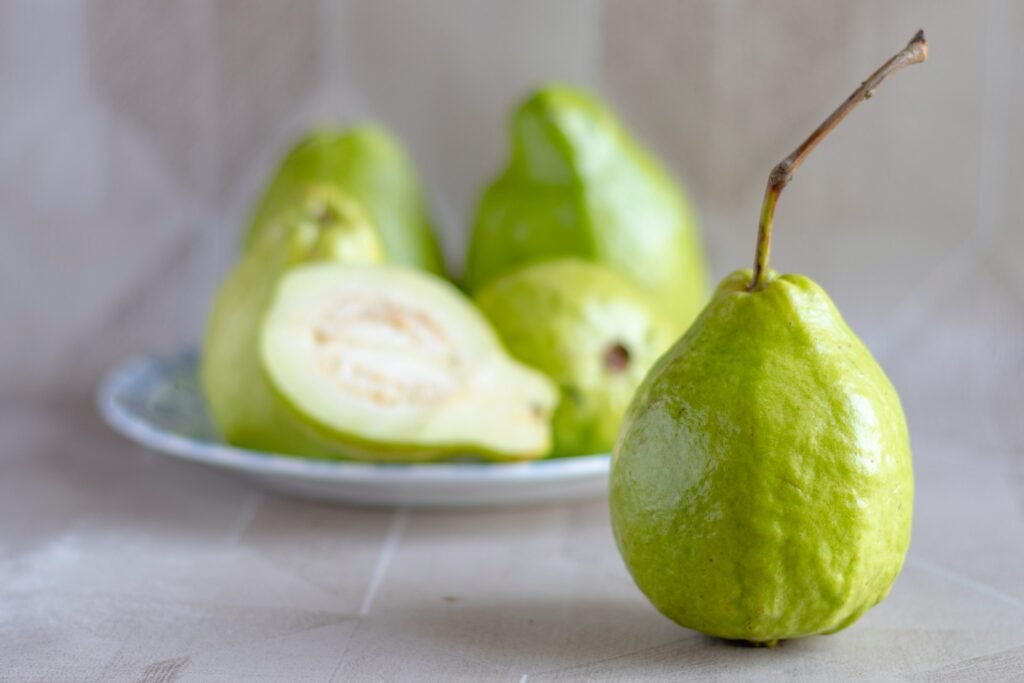
- Check the Scent: A ripe guava should be incredibly fragrant. If you cannot smell it, it is likely under-ripe.
- The Squeeze Test: It should yield slightly to gentle pressure, similar to a ripe avocado. If it is rock hard, it needs a few days on the counter.
- Skin Blemishes: Don’t worry about small blemishes on the skin; these often indicate the fruit is ripe and sweet.
Storage Advice:
Store unripe guavas at room temperature. Once ripe, move them to the fridge to extend their life by two or three days. You can also freeze guava pulp for smoothies. Healthline notes that processing or freezing fruit retains most nutrients, provided no sugar is added.
Frequently Asked Questions
Can I eat the seeds of a guava?
Yes, the seeds are edible. They are very hard, so chew carefully. They provide excellent roughage which aids digestion. However, if you have specific dental issues, you may prefer to scoop them out. The Mayo Clinic highlights that seeds and skins are often where the highest fibre concentration is found.
Is guava skin safe to eat?
Absolutely. The skin contains even more Vitamin C than the flesh. Just ensure you wash the fruit thoroughly under cold water to remove any potential residues.
Is guava good for diabetics?
Guava has a low Glycaemic Index (GI), making it a safer fruit choice for blood sugar management compared to watermelon or pineapple. However, portion control is still important. Cancer Research UK advises that maintaining a healthy weight through a balanced diet including low-GI fruits reduces health risks.
The Bottom Line
Incorporating healthy guava recipes into your diet is a delicious strategy for boosting nutrient intake without consuming excess calories.
With its high fibre content, exceptional Vitamin C levels, and versatility in both sweet and savoury dishes, guava is a true superfood. Whether you blend it, slice it into a salad, or poach it for dessert, you are making a positive choice for your body.
Remember that variety is the spice of life. Rotate guava with other fruits and vegetables to ensure you are getting a broad spectrum of minerals.
Always prioritise whole foods over processed alternatives. For further guidance on maintaining a balanced lifestyle, consult resources like the World Health Organization or your local GP.