
For many of us, the morning routine begins with a familiar, slightly blurry fumble towards the bedside table. Whether you are short-sighted, long-sighted, or managing astigmatism, the quest for perfect vision is a daily reality. The decision between wearing spectacles and inserting contact lenses is more than just a medical choice; it is a lifestyle decision that impacts your comfort, confidence, and daily convenience.
Corrective eyewear has evolved significantly over the last few decades. We are no longer limited to heavy glass lenses or uncomfortable hard contacts. Today, we have high-index plastic lenses, silicone hydrogel contacts, and a myriad of coatings and designs. Yet, the core dilemma remains: which option is superior? The answer is rarely black and white.
Prioritising your ocular health starts with a comprehensive check-up. According to the NHS, adults should aim for a routine eye test every two years, or more frequently if advised by an optometrist. Once your prescription is up to date, the choice between frames and lenses depends entirely on how you live your life, your budget, and your personal aesthetic.
Glasses: The Reliable Classic
Spectacles have stood the test of time for good reason. They offer a reliable, low-maintenance solution for vision correction that requires very little preparation. For many, glasses are also a pivotal fashion accessory, framing the face and adding character to one’s personal style.
The Benefits of Glasses
- Ease of Use: There is no need for sanitising hands or dealing with saline solutions. You simply put them on and go.
- Eye Protection: Glasses act as a physical barrier. They can protect your eyes from wind, dust, and debris, which is particularly beneficial if you live in a dry or windy climate.
- Cost-Effectiveness: Generally, glasses are cheaper over the long term. Once you purchase the frames and lenses, you do not incur the recurring monthly costs associated with disposable contacts.
- Reduced Infection Risk: Because you are not touching your actual eyeball, the risk of developing a sight-threatening infection is significantly lower compared to contact lens wear.
Potential Drawbacks
However, glasses are not without their limitations. They can sit heavily on the bridge of the nose or cause pressure behind the ears. Peripheral vision is often obstructed by the frames, and high-prescription lenses can distort the appearance of your eye size. Furthermore, environmental factors like rain or moving from a cold outdoor environment to a warm room can cause lenses to fog up, temporarily blinding you.
Contact Lenses: The Invisible Solution
Contact lenses sit directly on the surface of the eye (the cornea), moving with your gaze to provide a more natural field of view. For active individuals, they are often the preferred choice. While they require a stricter hygiene routine, the freedom they offer is unparalleled for many users.
The Benefits of Contact Lenses
- Full Field of Vision: Unlike glasses, contacts provide a full panoramic view without the obstruction of frames or the edge of a lens.
- Active Lifestyle Friendly: Contacts do not bounce when you run, nor do they steam up during intense exercise. They are compatible with protective sports gear, such as helmets or ski goggles.
- Aesthetic Freedom: They allow you to look like ‘you’. For those who feel their features are hidden by glasses, contacts offer a boost in confidence. You can also wear non-prescription sunglasses without needing clip-ons.
- Correction for Specific Issues: Specialised contacts can reshape the cornea (orthokeratology) or provide better correction for conditions like keratoconus than glasses ever could.
Experts at Healthline note that while contacts provide excellent vision correction, weighing the pros and cons of daily maintenance is crucial before switching.
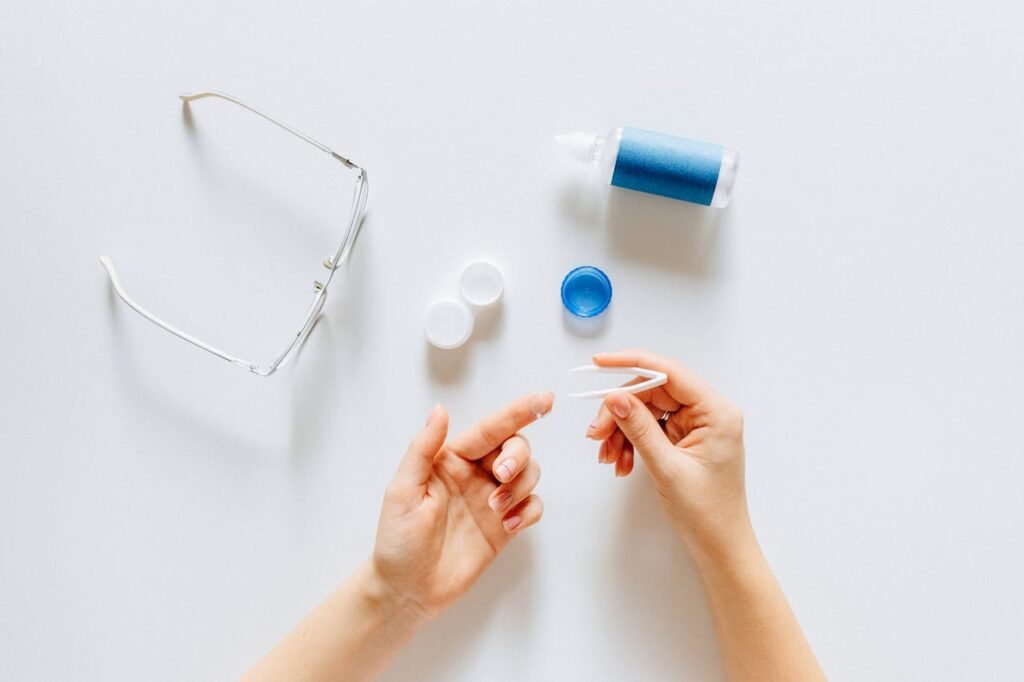
Analysing the Lifestyle Factors
To make an informed decision, you must audit your daily activities. Here is how different lifestyles align with each option.
1. The Digital Nomad and Office Worker
If you spend eight to ten hours a day staring at screens, you may suffer from Computer Vision Syndrome. Contact lenses can exacerbate symptoms of dryness because we tend to blink less frequently when looking at digital devices.
The Verdict: Glasses are often better here. Lenses with anti-reflective coatings can reduce glare. If you prefer contacts, you must adhere to the 20-20-20 rule and use lubricating drops. According to Patient.info, managing dry eye syndrome is essential for long-term comfort, often making glasses the superior choice for heavy screen users.
2. The Sportsperson and Athlete
Imagine playing rugby or football with glasses; it is a recipe for breakage and injury. Even in non-contact sports like running, glasses can slip down the nose.
The Verdict: Contact lenses reign supreme. They provide depth perception and peripheral awareness that glasses cannot match. However, swimmers must never wear contacts in the water due to bacteria. The National Eye Institute highlights that refractive errors should be corrected in a way that maximises safety during activity, which usually points toward contacts for land sports and prescription goggles for swimming.
3. The Hygiene Conscious
Contact lenses are medical devices. If they are not cleaned properly, or if you sleep in lenses not designed for it, you risk infections like Acanthamoeba keratitis, a painful and potentially blinding condition.
The Verdict: Glasses are safer. If you choose contacts, you must be disciplined. Moorfields Eye Hospital warns that poor lens hygiene is a leading cause of corneal infections, emphasising the need for strict hand washing and case replacement.
4. Drivers
Driving requires sharp distance vision and the ability to spot hazards in the periphery.
The Verdict: Both work well, but contacts eliminate the blind spots caused by thick frames. However, if your contacts dry out on long drives with the air conditioning on, vision can blur. It is a legal requirement to meet specific visual standards. GOV.UK states that you must wear your corrective eyewear every time you drive if it is needed to meet the standards of vision for driving.
Comparison: At a Glance
Use this table to quickly compare how each option stacks up against common criteria.
| Feature | Glasses | Contact Lenses |
|---|---|---|
| Field of Vision | Limited by frames; peripheral vision blur. | 100% natural field of view. |
| Maintenance | Low; wipe clean with a cloth. | High; requires daily cleaning (unless using dailies). |
| Cost | Lower long-term; one-off purchase. | Higher; recurring cost for lenses and solutions. |
| Comfort | Generally high; potential pressure on nose/ears. | High, but can cause dryness or irritation over time. |
| Aesthetics | Changes appearance; fashionable. | Invisible; natural look. |
| Safety | Very safe; protects eye from debris. | Risk of infection if hygiene is poor. |
| Weather Impact | Fogs up in rain/humidity. | Unaffected by weather. |
Frequently Asked Questions
Can I switch between glasses and contacts?
Absolutely. In fact, most optometrists recommend it. Giving your corneas a “breathing break” from contacts by wearing glasses in the evenings allows oxygen to reach the eye surface. The College of Optometrists suggests that having a backup pair of spectacles is essential, even for full-time contact lens wearers, to ensure eye health is maintained.
Are contact lenses safe for children?
Yes, age is rarely a barrier. Maturity and the ability to handle the lenses hygienically are the deciding factors. The Association of Optometrists notes that contact lenses can be brilliant for children, particularly for boosting self-esteem and for sports, provided there is parental supervision.
Do glasses provide better UV protection?
While some contact lenses include UV blockers, they only cover the cornea, leaving the white of the eye (sclera) and the delicate skin around the eyes exposed. Glasses, particularly sunglasses, offer broader coverage. The RNIB advises that protecting your eyes from UV light is vital to prevent cataracts and macular degeneration, so sunglasses should still be worn over contacts.
Is it difficult to put contacts in?
It is a learned skill. Most people struggle initially, blinking involuntarily as the finger approaches the eye. However, the brain quickly desensitises to this reflex. Within a week or two, it usually becomes second nature.
Does astigmatism rule out contact lenses?
Not anymore. Toric contact lenses are specifically designed to correct astigmatism. They are weighted at the bottom to prevent the lens from rotating, ensuring clear vision. According to research cited by Fight for Sight, advancements in lens technology mean that almost all refractive conditions can now be managed with either method.
The Bottom Line
There is no single “best” option for vision correction; there is only the best option for you at this moment in your life.
For many, the ideal solution is a hybrid approach: contact lenses for the gym, social events, and rainy days, and high-quality glasses for work, relaxing at home, and giving your eyes a rest. This dual strategy maximises the benefits of both worlds while minimising the risks of eye strain and infection.
Ultimately, the health of your eyes is paramount. Regardless of your choice, ensure you schedule regular visits with your optometrist to monitor your vision and ocular health.