Walking through the produce aisle of your local supermarket, you might have noticed that guava is becoming increasingly available. This tropical fruit, known for its distinct fragrance and sweet-tart flavour, is a nutritional powerhouse.
However, a common question arises when standing before the fruit display: which one should you choose? Guavas typically come in two main varieties—red (often pink) and white. While they may look similar on the outside, their internal composition tells a different story.
Choosing between them is not merely a matter of aesthetic preference. The difference in colour signifies a fundamental difference in their antioxidant profiles and specific health benefits. Whether you are looking to boost your immune system or improve your skin health, understanding these subtle differences is key.
In this article, we explore the science behind the red and white varieties, analysing their nutrient density, antioxidant capacity, and what that means for your daily diet.
What Sets Them Apart?
Before diving into the complex chemistry of antioxidants, it is helpful to understand the basic distinctions between these two varieties. The guava (Psidium guajava) is native to Central and South America but is now cultivated globally.
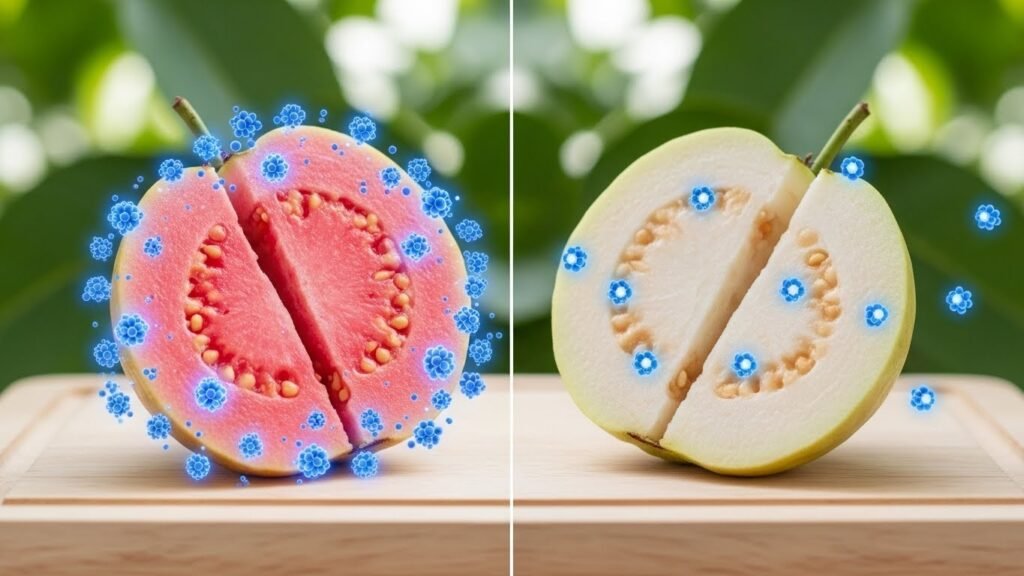
The primary difference lies in the flesh colour, which is dictated by the presence of specific pigments. These pigments are not just for show; they are bioactive compounds with potent health effects.
Red Guava:
- Appearance: The flesh ranges from a delicate pink to a deep salmon red.
- Flavour: Generally sweeter with a stronger, muskier fragrance.
- Texture: Often contains more moisture but can be slightly pulpier.
White Guava:
- Appearance: The flesh is creamy white or yellowish.
- Flavour: Tends to be slightly more acidic or tart, though some varieties are very sweet.
- Texture: Often firmer and sometimes crunchier, similar to a pear.
Both types are loaded with dietary fibre, vitamins, and minerals, making them an excellent addition to any diet. For a broad overview, you can read more about the health benefits of guava to understand why this fruit is classified as a superfood.
The Power of Red Guava: A Lycopene Heavyweight
The vibrant colour of red guava comes from a carotenoid pigment called lycopene. This is the same compound that gives tomatoes and watermelon their signature red hues. However, red guava is arguably one of the most concentrated sources of this powerful antioxidant.
Why Lycopene Matters
Lycopene is renowned for its ability to neutralise free radicals. Free radicals are unstable molecules that can cause cellular damage, leading to oxidative stress. Over time, this stress contributes to chronic diseases and ageing.
Research has consistently shown that lycopene is particularly effective in protecting cells from damage. Studies suggest a strong link between high lycopene intake and protection against cell damage, which may lower the risk of certain types of cancer.
Specific Benefits for Men
One of the most well-documented benefits of lycopene is its association with prostate health. Regular consumption of lycopene-rich foods has been linked to prostate health, potentially reducing the risk of prostate cancer.
Because red guava contains significantly more lycopene than white guava, it is the superior choice if your primary health goal involves combating oxidative stress or supporting prostate health.
The Strength of White Guava: The Vitamin C Champion
While red guava steals the spotlight for carotenoids, white guava is the undisputed king of Vitamin C (ascorbic acid). In fact, guavas are among the richest dietary sources of this vitamin, surpassing even oranges and kiwis.
Immune System Support
White guava typically contains higher concentrations of Vitamin C compared to its pink-fleshed cousin. Vitamin C is a water-soluble antioxidant that is crucial for a robust immune system. It stimulates the production of white blood cells, which are the body’s first line of defense against infection.
Considering the vital role of vitamin C in maintaining overall health, white guava is an excellent choice during cold and flu season. Just one fruit can provide double or triple your daily recommended intake.
Skin Health and Collagen
Beyond immunity, Vitamin C is essential for the synthesis of collagen. Collagen is the structural protein that maintains skin elasticity and firmness. High intake of Vitamin C can help:
- Reduce the appearance of wrinkles.
- Protect skin from UV damage.
- Accelerate wound healing.
If your focus is on skin vitality and immune defense, the white variety may offer a slight advantage due to its superior ascorbic acid levels.
Nutritional Comparison Breakdown
To help you visualise the differences, we have compiled a comparison of the key factors between the two varieties. While exact numbers vary by crop and region, these trends are consistent.
| Feature | Red / Pink Guava | White Guava |
|---|---|---|
| Primary Pigment | Lycopene (Carotenoid) | None (White/Yellowish flesh) |
| Dominant Antioxidant | Lycopene | Vitamin C (Ascorbic Acid) |
| Vitamin C Content | High | Very High (often superior) |
| Sugar Content | Generally Higher | Generally Lower |
| Polyphenol Content | High | Moderate to High |
| Best For | Anti-ageing, Prostate Health | Immunity, Skin Collagen |
Additional Health Benefits
Regardless of the colour, both varieties share impressive benefits regarding digestion and heart health. They are united by their high fibre and potassium content.
Blood Sugar and Digestion
Guava is exceptionally high in dietary fibre. Fibre is essential for keeping your digestive system moving and preventing constipation. Furthermore, fibre plays a critical role in managing blood sugar levels. It slows down the absorption of sugar into the bloodstream, preventing dangerous spikes in insulin.
This makes guava a diabetic-friendly fruit, provided it is eaten in moderation. The white variety, often being slightly less sweet, may have a marginally lower glycaemic impact, though both are considered low-to-medium GI foods.
Heart Health and Blood Pressure
Both red and white guavas are excellent sources of potassium. Potassium is an electrolyte that helps counteract the effects of sodium in the body, aiding in the regulation of blood pressure.
Organisations dedicated to maintaining heart health emphasise increasing potassium intake to reduce the risk of stroke and heart disease. Eating whole guava contributes significantly to this daily requirement.
Tips for Selecting and Eating Guava
To get the most out of your guava, selection and preparation are key. The antioxidants in guava, particularly Vitamin C, can be sensitive to heat and processing.
- Check for Ripeness: A ripe guava will yield slightly to thumb pressure, similar to an avocado. You should also be able to smell its floral aroma without holding it right up to your nose.
- Eat the Skin: The skin of the guava contains higher concentrations of Vitamin C and antioxidants than the flesh alone. Wash it thoroughly and eat it whole.
- Avoid Heating: Cooking guava can destroy a significant portion of its Vitamin C. It is best enjoyed raw.
- Pairing: To increase the absorption of iron from other foods, eat guava with leafy greens or nuts. The Vitamin C enhances non-heme iron absorption.
For those looking to incorporate more fruit into their diet, experts emphasise the importance of whole fruits over juices, as the fibre is preserved in the whole form.
Frequently Asked Questions
Which guava is better for weight loss?
Both are excellent for weight loss due to their high fibre and water content, which promotes satiety. However, white guava often has slightly less sugar, making it a preferable option for strict calorie counting. Increasing dietary fibre intake is a proven strategy for weight management.
Can I eat the seeds?
Yes, the seeds are edible. They are quite hard, so chew them carefully or swallow them whole. They act as roughage and aid in digestion.
How many guavas can I eat a day?
One or two medium-sized guavas are sufficient to meet your Vitamin C needs. Excessive consumption might lead to digestive discomfort due to the high fibre content.
Does guava help with inflammation?
Yes. The antioxidants in both varieties help reduce oxidative stress, which is a key driver of systemic inflammation in the body.
How should I store them?
Keep unripe guavas at room temperature. Once ripe, store them in the fridge and consume within two days. For creative recipe ideas on how to use up ripe fruit, consider adding them to salads or smoothies.
The Bottom Line
When choosing between red and white guava, there is no wrong answer. Both varieties are nutritionally dense and offer substantial health benefits.
If your goal is to maximise lycopene intake for prostate health or antioxidant protection against free radicals, the red guava is your best bet. If you are prioritising Vitamin C for immune defense and skin collagen production, the white guava holds the advantage.
Ultimately, the best approach is to enjoy a variety of fruits. Including both red and white guava in your diet ensures you receive a broad spectrum of protective compounds, keeping your body resilient and healthy.