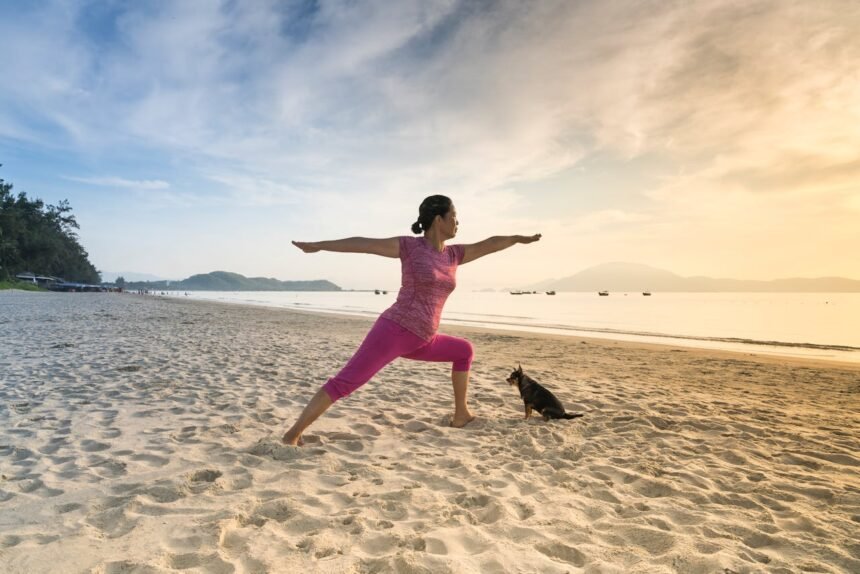
There is a profound tranquility found at the water’s edge just as the sun begins to crest over the horizon. The rhythmic crashing of waves, the cool touch of sand, and the saline breeze create a sensory experience that amplifies the benefits of a physical practice. Practicing sunrise beach yoga poses is not merely an aesthetic choice for social media; it is a holistic wellness strategy that combines the physiological benefits of asana with the psychological healing power of nature.
Engaging in yoga on the beach challenges your balance, strengthens stabilizer muscles, and aligns your circadian rhythm with the natural world. This comprehensive guide explores the most effective poses to perform at dawn, the science behind outdoor practice, and how to safely navigate the unique terrain of the shoreline.
The Science of Morning Movement: Why Hit the Beach?
Before diving into specific postures, it is essential to understand why taking your mat to the sand is scientifically beneficial. Practicing yoga in a “blue space” (environments with water) has been linked to lower stress levels and improved mental health.
Circadian Alignment and Vitamin D
Exposing your eyes to natural light early in the morning is the primary regulator of your circadian rhythm. According to the Sleep Foundation, morning sunlight signals the brain to suppress melatonin and increase cortisol production, promoting alertness. Furthermore, safe exposure to early morning sun facilitates the synthesis of Vitamin D, which is crucial for bone health and immune function as noted by the Mayo Clinic.
The “Grounding” Effect
Direct physical contact with the earth, often called “earthing” or grounding, suggests that connecting with the earth’s natural electric charge can stabilize physiology. While research is ongoing, a study published by the National Institutes of Health (NIH) indicates that grounding may reduce inflammation and improve sleep. Sand provides a malleable, conductive surface that enhances this connection more effectively than a rubber floor in a studio.
Preparing for Your Sunrise Session
Beach yoga requires different preparation than a studio class. The environment is uncontrollable, and the surface is uneven.
- Check the Tides: Always consult a tide chart from the National Oceanic and Atmospheric Administration (NOAA) to ensure plenty of hard-packed sand is available. Soft sand is significantly harder to balance on.
- Ditch the Mat (Optional): Many yogis prefer a large towel or a tapestry. Standard mats often bunch up on the sand. If you need padding, look for a specific outdoor yoga mat.
- Sun Protection: Even at dawn, UV rays can be damaging. Apply a broad-spectrum sunscreen as recommended by the Skin Cancer Foundation.
Top Sunrise Beach Yoga Poses for Stability and Energy
The following poses are selected for their ability to awaken the body, utilize the instability of sand for strengthening, and honor the rising sun.
1. Sun Salutation A (Surya Namaskar A)
There is no better way to greet the day than with the sequence named for the sun itself. On the beach, this flow warms the body quickly against the cool morning air.
- Execution: Begin in Mountain Pose. Inhale to raise arms, exhale to fold forward. Inhale to a flat back, step back to plank, lower through Chaturanga, inhale to Upward Dog, and exhale to Downward Dog.
- Beach Modification: In Chaturanga, you might find your hands sinking. Spread your fingers wide to distribute weight, or use fists if the wrist angle is too aggressive on soft sand.
2. Tree Pose (Vrikshasana)
Balancing on sand is significantly more difficult than on a hardwood floor. The shifting surface forces your feet and ankles to micro-adjust constantly, engaging the deep stabilizer muscles.
- Execution: Shift weight to your right foot. Place the sole of your left foot on your inner right thigh or calf (avoid the knee). Bring hands to the heart center.
- Focus: Fix your gaze (Drishti) on the horizon line where the ocean meets the sky. This steady line helps maintain equilibrium.
- Benefit: According to ACE Fitness, unstable surface training improves proprioception and joint stability.
3. Warrior II (Virabhadrasana II)
This powerful standing pose builds heat in the legs and opens the hips. The expansive nature of the pose mirrors the vastness of the ocean.
- Execution: Step feet wide. Turn the right foot out 90 degrees. Bend the right knee over the ankle. Extend arms parallel to the sand.
- The Sand Factor: You can dig your feet slightly into the sand for added traction, allowing you to lunge deeper than you might in a studio.
4. Triangle Pose (Trikonasana)
Triangle pose provides a deep stretch to the hamstrings and side body, which are often stiff after a night of sleep.
- Execution: From a wide stance, straighten the front leg. Reach forward and hinge at the hip, bringing the hand to the shin or the sand.
- Why it works: The uneven sand challenges your core to keep you upright, preventing you from dumping weight into the bottom hand. See guidance from Yoga Journal for precise alignment cues.
5. Camel Pose (Ustrasana)
Sunrise is a time for opening the heart to new possibilities. Camel pose is a deep backbend that counters the hunching posture often adopted during sleep.
- Execution: Kneel on the sand (or a towel for cushioning). Place hands on the lower back. Arch backward, lifting the chest toward the sky. If accessible, reach for your heels.
- Precaution: Ensure the sand is level to protect your knees.
6. Boat Pose (Navasana)
Engage the core while listening to the boats on the water. This pose generates internal heat.
- Execution: Sit on the sand. Lift legs to a 45-degree angle. Extend arms forward. Balance on the sit bones.
- Beach Benefit: If you fall out of this pose, you land on soft sand rather than a hard floor, encouraging you to push your limits.
7. Corpse Pose (Savasana)
While often a closing pose, Savasana takes on a new dimension at the beach. It becomes a meditation on sound and sensation.
- Execution: Lie flat on your back. Let arms and legs splay open.
- Sensory Focus: Close your eyes. Listen to the waves. Feel the warmth of the rising sun on your skin. This practice of mindfulness is supported by Harvard Health as a key method for reducing anxiety.

Comparison: Studio Yoga vs. Beach Yoga
Understanding the differences between studio practice and beach practice helps manage expectations and prevent injury. The table below outlines key distinctions.
| Feature | Studio Yoga | Sunrise Beach Yoga |
|---|---|---|
| Surface Stability | High (Hardwood/Rubber) | Low (Shifting Sand) |
| Muscular Engagement | Focus on major muscle groups | Increased engagement of secondary stabilizers |
| Sensory Input | Controlled (Music, Dim lighting) | Dynamic (Wind, Waves, Sunlight) |
| Joint Impact | Higher impact on joints | Lower impact (Sand absorbs shock) |
| Temperature | Climate Controlled | Variable (Humidity, Breeze) |
| Proprioception | Standard challenge | High challenge due to uneven terrain |
Addressing the Challenges of Sand Yoga
While sunrise beach yoga poses offer immense benefits, the environment presents specific challenges that require adaptation.
Wrist Pressure
Soft sand can cause the heels of the hands to sink lower than the fingers, creating an acute angle in the wrist during plank or downward dog. To mitigate this, create small mounds of sand under the palms to level the surface, or practice on your forearms (Dolphin Pose) to bypass the wrists entirely. Healthline suggests modifications are essential for preventing repetitive strain injuries.
The Wind Factor
Ocean breezes can be cooling, but they can also throw off balance. In poses like Half Moon or Tree, widen your base of support. If the wind is strong, keep your center of gravity lower to the ground.
Distractions
Public beaches are shared spaces. You may encounter dogs, runners, or seagulls. Instead of viewing these as distractions, integrate them into your practice as exercises in Pratyahara (withdrawal of the senses) or simply accept them as part of the present moment.
Mental Health and the “Blue Mind”
The concept of “Blue Mind,” popularized by marine biologist Wallace J. Nichols, refers to the meditative state the brain enters when we are near, in, under, or on water. Combining yoga with this proximity to the ocean amplifies the mental health benefits.
The American Psychological Association highlights that time spent in nature correlates with reduced anger, fear, and stress. The rhythmic sound of waves specifically alters wave patterns in the brain, inducing a state of deep relaxation. When you perform sunrise beach yoga poses, you are stacking the benefits of exercise, mindfulness, and nature therapy.
Frequently Asked Questions (FAQ)
1. What is the best time for sunrise beach yoga?
Ideally, arrive 15 to 20 minutes before the actual sunrise. This allows you to set up your space, meditate during the “blue hour” (twilight), and begin your movement as the sun breaks the horizon. You can check local sunrise times via Time and Date.
2. Do I really need a yoga mat on the sand?
Generally, no. A standard yoga mat will conform to the uneven sand, creating lumps that make balancing difficult. Furthermore, sand sticks to the mat and can be difficult to clean. A large beach towel or a Mexican blanket is usually superior, as it moves with the sand and is easily shaken out.
3. Is beach yoga safe for beginners?
Yes, but with modifications. The instability of the sand makes balance poses harder. Beginners should focus on standing poses with a wide base (like Warrior II) and seated stretches. Avoid complex inversions (like headstands) until you are accustomed to the shifting surface.
4. How does sand affect joint health during yoga?
Sand acts as a shock absorber, which is generally easier on the joints (knees and hips) during high-impact movements. However, the unevenness can strain ankles if they are weak. Move slowly and mindfully to protect your ligaments.
5. What should I wear for beach yoga?
Wear layers. Mornings by the ocean can be surprisingly chilly before the sun rises fully. Wear fitted clothing that won’t flap in the wind or expose you during inversions. Sunglasses and a hat are also helpful once the sun is up.
Conclusion
Starting your day with sunrise beach yoga poses is a transformative practice that goes beyond physical exercise. It is an immersion in the elements, a challenge to your stability, and a profound way to center your mind before the demands of the day take over. By swapping the studio floor for the shoreline, you engage your stabilizer muscles, soak in vital Vitamin D, and tap into the calming power of the ocean.
Whether you are a seasoned yogi or a curious beginner, the beach offers a forgiving yet challenging environment to deepen your practice. So, check the tides, grab a towel, and set your alarm—the horizon is waiting.
Disclaimer: Always consult with a physician before starting a new exercise program. If you have specific injuries, seek advice from a physical therapist or certified yoga instructor regarding modifications.