Introducing solid foods to your baby is an exciting milestone, but it often comes with a bundle of questions and anxieties. You may find yourself standing in the produce aisle, holding a fuzzy, brown kiwi and wondering if it is safe for your little one.
Parents naturally want to offer the most nutritious options available. We know that establishing healthy eating habits early on is crucial for long-term development. However, navigating the conflicting advice regarding textures, acidity, and potential allergens can be overwhelming.
Kiwi, with its vibrant green flesh and speckled black seeds, is a nutritional powerhouse. Yet, its unique texture and tart flavour profile often leave caregivers unsure about when and how to serve it. Is it a choking hazard? Will the acidity cause a rash?
Fortunately, for most babies, kiwi is a fantastic addition to their weaning diet. It is packed with essential vitamins and offers a wonderful sensory experience for new eaters.
In this article, we will explore the safety profile of kiwi for infants, breakdown the nutritional benefits, and provide actionable tips on how to prepare it safely.
Overview: When Can Babies Eat Kiwi?
According to the NHS, most babies are ready to start solid foods at around 6 months of age. By this time, they should be able to hold their head steady and swallow food rather than spitting it back out.
Kiwi can generally be introduced as soon as your baby is ready for solids. There is no need to wait until a later age, provided the fruit is prepared appropriately to minimise choking risks.
In the past, parents were often advised to delay introducing potentially allergenic or acidic foods. However, current research suggests that delaying introduction does not necessarily prevent allergies. In fact, offering a wide variety of tastes and textures early on is encouraged by health organisations like the World Health Organization (WHO).
Because kiwis are soft when ripe, they are an excellent candidate for both traditional spoon-feeding (purees) and baby-led weaning (BLW). Their high water content also helps keep babies hydrated as they navigate the transition from exclusive milk feeding to complex solids.
If you are ever unsure about your baby’s readiness for solids, it is always best to consult with your health visitor or GP.
Nutritional Breakdown and Health Benefits
Kiwi fruit is often categorised as a ‘superfood’ due to its dense nutrient profile. For a growing baby, these nutrients are vital for physical development and immune system support.
1. Rich Source of Vitamin C
One of the most significant benefits of kiwi is its exceptionally high Vitamin C content. Vitamin C is essential for boosting your baby’s immune system, helping them fight off common colds and infections.
Furthermore, Vitamin C plays a critical role in iron absorption. Babies are born with iron stores that begin to deplete around the 6-month mark. Offering Vitamin C-rich foods alongside iron-rich foods (like fortified cereals, lentils, or meats) helps their bodies absorb iron more efficiently. This synergy is explained in detail by the British Nutrition Foundation.
2. High in Dietary Fibre
Constipation is a common issue when babies first start solids. Their digestive systems are learning to process new foods, which can sometimes lead to firmer stools.
Kiwis contain both soluble and insoluble fibre. This fibre adds bulk to the stool and retains water, making bowel movements softer and easier to pass. Many parents swear by kiwi as a natural remedy for mild constipation in infants.
3. Essential Antioxidants
Beyond vitamins, kiwis are loaded with antioxidants like choline, lutein, and zeaxanthin. These compounds help protect cells from damage and support the development of healthy vision and brain function.
Unlike some processed snacks, whole fruits like kiwi provide these benefits without added sugars or salt, aligning with the NHS Start for Life guidelines for healthy weaning.
Safety, Allergies, and Risks
While kiwi is generally safe, there are specific considerations parents must keep in mind regarding allergies and texture safety.
Is Kiwi a Common Allergen?
Kiwi is not considered one of the “top 9” common food allergens (which include milk, eggs, nuts, etc.). However, kiwi allergies do exist and are becoming slightly more recognised.
Symptoms of a food allergy can range from mild to severe. Watch for:
- Hives or red skin rashes
- Swelling of the lips, face, or tongue
- Vomiting or diarrhoea
- Wheezing or difficulty breathing
If you suspect a severe reaction, seek emergency medical attention immediately. For detailed information on identifying reactions, resources like Anaphylaxis UK provide excellent guidance.
Oral Allergy Syndrome
Some babies may experience a condition known as Oral Allergy Syndrome (OAS). This occurs when the proteins in raw fruit resemble proteins found in pollen (specifically birch pollen for kiwi).
This can cause mild itching or tingling in the mouth or throat. Cooking the fruit often breaks down these proteins, making it safe to eat, though most babies consume kiwi raw. If you notice your baby rubbing their mouth or appearing uncomfortable while eating kiwi, stop serving it and consult a paediatrician.
Acidity and Nappy Rash
Kiwis are naturally acidic. While this is not an allergic reaction, the acid can sometimes cause a contact rash around the baby’s mouth or contribute to a nappy rash.
To minimise this:
- Apply a thin layer of barrier ointment (like petroleum jelly) around the mouth before feeding.
- Mix kiwi with lower-acid foods like banana, yoghurt, or avocado.
- Wipe the baby’s face gently with a damp cloth immediately after eating.
Choking Hazards
While ripe kiwi is soft, it can still pose a choking risk if served in large, hard chunks. The skin is also difficult for babies to chew and should be removed initially.
Always ensure the fruit is ripe—it should yield to gentle thumb pressure. Unripe kiwi is hard and poses a significant choking danger. For comprehensive advice on choking hazards, you can refer to safety guides from Great Ormond Street Hospital.

Diagnosis and Treatment of Reactions
If your baby displays symptoms of an allergic reaction, diagnosis typically involves a visit to an allergist. They may perform skin prick tests or blood tests.
Treatment for mild reactions usually involves an antihistamine prescribed by a doctor. However, strict avoidance is the primary management strategy until a professional deems it safe to reintroduce.
According to Allergy UK, keeping a food diary can be incredibly helpful in pinpointing the specific cause of a reaction, especially during the early stages of weaning when many new foods are introduced in quick succession.
Tips for Management and Preparation
Preparing kiwi safely depends on your baby’s age and chewing ability. Here is how to serve it at different stages.
6 to 9 Months
At this stage, babies use a palmar grasp (raking food with their whole hand). Large pieces are actually safer than small ones here.
- Puree: Peel and blend ripe kiwi until smooth. You may need to strain the seeds if your baby is sensitive to textures, though the seeds are generally safe and edible.
- BLW Spears: Cut the peeled fruit into large, thick wedges or quarters (about the length of an adult finger). This allows the baby to hold the fruit and gnaw on it.
- Texture: Ensure the fruit is very soft. If it is too hard, you can steam it briefly, though this reduces Vitamin C content.
9 to 12 Months
As babies develop their pincer grasp (using thumb and forefinger), you can move to smaller pieces.
- Bite-Sized Pieces: Cut peeled kiwi into small, flattened cubes. Avoid round shapes like grapes or cherry tomatoes unless they are quartered.
- Mashed: Coarsely mash the kiwi with a fork and stir it into porridge or natural yoghurt for a breakfast boost.
The “Skin” Question
The skin of the kiwi is technically edible and packed with fibre. However, the fuzzy texture is unpalatable for most infants and can be a choking hazard or cause gagging. It is best to peel the fruit until your child is a toddler and can chew more effectively.
Storage and Selection
- Selection: Choose kiwis that are firm but give slightly when squeezed.
- Ripening: If they are rock hard, place them in a paper bag with a banana for a day or two to speed up ripening.
- Storage: Ripe kiwis should be stored in the fridge to keep them fresh.
| Nutrient (per 100g) | Amount | Benefit for Baby |
|---|---|---|
| Vitamin C | ~92 mg | Supports immunity and iron absorption |
| Fibre | ~3 g | Aids digestion and prevents constipation |
| Potassium | ~312 mg | Supports heart and muscle function |
| Folate | ~25 µg | Crucial for cell growth |
| Sugar | ~9 g | Natural energy source |
Data approximated from standard nutritional databases.
Frequently Asked Questions
Can babies eat the seeds in kiwi?
Yes, the tiny black seeds in kiwi are edible and generally pass through the digestive system without issue. They do not pose a choking risk like watermelon or apple seeds. You may see them appear unchanged in your baby’s nappy—this is perfectly normal.
Is Gold kiwi better than Green kiwi for babies?
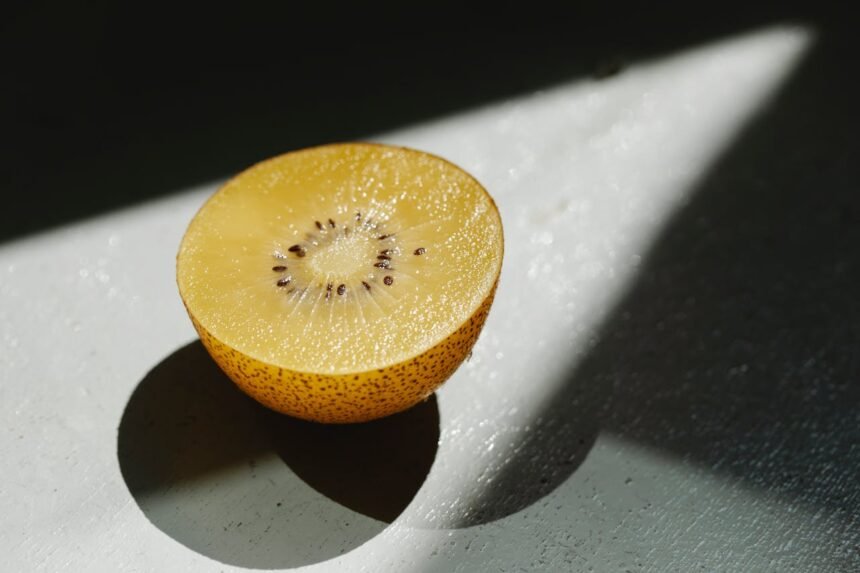
Gold (or yellow) kiwis are often sweeter and less acidic than the green variety. They also have smoother skin with less fuzz. Because they are less tart, some babies prefer the taste of gold kiwi. Both varieties are highly nutritious, though Healthline notes that gold kiwis can be even higher in Vitamin C than green ones.
Why did my baby’s poop change after eating kiwi?
Kiwi is high in fibre and natural sugars. It is common to see looser stools or a change in colour (often greener) after consumption. Unless there is diarrhoea or signs of illness, this is just the digestive system doing its job.
Can I mix kiwi with formula or breast milk?
Yes, you can mix kiwi puree with milk. However, be aware that an enzyme in kiwi called actinidin can break down milk proteins, causing the mixture to turn bitter or curdle if left to sit. It is best to mix and serve immediately.
The Bottom Line
Kiwi is a safe, nutritious, and delicious fruit for babies starting solids. Its high Vitamin C content makes it an excellent companion for iron-rich foods, and its soft texture is suitable for both spoon-feeding and baby-led weaning.
While acidic reactions like mild rashes can occur, true allergies are less common. By peeling the fruit, ensuring it is ripe, and cutting it into age-appropriate shapes, you can safely include this tropical fruit in your baby’s diet.
Remember to introduce new foods one at a time, waiting 3 to 5 days before introducing another. This helps you identify any potential sensitivities. For further guidance on building a balanced diet for your little one, the NHS Better Health website offers a wealth of resources.
Enjoy exploring these new flavours with your baby—it is a messy but magical time!