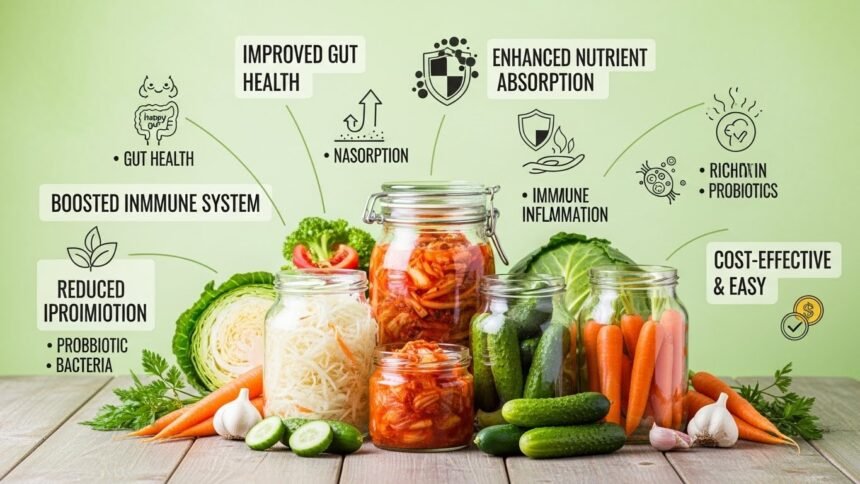
If you have walked down the aisles of your local supermarket recently, you have likely noticed a surge in jars filled with colourful, tangy vegetables. From spicy kimchi to traditional sauerkraut, fermented foods are enjoying a massive resurgence in the UK.
However, making these foods at home can feel a bit intimidating at first. You might worry about food safety, special equipment, or simply getting the flavour right. This hesitation is completely normal. The idea of leaving food on the counter for weeks goes against everything we are usually taught about kitchen hygiene.
Yet, learning to ferment vegetables at home is one of the most empowering steps you can take for your health. It connects you to an ancient preservation method that humans have relied upon for thousands of years. More importantly, it provides a potent, natural way to support your body from the inside out.
By taking control of the process, you ensure that your food is alive, active, and free from unnecessary preservatives. This guide will walk you through the science, the profound health benefits, and the simple steps to get started, ensuring you feel confident in your journey towards better gut health.
What Is Lacto-Fermentation?
To understand the benefits, we must first understand the process. The specific type of fermentation used for vegetables is called lacto-fermentation.
This does not mean the food contains dairy or lactose. Instead, it refers to a specific group of beneficial bacteria known as Lactobacillus. These bacteria are present on the surface of almost all plants, including the cabbage, carrots, or cucumbers you buy at the greengrocer.
The Science Simplified
When you submerge vegetables in a salty brine (saltwater) and exclude oxygen, you create a specific environment. Harmful bacteria that require oxygen to survive—such as moulds—cannot thrive in this salty, anaerobic setting. However, the salt-tolerant Lactobacillus flourishes.
These good bacteria begin to feast on the natural sugars and starches present in the vegetables. As they consume these sugars, they convert them into lactic acid. This acid is a natural preservative that inhibits the growth of harmful bacteria. It is also responsible for that distinctive, tart, and savoury flavour we associate with pickles and sauerkraut.
More Than Just Preservation
Historically, this method was used solely to keep food edible during the long winter months when fresh produce was scarce. Today, we know that this process does far more than just preserve calories. It transforms the nutritional profile of the ingredients, essentially pre-digesting the food and creating new compounds that our bodies desperately need.
According to the experts at Healthline, this transformation makes fermented foods a unique dietary component that bridges the gap between raw nutrition and enhanced bioavailability.
5 Key Health Benefits of Fermented Vegetables
Adding a small portion of home-fermented vegetables to your daily diet can have a cumulative, positive effect on your overall wellbeing. Here is a detailed breakdown of the evidence-based benefits.
1. Enhanced Gut Microbiome Diversity
Your gut is home to trillions of microorganisms, collectively known as the microbiome. Modern diets, often high in processed foods and sugar, can reduce the diversity of these microbes.
Fermented vegetables are rich in probiotics—live, beneficial bacteria. Consuming them acts like a reinforcement team for your gut. A diverse microbiome is linked to better digestion, weight management, and reduced inflammation. High-quality sources like the NHS note that probiotics may help restore the natural balance of bacteria in your gut, especially after a course of antibiotics.
2. Improved Nutrient Bioavailability
Eating a raw vegetable does not guarantee you will absorb all its nutrients. Some compounds are locked away behind tough cell walls or bound by “anti-nutrients” like phytates, which can block mineral absorption.
Fermentation breaks these walls down. For example, the fermentation of cabbage increases the bioavailability of Vitamin C and various antioxidants. This means your body has to do less work to extract the vitamins it needs to function optimally.
3. Immune System Support
It is often said that the gut is the centre of the immune system. In fact, a significant portion of your immune cells reside in the digestive tract. By keeping the gut lining robust and the bacterial population balanced, you are directly supporting your immune defences.
Regular consumption of fermented foods creates an environment that makes it difficult for pathogens to take hold. Research highlighted by Harvard Health suggests that a healthy microbiome helps regulate immune responses, potentially reducing the severity of common infections.
4. Production of New Nutrients
Amazingly, the bacteria involved in fermentation can create vitamins that were not originally present in the vegetable—or were present in very low amounts.
A prime example is Vitamin K2. While Vitamin K1 is found in leafy greens, K2 is synthesised by bacteria. Vitamin K2 plays a crucial role in bone health and heart health by directing calcium to the bones rather than the arteries. Studies cited by Medical News Today indicate that fermented foods are among the best dietary sources of this elusive nutrient.
5. The Gut-Brain Connection
There is a physical and chemical link between your gut and your brain, often called the “gut-brain axis.” The gut produces many of the same neurotransmitters found in the brain, including serotonin.
Emerging research suggests that a healthy gut microbiome can influence mood and mental health. While more research is needed to fully understand the mechanisms, maintaining a healthy gut flora is increasingly seen as a pillar of mental wellbeing. The BBC reports on fascinating studies connecting microbiome diversity to reduced symptoms of anxiety and depression.
Actionable Steps: How to Ferment at Home
Starting is easier than you think. You do not need expensive crocks or airlocks to begin, though they can help. A simple glass jar and some patience are the primary requirements.
The Golden Ratio
Success relies on the salt-to-water ratio. For most vegetables, a 2% to 3% brine is standard. This means for every 100 grams of vegetables and water, you need about 2 to 3 grams of salt.
Step-by-Step Guide
- Prepare Your Veg: Wash your vegetables. For sauerkraut, shred the cabbage finely. For carrots or cucumbers, cut them into spears or chunks.
- Add Salt: If shredding (like cabbage), massage the salt directly into the vegetable until it releases its own liquid. If keeping whole, dissolve salt in water to create a brine.
- Pack the Jar: Stuff the vegetables tightly into a clean jar. Pour the liquid over them. Crucial Step: The vegetables must be completely submerged under the liquid to prevent mould. You can use a glass weight or a cabbage leaf to hold them down.
- Wait: Cover the jar with a loose lid or a cloth secured with a rubber band. Leave it at room temperature (18–22°C is ideal) for 3 to 14 days.
- Taste and Store: Taste it daily after day three. Once it tastes sour enough for your liking, seal the lid tight and move it to the fridge. The cold slows the fermentation down significantly.
For a detailed walkthrough on safety, the Food Standards Agency provides excellent guidelines on hygiene to prevent contamination.
Tips for Success
- Use Non-Iodised Salt: Iodine can inhibit beneficial bacteria. Sea salt or pickling salt is best.
- Use Filtered Water: Chlorine in tap water can kill the microbes. Boil and cool your water, or use a filter.
- Trust Your Nose: Fermented foods should smell sour and tangy, not foul or rotting.
Comparison: Raw vs. Fermented vs. Pickled
It is important to distinguish between fermentation and vinegar pickling, as they offer different benefits. Here is a quick comparison.
| Feature | Raw Vegetables | Fermented Vegetables | Vinegar Pickled Vegetables |
|---|---|---|---|
| Preservation Method | Refrigeration (short term) | Lactic Acid (Bacteria) | Acetic Acid (Vinegar) |
| Probiotic Content | None | High (Live Cultures) | None (Usually pasteurised) |
| Digestibility | Moderate (High fibre) | High (Pre-digested) | Moderate |
| Vitamin Availability | High (but locked in cells) | Enhanced (Bioavailable) | Moderate (Heat may reduce) |
| Taste Profile | Fresh, Earthy | Sour, Complex, Umami | Sharp, Acidic, Sweet |
Frequently Asked Questions
Is it safe to eat fermented vegetables every day?
Yes, for most people. However, because they are high in fibre and probiotics, it is best to start with a small amount (one tablespoon) to let your digestive system adjust. Also, be mindful of the salt content if you have high blood pressure. The British Heart Foundation advises monitoring sodium intake, so treat pickles as a condiment, not a main course.
What is the white film on top of my ferment?
This is often “Kahm yeast.” It is generally harmless but can affect the flavour. Simply skim it off. However, if you see fuzzy blue, green, or black spots, that is mould. In that case, discard the entire batch to be safe.
Can I use less salt?
Salt is the safety barrier against harmful bacteria. Reducing it too much increases the risk of spoilage. Stick to tested recipes. If you are concerned about sodium, rinse the vegetables before eating, though this will wash away some beneficial bacteria.
How long do they last?
Once moved to the fridge, fermented vegetables can last for months. The flavour will continue to develop slowly over time. We recommend checking BBC Good Food for specific storage times for different recipes.
The Bottom Line
Fermenting vegetables at home is a rewarding intersection of culinary art and nutritional science. It offers a practical way to boost your intake of probiotics, vitamins, and fibre without relying on expensive supplements.
While the process requires patience, the result is a delicious, gut-friendly food that supports your immune system and digestive health. Start with a simple jar of sauerkraut or carrots. By integrating these foods into your diet, you are not just preserving the harvest; you are actively investing in your long-term health.
Ready to get started? Check out this guide on The Guardian for inspiration on your first batch.