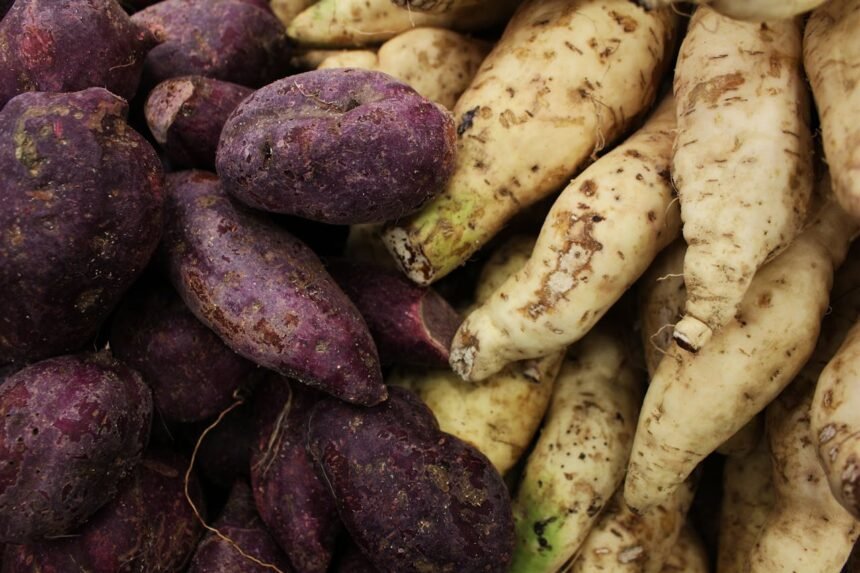
If you have wandered through the produce aisle recently, you may have noticed a vibrant newcomer nestled amongst the traditional orange tubers. The purple sweet potato is catching the eye of health enthusiasts and culinary experts alike, and for good reason. While the classic orange sweet potato is celebrated for its beta-carotene content, its purple cousin offers a unique nutritional profile that distinguishes it as a genuine superfood.
Rich in fibre, essential vitamins, and a specific class of potent antioxidants, these tubers are more than just a colourful addition to your plate. They are a dietary powerhouse linked to longevity and disease prevention. This article reviews the nutritional breakdown, health benefits, and culinary potential of the purple sweet potato.
Overview: What Is a Purple Sweet Potato?
Purple sweet potatoes are root vegetables belonging to the Ipomoea batatas species, the same family as the orange sweet potato.
However, unlike the orange variety, the purple sweet potato gets its distinctive vivid hue from anthocyanins. These are the same water-soluble pigments found in blueberries, blackberries, and red cabbage.
It is important not to confuse them with taro or ube (purple yam). While ube is popular in desserts and has a similar colour, it is a yam with a thicker bark-like skin and a stickier texture.
There are two main varieties of purple sweet potato you are likely to encounter:
- Okinawan Sweet Potato: Often called the Hawaiian sweet potato, it has beige skin but reveals a deep lavender flesh when cut. It is a staple in the diet of Okinawans, who are renowned for having some of the longest life expectancies in the world.
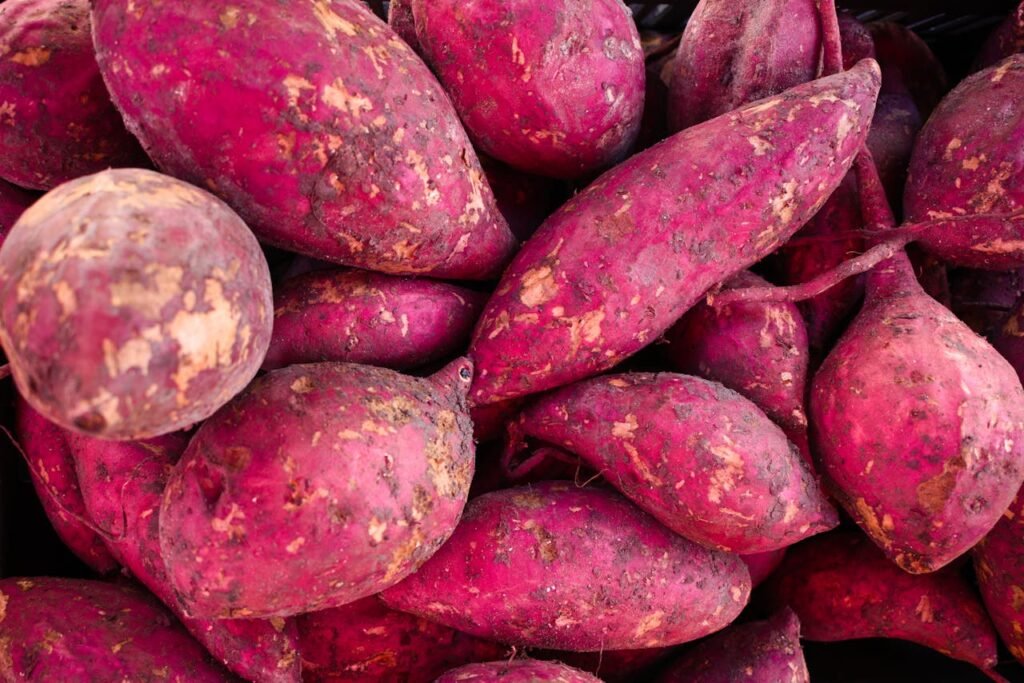
- Stokes Purple®: This variety has purple-tinted skin and intense violet flesh that deepens when cooked. It tends to be denser and slightly less sweet than the Okinawan variety.
Regardless of the specific cultivar, the nutritional density of these tubers makes them an excellent carbohydrate source for most diets.
Nutritional Profile
Purple sweet potatoes are nutrient-dense, providing a wealth of vitamins and minerals for relatively few calories.
They are naturally low in fat and contain complex carbohydrates that provide sustained energy without the sharp blood sugar spikes associated with refined carbs.
A medium-sized baked purple sweet potato (approximately 150 grams) generally provides:
| Nutrient | Amount | % Daily Value (DV) |
|---|---|---|
| Calories | 150 | – |
| Carbohydrates | 35 g | – |
| Fibre | 4.5 g | 18% |
| Protein | 2.5 g | – |
| Fat | 0.2 g | – |
| Vitamin A | – | >100% |
| Vitamin C | – | 25% |
| Potassium | – | 15% |
| Vitamin B6 | – | 15% |
Note: Values may vary slightly depending on the soil quality and specific variety.
The defining feature, however, is the antioxidant load. Studies indicate that the anthocyanin content in purple sweet potatoes is significantly higher than that of other root vegetables, rivalling even super-fruits like blueberries.
Healthline provides a comprehensive comparison of sweet potato varieties, highlighting that while orange ones lead in beta-carotene, purple ones lead in total antioxidant capacity.
The Power of Anthocyanins
The primary reason dietitians recommend the purple sweet potato is its high concentration of anthocyanins.
Anthocyanins are flavonoids that possess strong antioxidant effects. In the body, antioxidants work to neutralise harmful molecules called free radicals.
When free radicals accumulate, they cause oxidative stress, which damages cellular structures, proteins, and DNA. Over time, chronic oxidative stress is a key driver of inflammation, ageing, and chronic diseases such as cancer and heart disease.
Research published by the National Center for Biotechnology Information highlights that anthocyanins from purple sweet potatoes exhibit higher antioxidant activity than those from many other vegetable sources.
Health Benefits
Adding this vibrant tuber to your diet may offer specific health advantages backed by scientific inquiry.
1. Supports Heart Health and Blood Pressure
Cardiovascular disease remains a leading cause of illness globally. The purple sweet potato addresses heart health through two mechanisms: potassium content and antioxidant protection.
Potassium is essential for regulating blood pressure. It helps the body excrete excess sodium and relaxes the walls of blood vessels.
According to the British Heart Foundation, increasing dietary potassium is a primary strategy for managing hypertension.
Furthermore, the anthocyanins in these potatoes may help prevent the oxidation of LDL (bad) cholesterol. Oxidised LDL is more likely to clump on artery walls, leading to atherosclerosis (hardening of the arteries).
2. Aids Blood Sugar Regulation
Despite being a carbohydrate, purple sweet potatoes generally have a lower Glycaemic Index (GI) than standard white potatoes.
The GI measures how quickly a food raises blood sugar. Foods with a lower GI release glucose more slowly into the bloodstream.
This effect is largely due to the high content of polyphenols, which may slow down the absorption of starches in the gut.
For individuals managing Type 2 diabetes, choosing complex carbohydrates like purple sweet potatoes over refined grains is crucial. Diabetes UK emphasises the importance of GI awareness in managing post-meal glucose levels.
3. Promotes Gut Health
Purple sweet potatoes contain two types of fibre: soluble and insoluble. Both are vital for a healthy digestive system.
Additionally, they are a rich source of resistant starch. Resistant starch functions much like soluble fibre; it escapes digestion in the stomach and small intestine, reaching the colon intact.
Once in the colon, beneficial gut bacteria ferment this starch, producing Short-Chain Fatty Acids (SCFAs) like butyrate.
Butyrate helps fuel the cells lining your gut and keeps the intestinal barrier strong. A healthy gut microbiome is linked to improved immunity and even mental health. Research on gut microbiota suggests that prebiotic foods are essential for maintaining this bacterial balance.
4. May Support Eye Health
While orange sweet potatoes are famous for eye health due to beta-carotene, purple sweet potatoes also contribute significantly to vision protection.
Studies suggest that anthocyanins can protect retinal cells from damage caused by oxidative stress.
This is particularly relevant for age-related eye conditions. Research found in PubMed indicates a positive correlation between anthocyanin intake and the reduction of visual fatigue and protection against retinal degeneration.
5. Potential Anti-Cancer Properties
It is vital to approach cancer nutrition with caution and rely on evidence. No single food cures cancer.
However, laboratory and animal studies suggest that the specific anthocyanins in purple sweet potatoes may inhibit the growth of certain cancer cells, including those of the colon, bladder, and breast.
A study in Scientific Reports observed that purple sweet potato extracts slowed the growth of colorectal cancer cells in test-tube environments.
While human trials are needed to confirm these effects fully, a diet rich in these antioxidants is widely considered a prudent preventative measure.
Practical Tips: Cooking and Preparation
To maximise the health benefits of purple sweet potatoes, how you prepare them matters.
Boiling vs. Roasting vs. Frying
While frying is delicious, it can degrade anthocyanins and add unnecessary fats.
Steaming or boiling tends to preserve the most antioxidants. However, baking or roasting enhances the natural sweetness and improves the texture, making the vegetable more palatable for many.
Here are some practical ways to include them in your diet:
- Mash: Boil chunks of peeled purple sweet potato until tender. Mash with a splash of milk (or coconut milk) and a pinch of cinnamon for a visually stunning side dish.
- Roasted Wedges: Slice into wedges, toss with olive oil, rosemary, and sea salt. Roast at 200°C for 25–30 minutes.
- Smoothies: Yes, really. Cooked and cooled purple sweet potato adds creaminess and fibre to a smoothie without an overpowering vegetable taste.
- Soup: Use them as a base for a thick, creamy soup, pairing with ginger and coconut milk.
Combining with Fats
Like their orange counterparts, purple sweet potatoes contain fat-soluble vitamins (specifically Vitamin A precursors).
According to the National Institutes of Health, absorbing these vitamins requires the presence of dietary fat. Always serve your sweet potato with a small amount of healthy fat, such as olive oil, avocado, or butter.
Potential Downsides
Purple sweet potatoes are safe for almost everyone. However, due to their potassium content, individuals with kidney disease who are on a potassium-restricted diet should monitor their intake.
Furthermore, they contain oxalates, which can contribute to kidney stones in susceptible individuals. If you are prone to calcium-oxalate stones, consult your GP or dietitian.
The Bottom Line
The purple sweet potato is a nutrient-dense, high-fibre carbohydrate that deserves a place in your regular dietary rotation.
While the orange variety is a champion of Vitamin A, the purple variety reigns supreme in antioxidant content thanks to its high levels of anthocyanins. These compounds offer protection against inflammation, support heart health, and may even help regulate blood sugar.
Whether you boil, bake, or steam them, their striking colour and earthy flavour make healthy eating a more vibrant experience.
If you are looking to diversify your carbohydrate intake with a food that supports longevity and gut health, the purple sweet potato is an excellent choice.
For more detailed nutritional breakdowns, you can visit FoodData Central or explore specific studies on inflammation via PubMed.