Eating a diet rich in fresh produce is one of the most impactful steps you can take for your long-term health. However, as you stock your fridge with vibrant leafy greens and crunchy root vegetables, you might find yourself worrying about what else is lingering on their skins.
Pesticides are widely used in modern agriculture to protect crops from insects, weeds, and diseases. While they play a crucial role in food security, the thought of consuming chemical residues is a valid concern for many families. You are not alone in wondering if a quick rinse under the tap is truly enough to keep your meals safe.
Fortunately, simple, evidence-based methods can significantly reduce your exposure without requiring expensive gadgets or special washes. It is entirely possible to enjoy the nutritional benefits of your 5 A Day while minimising chemical intake.
This guide explores the science of cleaning your produce effectively, ensuring your food is as safe and nutritious as possible.
What Are Pesticide Residues?
Pesticide residue refers to the trace amounts of chemicals that remain on fruits and vegetables after they have been harvested. Farmers use these substances to ensure that crops survive the journey from the field to your local supermarket.
In the United Kingdom, the use of these chemicals is strictly regulated. The Food Standards Agency (FSA) sets Maximum Residue Levels (MRLs), which are safety limits based on the highest amount of pesticide expected on a food if the chemical is applied correctly.
Why Do Residues Persist?
Some pesticides are designed to be water-resistant so that rain does not wash them off the crops in the field. This durability is beneficial for farming but makes the chemicals harder for consumers to remove with plain water alone.
Furthermore, systemic pesticides are absorbed by the plant and circulate internally. No amount of washing can remove these, though peeling can sometimes help if the concentration is in the skin.
The Health Context
It is important to maintain perspective. According to the World Health Organization (WHO), the levels of pesticide residues found in food are generally well below the threshold for health risks. However, some studies suggest that long-term, low-level exposure to certain chemicals could be linked to health issues, particularly in vulnerable groups like children.
The Health and Safety Executive (HSE) continuously monitors residue levels in the UK food supply to ensure compliance. Despite strict regulations, taking extra steps to wash your produce provides an additional layer of safety and peace of mind.
Proven Methods to Remove Pesticides
While no washing method can remove 100% of all pesticide residues, research shows that specific techniques are significantly more effective than others. You do not need to buy expensive commercial vegetable washes; items already in your kitchen cupboard are often superior.
1. The Salt Water Soak
Soaking vegetables in a salt solution is one of the most effective ways to remove surface residues. Research indicates that a saline solution can remove significantly more pesticide residue than plain tap water.
How to do it:
- Mix one part salt to nine parts water.
- Soak your vegetables for 20 minutes.
- Rinse thoroughly with cold water to remove the salty taste.
This method is excellent for sturdy vegetables but may damage the texture of fragile soft fruits like berries. For delicate items, a quick rinse is preferable.
2. The Bicarbonate of Soda Solution
Perhaps the most scientifically validated method involves sodium bicarbonate (bicarbonate of soda). A study published by the National Center for Biotechnology Information (NCBI) found that a baking soda solution was highly effective at degrading certain classes of pesticides, removing them from the surface of apples more effectively than bleach or tap water.
How to do it:
- Fill a clean basin or bowl with water.
- Add 1 teaspoon of bicarbonate of soda for every 500ml of water.
- Submerge your vegetables and let them soak for 12 to 15 minutes.
- Rinse thoroughly with fresh water.
The alkaline nature of bicarbonate of soda helps to break down stubborn chemical structures on the surface of the produce.
3. The Vinegar Soak
Acetic acid, found in white vinegar, is another potent cleaner. It helps kill bacteria and can strip away some residues, although some studies suggest it is slightly less effective against pesticides than the baking soda method. It is, however, excellent for reducing bacterial load.
How to do it:
- Mix one part white vinegar with three parts water.
- Soak produce for 10–20 minutes.
- Rinse well.
Be aware that vinegar can leave a lingering taste on porous vegetables, so thorough rinsing is essential. You can read more about safe food preparation on BBC Good Food.
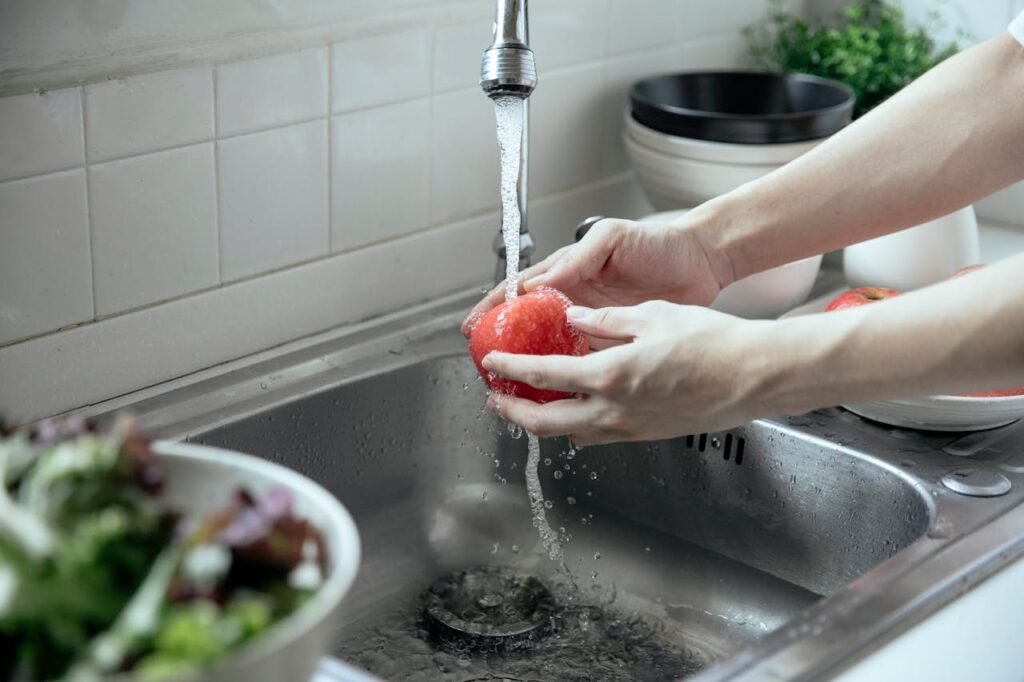
4. Running Cold Water and Scrubbing
Never underestimate the power of friction. For firm produce like potatoes, carrots, melons, and cucumbers, physical scrubbing is vital. The mechanical action removes dirt, bacteria, and surface chemicals.
How to do it:
- Hold the vegetable under cold, running tap water for at least 30 seconds.
- Use a clean produce brush to scrub the surface firmly.
- Dry with a clean cloth or paper towel.
Drying is a critical final step. Wiping the produce can physically remove any remaining residues that were loosened by the water.
Comparison of Washing Methods
To help you decide which method fits your routine, here is a comparison of efficacy and effort.
| Method | Best For | Effectiveness | Cost | Time Required |
|---|---|---|---|---|
| Cold Water Rinse | All produce | Moderate (removes dirt/loose residue) | Free | < 1 min |
| Scrubbing | Hard skins (potatoes, melons) | High (removes surface layers) | Low (brush cost) | 1-2 mins |
| Salt Water Soak | Sturdy veg, leafy greens | High (better than water) | Low | 20 mins |
| Bicarb Soak | Apples, pears, peppers | Very High (chemically degrades pesticide) | Low | 15 mins |
| Vinegar Soak | Bacteria reduction | Moderate to High | Low | 10-20 mins |
| Peeling | Root veg, citrus | Very High (removes skin entirely) | Free | 2-5 mins |
Tips for Specific Types of Vegetables
Different textures require different approaches to ensure they are clean without being damaged.
Leafy Greens (Spinach, Kale, Lettuce)
Leafy greens have a large surface area where dirt and chemicals can hide. Separate the leaves and discard the outer layers, which usually contain the most residue and dirt.
Soak the leaves in a bowl of cold water for a few minutes, swishing them around to loosen grit. Lift the greens out of the water (rather than draining the water, which redeposits dirt) and rinse again. A salad spinner is an excellent tool for drying them effectively.
Root Vegetables (Carrots, Potatoes, Beetroot)
These grow directly in the soil and require vigorous scrubbing. Even if you plan to peel them, you must wash them first. If you peel a dirty vegetable, the knife blade can transfer bacteria and pesticides from the skin to the flesh you are about to eat.
Soft-Skinned Vegetables (Tomatoes, Peppers)
These items have thin skins that are often consumed. The bicarbonate of soda soak is particularly useful here. Ensure the water is not too hot, as this can cause the vegetables to split or soften prematurely.
Frequently Asked Questions
Is organic produce free of pesticides?
Not necessarily. Organic farming uses natural pesticides rather than synthetic ones. While these are generally derived from natural sources, residue can still exist. According to The Soil Association, organic standards strictly limit what can be used, but washing organic produce is still recommended for hygiene and safety.
Are commercial vegetable washes worth the money?
Most experts, including the Food Standards Agency (FSA), suggest that commercial washes are unnecessary. Studies have shown that tap water, baking soda, or vinegar are equally, if not more, effective. Commercial washes are an added expense that provides little additional benefit over properly utilized household ingredients.
Should I use washing up liquid?
No. You should never use soap, bleach, or detergents on food. These products are not designed for consumption. Porous skins can absorb the chemicals in soap, leading to nausea or gastric distress. Stick to food-grade agents like vinegar, salt, or bicarbonate of soda.
What about the “Dirty Dozen”?
The “Dirty Dozen” is a list popularized in the US, highlighting produce with the highest pesticide loads. While the UK has different farming regulations, groups like the Pesticide Action Network UK produce similar lists. Commonly affected items often include strawberries, citrus fruits, and pre-packed salad leaves. Prioritising organic options for these specific items can lower your overall intake.
Does peeling remove all pesticides?
Peeling is extremely effective for systemic pesticides that may have penetrated the skin, as well as surface residues. However, peeling removes the skin, which is often the most nutrient-dense part of the vegetable, rich in fibre. A thorough wash with bicarbonate of soda is a good compromise to keep the nutrients while reducing the chemical load.
The Bottom Line
It is natural to be concerned about pesticide residues, but this fear should not stop you from eating a diet rich in fruits and vegetables. The health benefits of consuming fresh produce—such as reduced risks of heart disease and cancer—far outweigh the potential risks associated with minute pesticide residues.
Adopting a washing routine using bicarbonate of soda or salt water, combined with mechanical scrubbing, is a proven way to minimise exposure.
For more detailed advice on maintaining a healthy diet and understanding food safety, resources like Healthline and Cancer Research UK offer extensive guidance. By taking these simple precautions, you can enjoy your meals with confidence, knowing you are nourishing your body safely.