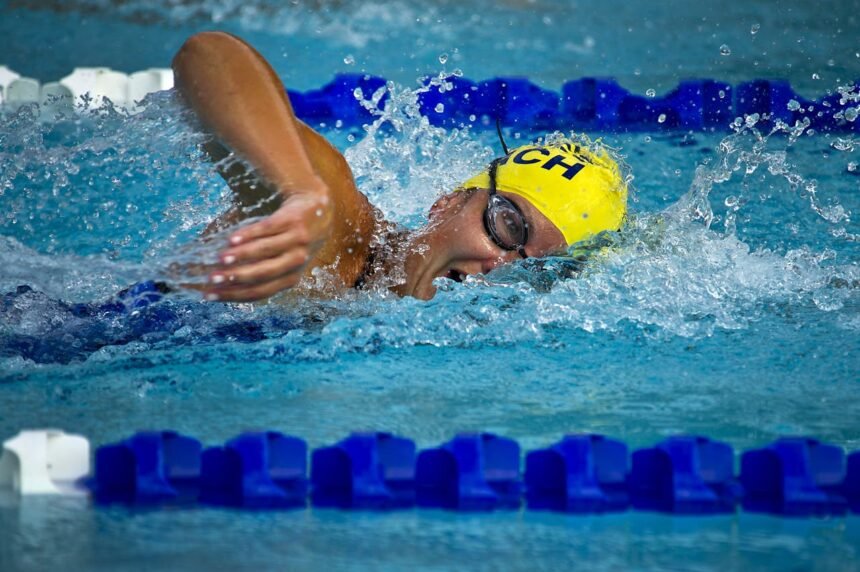
There is a transformative power in water. The moment you submerge, the noise of the world muffles, gravity releases its hold, and you enter an environment that is approximately 800 times denser than air. For fitness enthusiasts and beginners alike, this density offers a unique opportunity: the ability to engage every major muscle group simultaneously without the jarring impact of terrestrial exercises.
Whether you are recovering from an injury, looking to cross-train, or seeking a primary mode of fitness, a well-structured full body swimming routine is one of the most efficient ways to build endurance, strength, and cardiovascular health. Unlike running or weightlifting, which often isolate specific muscle groups or stress specific joints, swimming requires a coordinated effort from your fingertips to your toes.
In this comprehensive guide, we will dive deep into the mechanics of aquatic fitness, outline a scalable workout, and explore why the pool might just be the best gym you ever visit.
The Physiology of Aquatic Fitness: Why Swim?
Before maximizing your time in the lane, it is essential to understand why swimming is touted as a superior form of exercise. The benefits extend far beyond simply burning calories.
1. Zero-Impact Resistance
Water provides natural buoyancy, which reduces your body weight by roughly 90%. This makes swimming an ideal activity for individuals suffering from arthritis or joint pain. According to the Arthritis Foundation, aquatic exercises can significantly reduce joint pain and stiffness while maintaining bone health.
2. Cardiovascular Excellence
Swimming is an aerobic powerhouse. It forces your body to learn how to use oxygen more efficiently. The American Heart Association recognizes aerobic activities like swimming as vital for lowering blood pressure and improving heart health.
3. Total Body Engagement
Every stroke is a resistance exercise. Pulling the water engages the latissimus dorsi, shoulders, and triceps, while the kick targets the glutes, quads, and hamstrings. The core acts as the stabilizer, constantly engaged to keep the body flat and streamlined.
Essential Gear for Your Swim
While swimming requires less equipment than sports like hockey or cycling, the right gear is crucial for comfort and technique.
- Goggles: Essential for visibility and protecting eyes from chloramines. Look for a watertight seal.
- Swim Cap: Protects hair from chlorine and reduces drag. Silicone caps are generally more durable than latex.
- Kickboard: A vital tool for isolating leg muscles during your full body swimming routine.
- Pull Buoy: Placed between the legs to float the hips, allowing you to focus entirely on upper body strength.
The Blueprint: A Scalable Full Body Swimming Routine
Below is a structured routine designed to be scalable. Whether you are a novice or a master, the structure remains the same; only the intensity and rest intervals change.
Total Distance: Approximately 1,200 – 1,500 meters (yards)
Duration: 45 – 60 minutes
Phase 1: The Warm-Up (10-15 Minutes)
Never start with a sprint. Your muscles need time to adjust to the temperature and the movement range.
- 200m Freestyle (Easy Pace): Focus on long reaches and smooth rotation. Do not worry about the clock.
- 100m Kick (with board): Wake up your hamstrings and glutes. Keep the kick small and fast, originating from the hips, not the knees.
Phase 2: Technical Drills (10 Minutes)
Efficiency beats power in the water. Incorporating drills helps refine your stroke mechanics. For detailed visual guides on drills, resources like U.S. Masters Swimming offer excellent tutorials.
- 4 x 50m Catch-Up Drill: In freestyle, leave one hand extended in front of you until the other hand completes a full stroke and touches it. This forces a long glide and prevents “windmilling.”
- 4 x 50m Fist Drill: Swim freestyle with clenched fists. This removes the surface area of your hand, forcing you to engage your forearms to catch the water (the “high elbow catch”).
Phase 3: The Main Set (20-30 Minutes)
This is the core of your full body swimming routine. We will use a “Pyramid” structure to build endurance and speed.
- 1 x 50m Freestyle (Fast Pace): Rest 15 seconds.
- 1 x 100m Freestyle (Moderate Pace): Focus on consistency. Rest 20 seconds.
- 1 x 150m Freestyle (Endurance Pace): Focus on breath control. Rest 30 seconds.
- 1 x 100m Freestyle (Moderate Pace): Try to match the time of your first 100m.
- 1 x 50m Freestyle (Sprint): Empty the tank.
Rest for 2 minutes, then repeat the pyramid if you are an advanced swimmer.
Phase 4: Cool Down (5-10 Minutes)
Sudden stops can cause blood pooling in the extremities. A proper cool-down aids in lactic acid removal.
- 200m Choice (Very Easy): Mix in breaststroke or backstroke to open up the chest and relax the shoulders.
Stroke Mechanics: Targeting Specific Muscle Groups
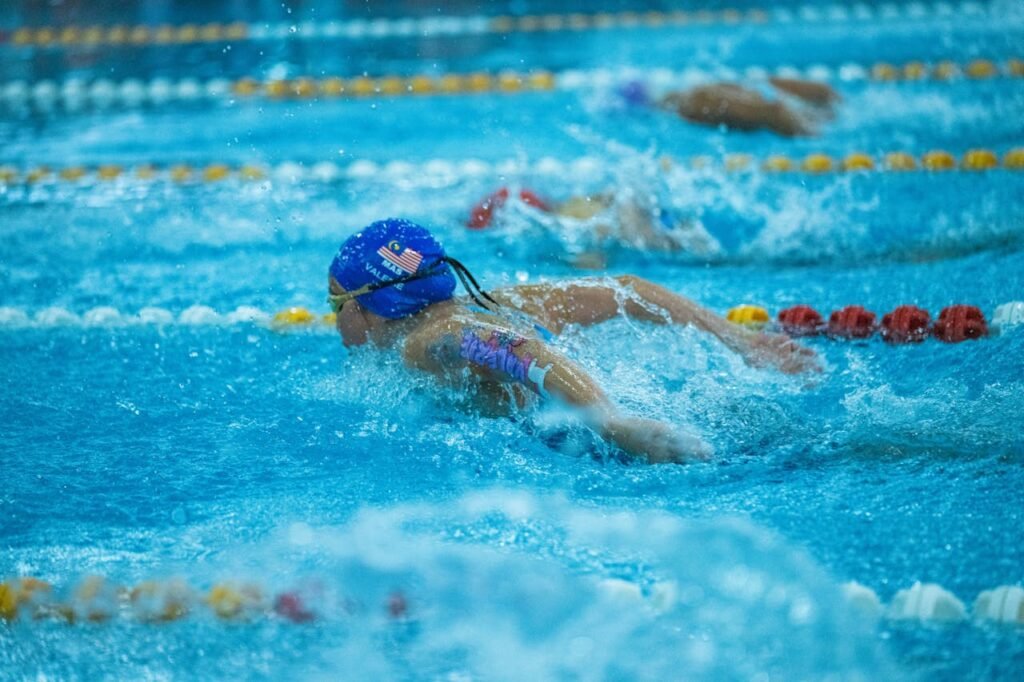
To truly achieve a full-body workout, you should eventually incorporate all four competitive strokes. Each stroke emphasizes different muscle groups, as shown in the data table below.
Muscle Engagement and Caloric Burn by Stroke
| Stroke | Primary Muscles Worked | Secondary Focus | Calorie Burn Est. (per hour/155lb person) |
|---|---|---|---|
| Freestyle | Lats, Shoulders, Triceps | Core, Glutes | 500 – 700 |
| Breaststroke | Pectorals, Latissimus Dorsi | Inner Thighs (Adductors), Glutes | 400 – 600 |
| Backstroke | Lats, Hamstrings, Glutes | Hip Flexors, Shoulders | 400 – 550 |
| Butterfly | Abdominals, Shoulders, Upper Back | Lower Back, Deltoids | 700 – 900 |
Note: Calorie burn varies based on intensity. Data extrapolated from general fitness estimates comparable to Harvard Health Publishing figures.
Nutrition and Safety Considerations
Hydration in the Hypotonic Environment
One of the biggest misconceptions about swimming is that you do not sweat. You do sweat, but the surrounding water washes it away instantly. Dehydration can lead to cramping, particularly in the calves (charley horse). The Mayo Clinic emphasizes that fluid intake is critical before, during, and after exercise, regardless of the environment.
Chlorine and Skin Care
While chlorine is essential for killing bacteria and maintaining CDC Healthy Swimming standards, it can dry out skin and hair. Always shower before entering the pool (to keep the pool clean) and immediately after (to remove chemicals from your skin).
Water Safety
Never swim alone. Even experienced swimmers can suffer from cramps or sudden fatigue. Ensure you are swimming in a facility with a lifeguard or a designated safe zone. Organizations like the American Red Cross provide extensive resources on water competency and safety that everyone should review.
Overcoming Common Beginner Hurdles
If you find yourself breathless after one lap, do not get discouraged. This is usually due to technique rather than a lack of fitness.
- Head Position: Many beginners look forward. This drops the hips and creates drag. Look down at the bottom of the pool to keep your spine aligned.
- Kicking: Avoid kicking from the knees. Your legs should be relatively straight, with the power coming from the hips.
- Breathing: Exhale underwater. If you hold your breath underwater, you have to exhale and inhale when you turn your head, which there isn’t time for. Continuous exhalation is key.
For those interested in the competitive history or standardized techniques of these strokes, World Aquatics (formerly FINA) sets the global standard for aquatic sports.
Conclusion: Just Keep Swimming
Adopting a full body swimming routine is an investment in your long-term health. It builds a heart of steel, muscles of iron, and a mind that is calm and focused. The water is the great equalizer; it supports you when you are tired and challenges you when you are strong.
Start with the routine outlined above twice a week. Track your progress, not just in speed, but in how you feel—the ease of your breath, the length of your stroke, and the quiet strength you carry back onto dry land. Grab your goggles, hit the deck, and make a splash.
Are you ready to transform your fitness? Find your local pool today and dive in.