For many of us, enjoying a drink is a staple of socialising. Whether it is a pint at the pub after work, a glass of wine with dinner, or a celebratory cocktail, alcohol is woven into the fabric of British culture. However, when you are trying to manage your weight or improve your overall health, alcohol can be a confusing variable.
It is easy to view drinks as harmless extras that do not count towards your daily intake. Unfortunately, liquid calories are just as impactful as those found in food, yet they often lack the nutritional value to justify them. This disconnect can lead to frustration when the scales refuse to budge, despite your best efforts with diet and exercise.
Understanding alcohol and weight management requires looking beyond the glass. It involves understanding how your body processes ethanol, how it influences your appetite, and the hidden sugars that often accompany your favourite tipple. By equipping yourself with evidence-based knowledge, you can make informed decisions that align with your health goals without necessarily giving up your social life entirely.
What Is the Caloric Impact of Alcohol?
To understand why alcohol can hinder weight loss, we must look at the basic numbers. In nutrition, calories are derived from macronutrients: proteins, carbohydrates, and fats. Alcohol acts as a fourth macronutrient, but with a unique profile.
Here is the caloric breakdown per gram:
- Carbohydrates: 4 calories
- Protein: 4 calories
- Fat: 9 calories
- Alcohol: 7 calories
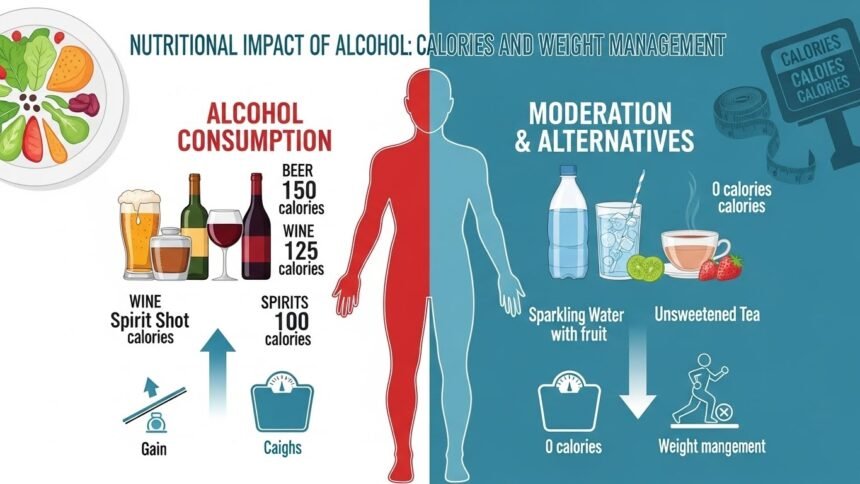
As you can see, alcohol is nearly as calorie-dense as pure fat. This high energy density means that even a moderate amount can significantly increase your daily intake. For example, a large glass of wine can contain the same number of calories as a slice of pizza. According to the NHS Live Well guidelines, these calories are often referred to as ’empty calories’ because they provide energy but virtually no essential nutrients like vitamins, minerals, or fibre.
Furthermore, the way we consume alcohol matters. We rarely drink pure ethanol. We consume it in beers rich in carbohydrates, wines full of natural sugars, or spirits mixed with sugary sodas and syrups. A standard pint of lager can contain around 180 calories, which is roughly equivalent to a slice of pizza. If you drink three pints over the course of an evening, you have essentially consumed an extra meal.
Resources from Drinkaware highlight that many people are unaware that a night out can easily add 500 to 1,000 calories to their weekly intake, often negating the calorie deficit created by dieting or exercise earlier in the week.
How Alcohol Affects Weight: A Detailed Breakdown
It is not just about the calories in the glass. The biological impact of alcohol on weight management is multifaceted, involving metabolic prioritisation, hormonal shifts, and behavioural changes.
1. Metabolic Pausing
When you consume alcohol, your body views it as a toxin. Consequently, your metabolism shifts gears to eliminate it as quickly as possible.
Normally, your liver is busy metabolising fats and carbohydrates for energy. However, when alcohol is present, the liver prioritises the breakdown of ethanol. This process produces acetate, which the body uses for energy instead of burning the fat stores you are trying to lose. Essentially, fat burning is paused until all the alcohol has been processed. If you are eating high-calorie foods alongside your drink, those food calories are more likely to be stored as fat because your body is busy dealing with the alcohol.
2. The ‘Munchies’ Effect
Have you ever noticed that you crave kebabs, chips, or pizza after a few drinks? This is not a coincidence. Alcohol consumption disrupts the hormones that regulate hunger and satiety, specifically ghrelin (the hunger hormone) and leptin (the fullness hormone).
A study referenced by the British Nutrition Foundation suggests that alcohol may stimulate nerve cells in the brain’s hypothalamus that are usually activated by starvation, tricking your brain into thinking you need food. This leads to increased calorie intake, often from salty or greasy foods that are calorically dense.
3. Lowered Inhibitions
Beyond biology, there is a psychological component. Alcohol lowers your inhibitions and impairs judgement. You might have a strict plan to eat a healthy salad for dinner, but after two glasses of wine, your resolve weakens, and a burger becomes far more appealing.
This loss of dietary restraint is a primary reason why alcohol and weight management are often at odds. The Alcohol Change UK charity notes that decision-making processes are compromised even after moderate consumption, leading to ‘passive overeating.’
4. Sleep Disruption
Rest is a crucial, yet often overlooked, pillar of weight loss. While alcohol acts as a sedative and may help you fall asleep faster, it significantly degrades the quality of your sleep. It reduces Rapid Eye Movement (REM) sleep, which is essential for mental and physical restoration.
Poor sleep is strongly linked to weight gain. When you are sleep-deprived, your cortisol (stress hormone) levels rise, and your body struggles to regulate blood sugar, leading to increased cravings the next day. The Sleep Foundation via Healthline confirms that sleep deprivation caused by alcohol can derail metabolism and increase insulin resistance.
5. Impact on Testosterone and Recovery
For those who exercise regularly, alcohol can hamper your progress. It inhibits protein synthesis, which is the process your muscles use to repair and grow after a workout. Furthermore, heavy drinking can lower testosterone levels, a hormone vital for maintaining lean muscle mass. Since muscle tissue burns more calories at rest than fat tissue, losing muscle mass can lower your overall metabolic rate.
Comparison: Alcohol vs. Common Foods
To visualise the impact, it is helpful to compare common alcoholic beverages with food equivalents. This data helps contextualise the ‘hidden’ energy we consume.
| Beverage Type | Serving Size | Approx. Calories | Food Equivalent |
|---|---|---|---|
| Standard Glass of Wine (13%) | 175ml | 160 kcal | A slice of sponge cake |
| Pint of Lager (4%) | 568ml | 180 kcal | A slice of pizza |
| Pint of Cider | 568ml | 210 kcal | A sugar-glazed doughnut |
| Gin & Tonic | 25ml spirit + tonic | 100 kcal | Two rich tea biscuits |
| Cream Liqueur | 50ml | 150 kcal | A scoop of ice cream |
| Alcopop | 275ml | 170 kcal | Three chocolate chip cookies |
Note: Calorie counts are approximate and vary by brand and alcohol by volume (ABV).
Practical Tips for Managing Intake
You do not necessarily need to become a teetotaller to manage your weight, but mindfulness is key. Following guidelines from GOV.UK regarding low-risk drinking is a good starting point.
Try these actionable strategies:
- Alternate with Water: For every alcoholic drink, have a glass of water. This slows your consumption rate and keeps you hydrated.
- Choose Low-Calorie Mixers: Swap sugary colas or lemonades for soda water, slimline tonic, or diet versions. This can save hundreds of calories per night.
- Opt for Clear Spirits: Vodka, gin, and tequila generally have fewer calories than dark spirits, beers, or sweet wines, provided they are not mixed with syrup.
- Be Wary of Rounds: Buying rounds in a pub often forces you to drink at the pace of the fastest drinker. Opt out to maintain control over your own intake.
- Eat Before You Drink: A healthy meal with protein and fibre can slow the absorption of alcohol and reduce the ‘munchies’ later.
- Track Your Units: Use apps or calculators to be aware of exactly what you are consuming. Diabetes UK recommends being particularly careful if you are managing blood sugar levels, as alcohol can cause dangerous fluctuations.
Frequently Asked Questions
Does alcohol stop fat loss completely?
It does not stop it permanently, but it pauses it. While alcohol is in your system, your body will burn it for fuel instead of fat. Consistent drinking can therefore significantly slow down fat loss progress.
Is a ‘beer belly’ actually caused by beer?
Yes and no. While beer is calorie-dense, the abdominal weight gain associated with drinking is often due to the excess calories from alcohol and the poor dietary choices made while drinking, rather than the beer itself. Visceral fat accumulation is linked to high calorie intake generally, which Cancer Research UK notes increases the risk of several health conditions.
Are low-carb beers better for weight loss?
They can be. Low-carb beers generally have fewer calories than standard beers. However, they still contain alcohol (7 kcal/g), so they are not calorie-free. Moderation remains essential.
Can I drink and still gain muscle?
Heavy drinking impairs muscle protein synthesis and recovery. Occasional, moderate consumption may have a negligible effect, but frequent drinking will likely hinder muscle growth and recovery efforts.
The Bottom Line
Alcohol and weight management have a complex relationship. While alcohol offers no nutritional benefit, it remains a pleasurable part of life for many. The key lies in understanding the trade-offs.
Alcohol contains 7 calories per gram, inhibits fat burning, disrupts sleep, and often leads to poor dietary choices. If your goal is weight loss, reducing alcohol intake is one of the most effective changes you can make. As highlighted by the Stroke Association, cutting down not only helps your waistline but also reduces risks of high blood pressure and other cardiovascular issues.
If you choose to drink, prioritise quality over quantity, opt for lower-calorie mixers, and stay hydrated. Balance is achievable when you are mindful of the numbers in your glass. For more information on maintaining a healthy lifestyle, reputable sources like BBC News Health often provide updated guidance on navigating social drinking healthily.