Orchids are renowned for their breathtaking blooms and structural elegance, yet they hold a reputation for being notoriously difficult to maintain. For the avid gardener or the tentative beginner, the difference between a thriving plant and a withered stem often lies in the soil—or rather, the lack of it.
Most commercially available orchids are epiphytes, meaning they grow on trees in the wild rather than in the ground. Consequently, traditional potting soil suffocates their roots. This is where coconut husk chips have emerged as a revolutionary medium for enthusiasts.
Derived from the fibrous outer layer of the coconut, these chips offer a sustainable, durable, and structurally superior alternative to traditional bark or moss. Understanding the science behind this medium can help you transform your orchid care routine.
Overview: The Shift to Coir-Based Media
In recent years, the horticultural world has pivoted toward organic orchid media that mimics the natural environment of epiphytic plants. Coconut husk chips, often referred to as coco chips, are cut chunks of the coconut rind. Unlike the finer coco peat (coir dust), chips provide a coarse texture.
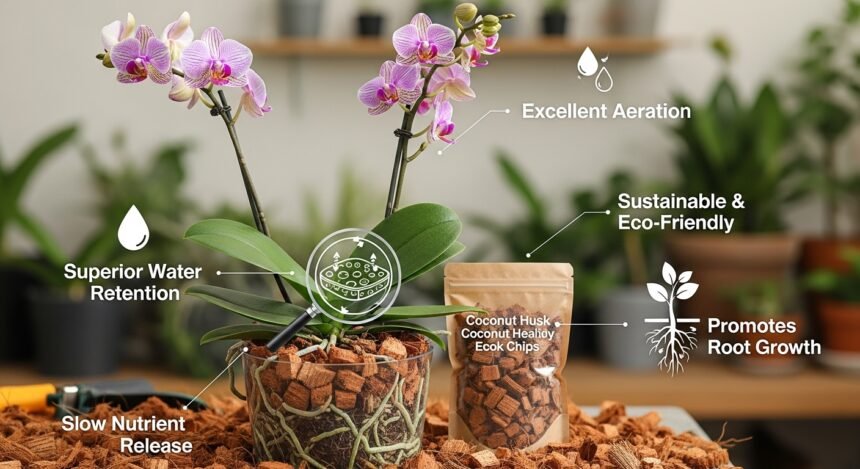
This texture is crucial. It creates air pockets around the roots, facilitating gas exchange while holding just enough moisture to keep the plant hydrated without becoming waterlogged. This balance is often the primary struggle for orchid growers using Sphagnum moss or fir bark.
Furthermore, the move toward sustainable potting substrate options has driven popularity. Peat bogs are fragile ecosystems, and their depletion contributes to carbon emissions. Coconut husks, conversely, are a byproduct of the coconut industry, making them a renewable resource.
For those interested in the broader applications of coconut byproducts in horticulture, it is worth exploring The Strength and Durability of Coconut Fiber Rope in Gardening.
Signs Your Orchid Growing Medium Needs Changing
Orchids communicate their distress through their roots and leaves. If you are using traditional fir bark, you may notice that over time, the medium breaks down into a sludge-like consistency. This decomposition reduces airflow and increases acidity, which can burn sensitive root tips.
Preventing orchid root rot is the primary goal of any potting mix. Symptoms that your current medium is failing include:
- Mushy, black roots: Indicates suffocation and excess water.
- Yellowing leaves: often a sign of root distress preventing nutrient uptake.
- Rapid decomposition of medium: The soil level in the pot drops significantly as the bark rots away.
Transitioning to coconut husk chips addresses these issues because the chips resist decay significantly longer than bark. This stability is due to the high lignin content in the husk.
The Science: Why Coconut Husk Chips Work
Superior Aeration and Drainage
One of the most significant advantages of using husk chips is coco husk aeration. Orchids require oxygen at the root zone to perform respiration. The irregular shape of the chips prevents them from compacting, ensuring that air channels remain open even after repeated watering.
According to the Royal Horticultural Society, open compost structures are vital for mimicking the orchid’s natural arboreal habitat. The chips facilitate this perfectly.
Water Retention Without Saturation
Finding the balance for water retention in orchids is difficult. Sphagnum moss acts like a sponge, often holding too much water, while coarse bark may dry out too quickly in low-humidity homes. Coconut chips behave like a sponge that releases water slowly. They can hold up to 10 times their weight in water but drain excess freely.
This property makes them an excellent hydroponic growing medium as well. Studies from University of Florida IFAS Extension highlight coir’s ability to maintain high moisture content while maintaining high air-filled porosity.
High Lignin Content
The lignin content in coir is naturally high. Lignin is a complex organic polymer that provides structural support in plants. Because coconut husks are tough, fungi and bacteria take a very long time to break them down. A quality coco chip mix can last 3 to 5 years, whereas fir bark often requires replacement every 1 to 2 years.
How to Prepare and Use Coconut Husk Chips
While the benefits are clear, you cannot simply throw fresh chips into a pot. Proper preparation is essential to avoid damaging your plants.
1. The Soaking and Leaching Process
Raw coconut products can contain high levels of salts, specifically sodium and potassium, which are toxic to orchids. You must perform a salt leaching process.
- Soaking coconut husk: Submerge the chips in fresh water for 24 hours.
- Rinse and Repeat: Drain the water, which will now look like tea (due to tannins), and refill. Repeat this process 3-5 times until the EC (Electrical Conductivity) levels are low.
2. Buffering (Optional but Recommended)
Coco coir naturally attracts calcium and magnesium, locking them away from the plant. To prevent nutrient deficiencies, many growers buffer the chips by soaking them in a calcium-magnesium solution before use. This creates a neutral pH potting mix tailored for nutrient uptake.
For more on plant care and cultivation, similar principles apply when considering How to Grow and Care for Your Own Coconut Bonsai Tree.
3. Creating the Mix
While chips can be used alone, many growers create a phalaenopsis potting mix by combining:
- 60% Coconut Husk Chips
- 20% Perlite (for extra drainage)
- 20% Charcoal (to keep the substrate sweet)
Speaking of charcoal, it is a versatile material. While gardeners use it for filtration, others explore its cosmetic uses, such as in Does Coconut Charcoal Teeth Whitening Actually Work?.
Coconut Husk Chips vs. Traditional Bark
The debate of coco chips vs bark is common in orchid circles.
- Durability: Coco chips last nearly twice as long as fir bark.
- Rewetting: If fir bark dries out completely, it becomes hydrophobic (repels water). Coco chips re-wet instantly, making them more forgiving for forgetful waterers.
- Sustainability: Fir bark requires logging trees; coconut husks are renewable gardening materials harvested every 45 days.
According to the American Orchid Society, the longevity of the medium significantly reduces the shock plants experience from frequent repotting.
Sourcing Your Medium
You can often purchase this medium as a compressed coco peat block or brick. These compressed blocks are efficient for shipping and expand significantly when hydrated. This aligns with broader trends in eco-friendly living, much like those discussed in Sustainable Living: Why Every Kitchen Needs a Coconut Shell Bowl.
When handling these blocks and mixing soil, your hands can become dry or irritated. It is vital to care for your skin after gardening. For those with sensitive skin conditions, you might find relief by reading Managing Your Symptoms: Using Coconut Oil Psoriasis Treatments.
Tips for Thriving Orchids
Monitor Hydration: While chips hold water well, you must ensure you aren’t overwatering. The top of the chips may look dry while the center remains damp. Using clear pots can help you visualize moisture.
Fertilisation: Because coir has no nutritional value, you must use a balanced fertiliser. Ensure you are providing adequate nitrogen, as the natural decomposition process (though slow) can consume some nitrogen.
Safety First: If you have pets that roam your garden or home, ensure your additives are safe. Fortunately, coir is generally safe, much like the topics covered in The Surprising Benefits of Using Coconut Oil Dogs Can Enjoy.
Holistic Coconut Use: The coconut palm is known as the “tree of life” for a reason. From the epiphytic plant care provided by the husk to the culinary uses of the meat. If you are interested in the nutritional aspects of the plant itself, read A Detailed Look at Raw Coconut Meat Nutrition and Health Facts.
The Bottom Line
Switching to coconut husk chips can be a game-changer for orchid growers. They provide the perfect balance of moisture retention and aeration, preventing root rot and promoting vigorous growth. By choosing this sustainable, durable medium, you are not only helping your plants thrive but also making an eco-conscious choice.
Gardening is an active hobby, so don’t forget to take care of your own body while tending to your plants. Staying hydrated is key—perhaps consider The Ultimate Guide to Using Coconut Water Powder for Hydration.
Whether you are a master gardener or just starting, the versatility of coconut products is endless. From the garden to the kitchen, where you might be Finding the Best Coconut Aminos Substitute for Your Cooking, the coconut proves its worth time and again.
If you found this guide helpful, you might also be interested in our lifestyle articles, such as Is Coconut Sugar Keto Friendly? Everything You Need to Know.
Additional Resources
- Kew Royal Botanic Gardens: Orchid Care
- Food and Agriculture Organization (FAO): Coir Processing
- University of Maryland Extension: Growing Orchids
- Smithsonian Gardens: Orchid Care Sheets
- North Dakota State University: Potting Media
- Texas A&M AgriLife Extension: Orchid Culture
- Environmental Protection Agency: Composting
- National Health Service (NHS): Gardening for Health