Transitioning to a Paleo lifestyle can feel overwhelming at first. You might look at your kitchen cupboards and realise that many of your go-to ingredients—pasta, rice, and sugary sauces—are no longer on the menu. This moment often leads to panic about what you will actually cook for dinner.
However, eating Paleo does not mean your meals must be complicated or bland. In fact, a well-stocked pantry is the secret weapon for effortless, healthy cooking. By keeping specific staples on hand, you can whip up nutritious meals without the stress of constant grocery shopping. The key is simplifying your approach to food preparation.
We understand that overhaul is difficult. Changing habits requires time, patience, and the right tools. This guide removes the guesswork from stocking your kitchen. We focus on versatile, shelf-stable ingredients that form the backbone of the Palaeolithic diet. With these essentials, you will always be prepared to cook delicious, wholesome meals that fuel your body and satisfy your taste buds.
What is a Paleo-Friendly Pantry?
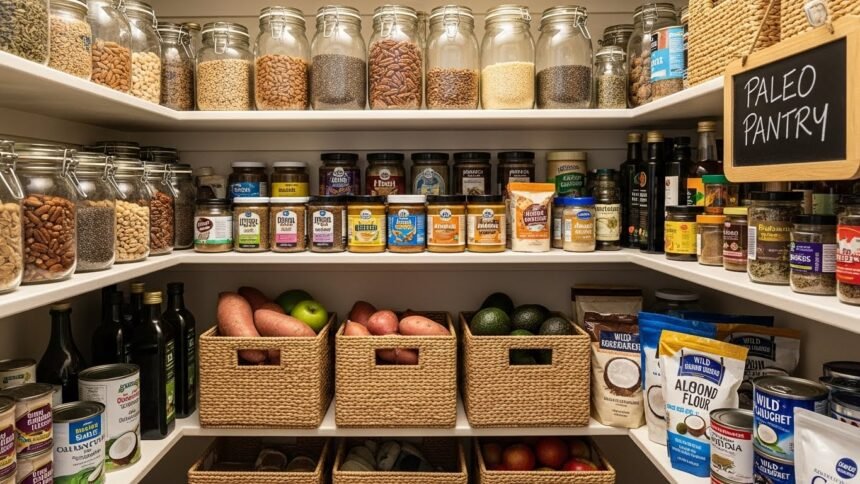
A Paleo-friendly pantry is stocked with whole, unprocessed foods that mimic what our hunter-gatherer ancestors might have consumed. The philosophy centres on eliminating inflammatory ingredients like grains, legumes, refined sugars, and most dairy products. Instead, you prioritise nutrient-density and natural flavours.
Building this pantry is not just about restriction; it is about abundance. You are replacing empty calories with ingredients rich in vitamins, minerals, and healthy fats. According to a detailed guide by Healthline, the Paleo diet emphasizes whole foods, lean proteins, vegetables, fruits, nuts, and seeds, while discouraging processed foods, sugar, dairy, and grains.
Having these items ready means you are less likely to rely on takeaways when life gets busy. It transforms cooking from a chore into a manageable, enjoyable process. A properly stocked cupboard ensures that a healthy choice is always the easiest choice.
The Essential Breakdown
To simplify your shopping list, we have categorised the absolute essentials. These items offer the best versatility for British home cooks looking to maintain a Paleo lifestyle.
High-Quality Fats and Oils
Fat is a primary energy source on the Paleo diet. Unlike modern low-fat trends, Paleo embraces stable, natural fats. However, not all fats are created equal. You must avoid highly processed vegetable oils like sunflower or rapeseed oil, which can be high in inflammatory omega-6 fatty acids.
Extra Virgin Olive Oil (EVOO): This is your best friend for salads and low-heat cooking. It is packed with antioxidants and monounsaturated fats. Research published in the National Library of Medicine highlights that olive oil consumption is associated with lower risks of cardiovascular disease and mortality.
Coconut Oil: Ideal for high-heat cooking like stir-frying. It is solid at room temperature and adds a subtle sweetness to dishes. It is also a source of medium-chain triglycerides (MCTs), which provide quick energy.
Ghee or Avocado Oil: If you are sensitive to dairy, ghee (clarified butter) is often tolerated because the milk solids are removed. Alternatively, avocado oil has a high smoke point and a neutral flavour, making it excellent for roasting vegetables.
Grain-Free Flours and Baking
Just because you are skipping wheat does not mean you must give up baking. Grain-free flours behave differently than standard plain flour, so having the right options is crucial for binding and texturing your meals.
Almond Flour: This is simply ground almonds. It is dense, moist, and perfect for cakes or breading meats. It provides a significant boost of Vitamin E and magnesium. For creative ways to use ground almonds, BBC Good Food offers excellent culinary tips and nutritional context.
Coconut Flour: highly absorbent and full of fibre. You need very little of it compared to almond flour. It is excellent for thickening sauces or making fluffy pancakes. Be careful not to swap it 1:1 with other flours, as it soaks up liquid rapidly.
Tapioca Starch: Derived from the cassava root, this is your cornflour replacement. It creates a crisp coating on fried meats and helps thicken stews without gluten.
Tinned Goods and Proteins
Shelf-stable proteins and liquids are lifesavers for quick weeknight dinners. These items ensure you have access to high-quality nutrition even when you haven’t visited the butcher or fishmonger.
Tinned Fish: Wild-caught salmon, mackerel, and sardines are powerhouses of nutrition. They provide essential omega-3 fatty acids, which are vital for heart and brain health. The NHS recommends eating at least two portions of fish a week, including one oily fish, to maintain optimal health.
Coconut Milk: Look for full-fat varieties in a tin with no added stabilisers like guar gum. This is your dairy replacement for curries, soups, and creamy beverages. It adds richness and satiety to meals.
Tinned Tomatoes: A staple for bases, stews, and braises. Ensure you buy brands with no added sugars or citric acid if possible. They are a convenient source of lycopene.
Nuts, Seeds, and Flavour Boosters
Finally, no pantry is complete without the elements that add texture and taste. These items turn simple ingredients into gourmet experiences.
Raw Nuts and Seeds: Walnuts, pecans, pumpkin seeds, and chia seeds are excellent for snacking or adding crunch to salads. They are high in fibre and healthy fats. The British Heart Foundation notes that unsalted nuts make a heart-healthy snack when eaten in moderation.
Herbs and Spices: Turmeric, cumin, paprika, and dried oregano are essential. Turmeric, in particular, contains curcumin, a compound with powerful anti-inflammatory properties. Information from Nutrition.org.uk suggests using herbs and spices to flavour food allows you to reduce salt intake significantly.
Bone Broth: While often homemade, keeping high-quality organic beef or chicken stock in the cupboard is vital for quick soups. It provides collagen and amino acids that support gut health.
| Traditional Staple | Paleo Alternative | Primary Culinary Use | Storage Tip |
|---|---|---|---|
| Wheat Flour | Almond Flour | Baking, breading meats | Keep refrigerated to prevent spoiling |
| Vegetable Oil | Coconut Oil / Avocado Oil | High-heat frying, roasting | Store in a cool, dark cupboard |
| Soy Sauce | Coconut Aminos | Stir-fries, marinades | Refrigerate after opening |
| Refined Sugar | Raw Honey / Maple Syrup | Sweetening desserts, dressings | Store at room temperature |
| Cow’s Milk | Canned Coconut Milk | Curries, creamy soups | Transfer to a glass jar after opening |
| Peanut Butter | Almond Butter | Snacking, baking binding | Stir well before use to mix oils |
Frequently Asked Questions
Is honey allowed in a Paleo pantry?
Yes, raw honey is permitted in small amounts. It is a natural sweetener that hasn’t undergone refining. However, it is still a form of sugar. According to Diabetes UK, even natural sugars like honey affect blood glucose levels, so moderation is key.
Are potatoes considered Paleo?
White potatoes are a grey area. Many modern Paleo eaters include them as a source of resistant starch. However, sweet potatoes are generally preferred due to their lower glycaemic impact and higher nutrient profile.
Why are peanuts excluded from the pantry list?
Peanuts are technically legumes, not nuts. Legumes contain phytic acid and lectins, which can cause digestive issues for some people. Paleo focuses on tree nuts like almonds and walnuts instead.
Can I use vinegar?
Yes, most vinegars are fine. Apple cider vinegar is particularly popular in the Paleo community for its potential health benefits and utility in dressings. Ensure it is raw and contains “the mother” for probiotic benefits.
How do I ensure my tinned fish is sustainable?
Look for the blue MSC label on packaging. The Marine Stewardship Council certifies fisheries that ensure fish stocks remain healthy and ecosystems are protected.
The Bottom Line
Stocking a Paleo pantry does not need to be complicated or expensive. By focusing on high-quality basics—healthy fats, grain-free flours, tinned proteins, and robust spices—you set yourself up for culinary success. These staples allow you to cook simpler, tastier meals that align with your health goals.
Remember, the transition to Paleo is a journey. You do not need to buy everything at once. Start with the oils and one type of flour, then expand as you get comfortable. Ultimately, a well-prepared kitchen is the foundation of a sustainable, healthy lifestyle.
Prioritise whole ingredients, read labels carefully, and enjoy the process of discovering new flavours. Your body will thank you for the nourishment.