The alarm clocks rings, and for many, the immediate reaction is to hit the snooze button, prolonging the inevitable grogginess that accompanies the transition from sleep to wakefulness. We often reach for a strong cup of coffee to jolt our systems into action, but there is a more sustainable, physiological way to wake up the body and mind. Establishing an energizing yoga flow daily can transform your mornings from a sluggish struggle into a foundation for vitality and productivity.
Unlike the jarring effect of caffeine, a morning yoga practice gently awakens the nervous system, lubricates the joints, and oxygenates the blood. This comprehensive guide explores the science behind morning movement, details a specific sequence designed to build heat, and provides the tools necessary to make this habit stick.
The Science of Morning Movement
Before diving into the physical postures, it is essential to understand why movement is crucial in the morning. When we sleep, our body temperature drops, our muscles stiffen, and our fascia (connective tissue) can become dehydrated and tacky. This is often why we feel “creaky” upon waking.
According to Harvard Health Publishing, yoga helps modulate the stress response systems. By engaging in mindful movement, you decrease physiological arousal—lowering blood pressure and heart rate—which sets a calm yet alert tone for the day. Furthermore, engaging in physical activity first thing in the morning leverages the body’s cortisol awakening response (CAR), turning potential stress hormones into usable energy.
Benefits of a Daily Morning Practice
- Enhanced Circulation: Movement stimulates blood flow, delivering oxygen to the brain and muscles.
- Joint Lubrication: Motion stimulates the production of synovial fluid, reducing stiffness.
- Mental Clarity: Focus on breathwork clears the mental fog associated with sleep inertia.
- Metabolic Kickstart: Engaging large muscle groups wakes up the metabolism.
Setting the Stage: Preparation and Breath
An effective energizing yoga flow daily routine begins before you even step onto the mat. The environment and your internal state play significant roles.
1. Hydration First: Before moving, drink a glass of water. The Mayo Clinic emphasizes that even mild dehydration can drain your energy and make you tired. Rehydrating helps perform physical movements safely.
2. The Atmosphere: Try to practice in a space with natural light. Exposure to sunlight helps regulate your circadian rhythms, signaling to your brain that it is time to be awake, a concept supported by the Sleep Foundation.
3. Pranayama (Breath Control): Begin with Ujjayi (Victorious Breath). Constrict the back of the throat slightly to create an ocean-like sound. This warms the air before it enters the lungs and builds internal heat.
The 15-Minute Energizing Yoga Flow
This sequence is designed to move the spine in all directions, activate the core, and open the hips. It progresses from gentle awakening to active heat-building.
1. Child’s Pose to Cat-Cow (The Warm-Up)
Start in Child’s Pose (Balasana) to ground yourself. After five breaths, move to a tabletop position.
- Inhale (Cow): Drop the belly, lift the gaze, and arch the spine.
- Exhale (Cat): Round the spine, tuck the chin, and press the floor away.
- Repeat 5-8 times. This synchronizes breath with movement and flosses the spinal nerves.
2. Downward Facing Dog (Adho Mukha Svanasana)
From tabletop, tuck your toes and lift your hips high. Pedal out the feet to stretch the hamstrings. According to Johns Hopkins Medicine, poses like this improve balance and flexibility while strengthening the upper body.
3. Sun Salutations A (Surya Namaskar A)
This is the heart of the energizing yoga flow daily. Sun Salutations are a rhythmic sequence that builds cardiovascular heat. As noted by Wikipedia, this sequence has historical roots in honoring the sun as the source of energy.
- Mountain Pose: Stand tall at the top of the mat.
- Inhale: Reach arms overhead.
- Exhale: Forward fold.
- Inhale: Halfway lift (flat back).
- Exhale: Step back to plank and lower halfway (Chaturanga).
- Inhale: Upward Facing Dog (backbend).
- Exhale: Downward Facing Dog.
- Repeat 3-5 times.
4. Warrior II (Virabhadrasana II)
From Downward Dog, step the right foot forward between the hands. Spin the back heel down and cartwheel the arms open. Lunging deeply stimulates the large muscles of the legs, increasing heart rate and stamina.
5. Triangle Pose (Trikonasana)
Straighten the front leg from Warrior II. Reach forward and tip the torso, placing the hand on the shin or a block. This pose opens the side body and improves digestion.
6. Bridge Pose (Setu Bandha Sarvangasana)
Lie on your back, bend your knees, and place feet flat on the floor. Lift your hips. Backbends are naturally invigorating because they compress the adrenal glands and open the chest, countering the posture of slouching. The American Council on Exercise (ACE) highlights such poses for correcting posture-related fatigue.
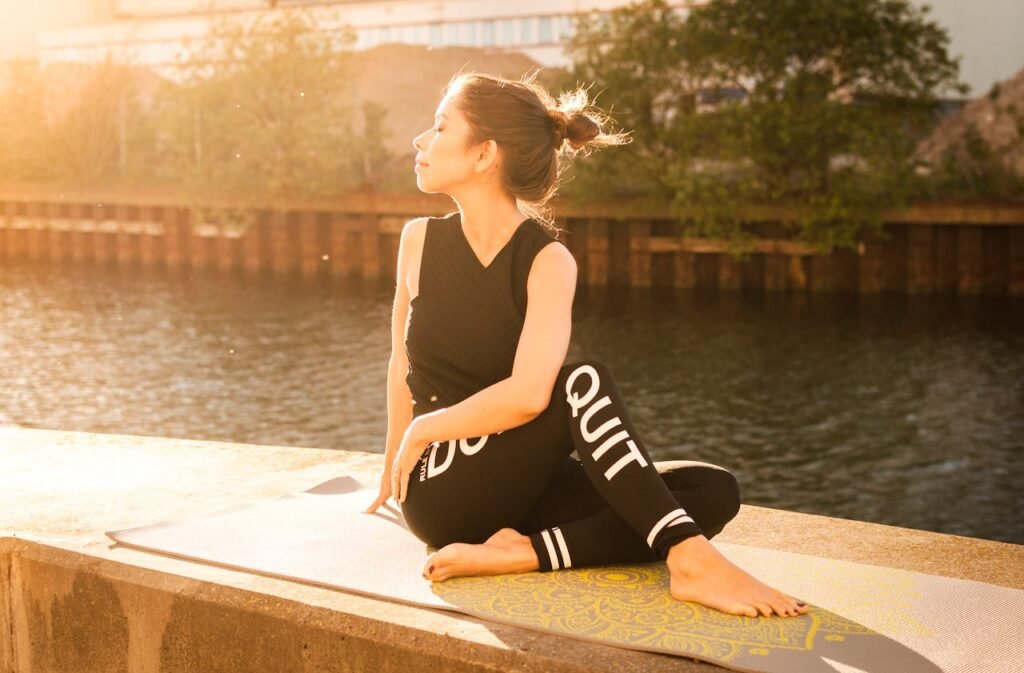
7. Seated Twist (Ardha Matsyendrasana)
Finish with a gentle spinal twist to neutralize the spine and aid in detoxification.
Comparing Morning Energy Boosters
Many people rely solely on caffeine, but how does yoga compare? Below is a breakdown of different morning energy strategies.
| Energy Method | Onset of Energy | Duration of Effect | Primary Benefit | Potential Side Effects |
|---|---|---|---|---|
| Energizing Yoga Flow | Gradual (10-15 mins) | Sustained (4-6 hours) | Stress reduction, flexibility, mental clarity | None (if practiced safely) |
| Caffeine (Coffee) | Rapid (15-30 mins) | Moderate (3-5 hours) | Alertness, dopamine spike | Jitters, crash, dependency |
| HIIT Workout | Rapid (Immediate) | Moderate (2-3 hours) | High calorie burn, endorphins | High impact on stiff joints, cortisol spike |
| Sugar/Carb Load | Very Rapid (<10 mins) | Short (<1 hour) | Immediate fuel | Blood sugar crash, brain fog |
Psychological and Cognitive Benefits
The physical benefits are obvious, but the mental shifts are profound. A daily practice creates a “buffer zone” between waking up and reacting to the demands of the world (emails, kids, work).
Psychology Today reports that yoga requires a high degree of focus, which trains the brain to concentrate better throughout the day. By focusing on your balance in a pose like Tree Pose, you are essentially practicing the skill of focusing your mind, which translates to better productivity at work.
Furthermore, the National Institutes of Health (NIH) has published studies suggesting that regular yoga practice enhances muscular strength and body flexibility while promoting respiratory and cardiovascular function, reducing stress, anxiety, depression, and chronic pain.
Tips for Consistency
Starting an energizing yoga flow daily is easier than maintaining it. Here is how to ensure you stick to the plan:
- Prepare the Night Before: Lay out your mat and clothes. Visual cues trigger habit formation.
- Start Small: If 15 minutes feels like too much, start with 5 minutes. The CDC recommends regular physical activity, but consistency trumps intensity when building a new habit.
- Listen to Your Body: Some mornings you may need more stretching (Child’s Pose), others you may need more fire (Sun Salutations). Honoring your energy level prevents burnout.
- Track Your Progress: Use a journal or app to mark the days you practice. The psychological reward of a “streak” can be a powerful motivator.
Conclusion
Transforming your morning routine does not require an hour of intense sweating or an expensive gym membership. By integrating a simple, energizing yoga flow daily, you invite a sense of purpose, vitality, and calm into your life before the world wakes up.
This practice is an investment in your long-term health, offering benefits that extend far beyond the mat—from better posture and digestion to improved emotional resilience. Tomorrow morning, instead of reaching for your phone or the coffee pot, roll out your mat. Take a deep breath, move your body, and welcome the day with intention.
Are you ready to transform your mornings? Start with just one Sun Salutation tomorrow and feel the difference.