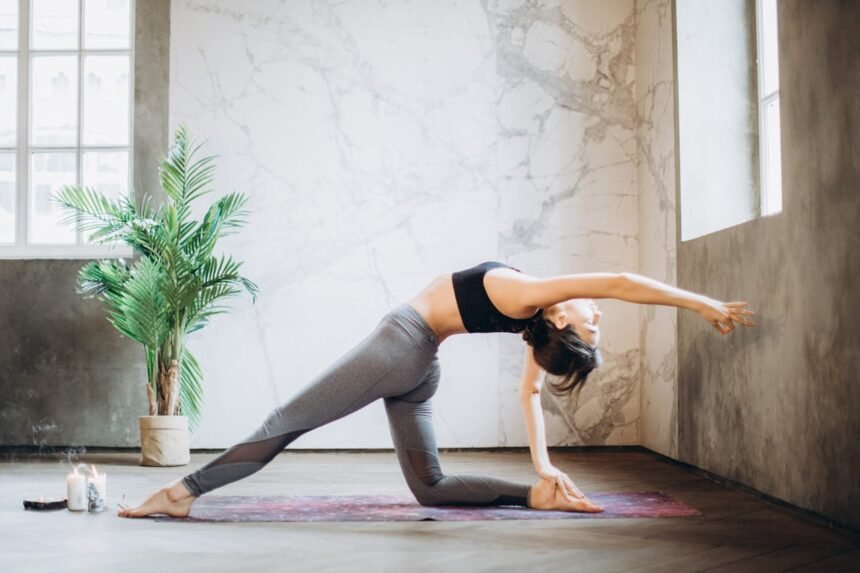
In recent years, the landscape of personal fitness has shifted dramatically from crowded studios to the sanctuary of the living room. Among the myriad of disciplines available, vinyasa yoga stands out as a dynamic, rhythmic practice that marries breath with movement. For the aspiring yogi, starting a vinyasa yoga at home beginner practice can feel daunting without a teacher’s immediate guidance. However, with the right mindset and structure, cultivating a home practice can be one of the most rewarding investments in your physical and mental well-being.
Understanding the Essence of Vinyasa
Before unrolling your mat, it is crucial to understand what distinguishes Vinyasa from other styles. Often referred to as “flow” yoga, Vinyasa is derived from the Sanskrit term nyasa, meaning “to place,” and the prefix vi, meaning “in a special way.” This translates to arranging poses in a specific, conscious sequence.
Unlike Hatha yoga, which often involves holding static postures for extended periods, Vinyasa is characterized by continuous movement. According to Wikipedia, this modern style of yoga evolved from the teachings of T. Krishnamacharya, emphasizing the transition between asanas (poses) as much as the poses themselves. This continuous movement builds internal heat, challenges cardiovascular endurance, and promotes a trance-like state of focus.
The Physiology of Flow: Why Practice at Home?
Establishing a home practice offers benefits that extend beyond saving money on studio memberships. It allows for a customized experience where you can listen to your body’s unique needs without the pressure of keeping up with a class.
Physical Benefits
Regular Vinyasa practice is a powerful tool for holistic health. The Mayo Clinic notes that yoga combines physical poses, controlled breathing, and meditation or relaxation, which can help reduce stress, lower blood pressure, and lower your heart rate. Because Vinyasa is fast-paced, it also serves as a light-to-moderate aerobic workout.
Mental Clarity
The synchronization of breath and movement requires intense focus, which anchors the mind in the present moment. This creates a state of “flow,” a psychological concept explored by Psychology Today as a state of complete immersion in an activity. For a beginner practicing at home, this mental break from household chores or remote work is invaluable.
Setting the Stage: Your Home Sanctuary
A successful vinyasa yoga at home beginner journey begins with the environment. You do not need a dedicated studio, but you do need a distraction-free zone.
- The Gear: At a minimum, invest in a non-slip yoga mat. As you progress, blocks and a strap are helpful for modifying poses. The New York Times Wirecutter reviews suggest looking for mats with good grip to prevent injury during sweaty sessions.
- The Atmosphere: Lighting and sound play a huge role. Soft lighting and instrumental music can help signal to your nervous system that it is time to switch from “fight or flight” to “rest and digest.”
- Safety First: Ensure you have enough space to extend your arms and legs fully without hitting furniture.
The Core Pillars of Vinyasa
To build a safe home practice, you must master three fundamental elements: Breath, Foundation, and Sequencing.
1. Ujjayi Pranayama (The Victorious Breath)
Breathing is the engine of Vinyasa. The specific technique used is Ujjayi breath, where you slightly constrict the back of your throat to create an audible, ocean-like sound while breathing through the nose. This regulates body temperature and maintains focus. The Cleveland Clinic emphasizes that controlled breathing can trigger the relaxation response, reducing anxiety.
2. Surya Namaskar (Sun Salutations)
Sun Salutations are the backbone of Vinyasa. They serve as a warm-up and a recurring sequence to reset the body. A standard Sun Salutation A includes:
- Mountain Pose (Tadasana)
- Upward Salute (Urdhva Hastasana)
- Forward Fold (Uttanasana)
- Halfway Lift (Ardha Uttanasana)
- Plank Pose
- Chaturanga Dandasana (Low Plank)
- Upward-Facing Dog (Urdhva Mukha Svanasana)
- Downward-Facing Dog (Adho Mukha Svanasana)
3. The “Vinyasa” Transition
When an instructor says “take a vinyasa,” they usually refer to the sequence: Plank → Chaturanga → Upward Dog → Downward Dog. For beginners, repeated Chaturangas can strain the shoulders. It is vital to learn proper alignment or modify by lowering knees to the floor. Yoga Journal offers excellent breakdowns on how to perform this transition without compromising the rotator cuff.
Structuring Your Home Session
Without a teacher, you become your own guide. A well-rounded Vinyasa practice generally follows a bell-curve structure.
The Sequence Arc
- Centering (3-5 mins): Child’s pose or seated meditation to connect with breath.
- Warm-up (10 mins): Gentle spinal movements (Cat-Cow) followed by Sun Salutations.
- Standing Series (15-20 mins): Warrior poses (I, II, and III), Triangle pose, and balancing postures. This is the peak of the heat building.
- Floor Series (10-15 mins): Backbends, hip openers (like Pigeon pose), and seated forward folds.
- Closing (5-10 mins): Supine twists and the final resting pose, Savasana.
According to the National Center for Complementary and Integrative Health (NCCIH), yoga is generally safe for healthy people when practiced appropriately. However, sequencing logically—warming up the body before deep stretching—is key to injury prevention.
Comparison: Vinyasa vs. Other Styles
Understanding where Vinyasa fits in the yoga ecosystem helps manage expectations regarding intensity and pace.
| Feature | Vinyasa (Flow) | Hatha | Yin Yoga | Ashtanga |
|---|---|---|---|---|
| Pace | Fast to Moderate | Slow to Moderate | Very Slow | Fast, vigorous |
| Focus | Breath-movement synchronization | Alignment and static holds | Deep connective tissue stretch | Strict, set sequence |
| Heat Generation | High (Internal heat) | Low to Medium | Low (Cool practice) | High (Internal heat) |
| Variety | High (Creative sequencing) | Medium | Low (Fewer poses) | None (Fixed series) |
| Best For | Cardio, focus, fluidity | Beginners learning basics | Flexibility, joint health | Discipline, stamina |
Common Pitfalls for Home Beginners
While practicing at home offers freedom, it also allows bad habits to go unchecked.
- Ego Lifting: Forcing your body into shapes it isn’t ready for (like deep backbends) often leads to strain. Harvard Health Publishing suggests that mindful practice is about listening to the body, not competing with an image in your head.
- Skipping Savasana: It is tempting to roll up the mat immediately after the workout. However, Savasana (Corpse Pose) is essential for nervous system integration. The Sleep Foundation highlights how yoga, particularly the cool-down phase, significantly improves sleep quality.
- Ignoring Alignment: In a studio, a teacher corrects you. At home, you must rely on body awareness. Using mirrors or recording yourself occasionally can be helpful.
Leveraging Technology
Even with a self-guided practice, external resources are valuable. Many platforms offer “follow-along” classes that are perfect for the vinyasa yoga at home beginner.
- Apps: Applications like Down Dog or Glo allow you to customize the length and difficulty of the flow.
- YouTube: Channels like Yoga with Adriene have popularized home practice globally.
Always verify the credentials of online instructors. The American Council on Exercise (ACE) recommends ensuring your guidance comes from certified professionals to maximize safety and effectiveness.
Conclusion: Rolling Out the Mat
Starting a vinyasa yoga at home beginner practice is a journey of self-discovery. It is not about performing the perfect handstand or touching your toes on day one; it is about showing up for yourself, day after day. By establishing a safe space, focusing on your breath, and respecting your body’s limits, you unlock a powerful tool for physical vitality and mental resilience.
Remember, the hardest part of the practice is often just rolling out the mat. Once you are there, let the breath guide you, and you will find your flow.
Disclaimer: Always consult with a healthcare professional before starting any new exercise regime, especially if you have pre-existing health conditions or injuries.