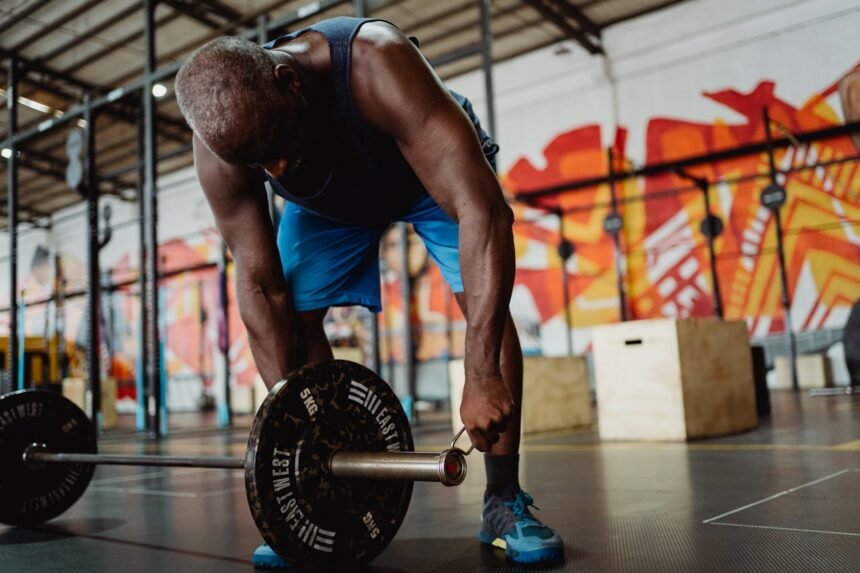
If you have ever seen someone in the gym straddling a barbell and lifting it with a vertical torso while their feet point in opposing directions, you may have witnessed the Jefferson squat. Often regarded as an old-school bodybuilding lift, this exercise has seen a resurgence in popularity thanks to modern bodybuilders seeking unique ways to stimulate hypertrophy.
While it may look unconventional, the Jefferson squat—also known as the Jefferson lift—offers unique biomechanical advantages that traditional squats and deadlifts cannot replicate. It challenges your stability, targets the adductors heavily, and allows for heavy loading with reduced spinal shear force.
Whether you are looking to break through a plateau or simply want to try a Jefferson deadlift variation to spice up your leg day, understanding the proper form is crucial to avoid injury. In this article, we will explore the mechanics, benefits, and safety protocols of this classic lift.
What Is the Jefferson Squat?
Named after the strongman Charles Jefferson, who popularised the movement in the early 20th century, the Jefferson squat is a hybrid movement. It occupies a space between a squat and a deadlift. Because the weight is lifted from the floor, it utilises straddle deadlift mechanics, yet the vertical torso angle and knee flexion mimic a deep squat.
The exercise is performed by straddling a barbell, with one foot forward and one foot back, usually at 90-degree angles to one another. This asymmetry makes it a multi-planar leg exercise, forcing the body to resist rotation while generating vertical force.
Unlike bilateral movements such as the back squat, the Jefferson squat places significant demand on the core to maintain stability. If you are interested in other lifts that challenge core stability through unique loading, you might want to learn How to Master the Zercher Squat for Superior Core Strength.
Muscles Worked
The Jefferson squat is a comprehensive lower-body developer. Because of the unique foot positioning, it targets muscles differently than standard lifts.
Quadriceps and Glutes
Like any squat pattern, the primary drivers are the quads and glutes. The upright torso position forces a high degree of knee flexion, leading to significant quadriceps strengthening. This is similar to the effect seen in trap-bar deadlifts but with added rotational stability requirements.
Adductors
The wide, staggered stance places the hips in an abducted and externally rotated position. This creates immense tension in the inner thighs, making the Jefferson squat a premier choice for adductor muscle development. Strong adductors are essential for overall hip stability and injury prevention.
Core and Obliques
Because you are lifting an asymmetrical load relative to your stance, your body naturally wants to twist. Resisting this rotation builds substantial anti-rotational core strength. This functional strength is vital not just for lifting, but for daily activities.
According to the Mayo Clinic, compound strength training exercises that engage multiple muscle groups are essential for metabolic health and functional fitness.
Benefits of the Jefferson Squat
Why should you include this awkward-looking lift in your routine? There are several compelling reasons.
Reduced Spinal Loading
One of the primary benefits is that it is a spine-sparing squat. Because the load is positioned directly under your centre of mass rather than on your back (like a back squat) or in front of your shoulders (like a front squat), there is significantly less shear force on the lumbar spine. This makes it an excellent alternative for those with lower back issues who still want to lift heavy.
Correcting Asymmetries
Most people have a dominant side. The asymmetrical lifting technique inherent in the Jefferson squat forces each leg to work independently to a degree, helping to identify and correct imbalances between the left and right sides of the body.
Understanding your body’s capabilities is key. To learn more about how strength ratios impact performance, read our guide on Absolute Strength vs Relative Strength: Understanding the Difference.
Hypertrophy
Bodybuilders like Kai Greene have famously utilised this lift. The Kai Greene leg workout philosophy often involves using unique angles to stimulate muscle growth. The deep stretch and unique tension curve make it effective for hypertrophy leg training, particularly if you are aiming for Sarcoplasmic Hypertrophy: What It Is and How to Achieve It.
How to Perform the Jefferson Squat
Proper execution is critical. This is not a lift you should rush into with heavy weights. Follow these steps to master the form.
1. The Setup
Place a barbell on the floor. Straddle the bar so that it runs between your legs.
Proper foot placement is the most tricky part of this lift. Place your front foot alongside the bar, pointing forward. Place your back foot behind you, rotated outwards at approximately 90 degrees. Your feet should be shoulder-width apart or slightly wider.
2. The Grip
Squat down with a straight back. Grasp the front of the bar with the hand on the same side as your front leg. Grasp the back of the bar with your other hand. This mixed grip prevents the bar from rolling. Ensure your palms are neutral or mixed, depending on comfort.
Research from the National Strength and Conditioning Association (NSCA) suggests that grip variation can influence muscle activation and stability during pulling movements.
3. The Ascent
Take a deep breath and brace your core. Drive through your feet, keeping your chest up and your spine neutral. The bar should rise vertically between your legs. As you stand, squeeze your glutes and quads. Avoid locking your knees aggressively at the top.
4. The Descent
Lower the weight under control by pushing your hips back and bending your knees. Do not simply drop the weight; controlling the eccentric phase is crucial for muscle growth. If you are interested in how lowering the weight builds muscle, check out How Eccentric Loading Can Accelerate Muscle Growth and Repair.
5. Switch Sides
Because this is an asymmetrical lift, you must switch your foot position and hand placement for the next set to ensure balanced development.
Common Mistakes and Safety Tips
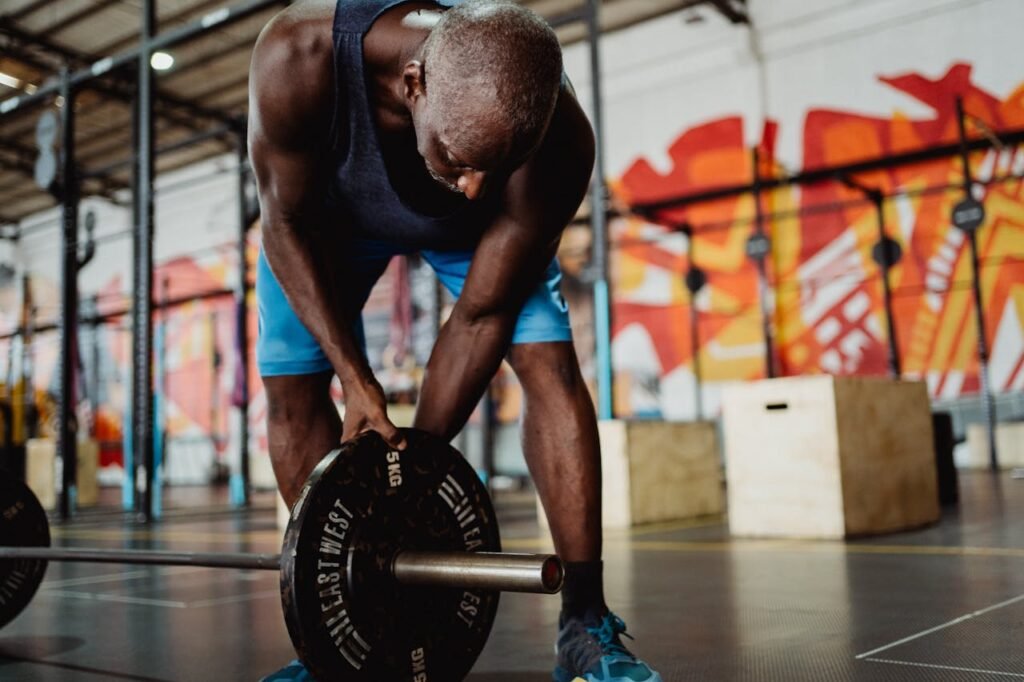
Despite its benefits, the Jefferson squat can be risky if performed poorly.
Rounding the Back
Just like a deadlift, rounding the lumbar spine is dangerous. Keep your chest elevated. If you struggle with back development or form, you might find our comparison on Rack Pulls vs Deadlifts: Which is Better for Back Development? helpful for understanding spinal positioning.
Knee Collapse
Ensure your knees track over your toes. Because of the split stance, the back knee often wants to cave inward (valgus collapse). This puts immense stress on the ligaments. According to OrthoInfo, maintaining proper alignment is the first line of defence against knee injuries.
Poor Hip Mobility
If you cannot get into the starting position without your heels lifting or your back rounding, you likely lack the necessary hip mobility for squatting. Do not force the depth. Work on your flexibility first.
Hitting “Sensitive Areas”
For those with male anatomy, the bar path runs dangerously close to the groin. Ensure your stance is wide enough and the bar is centred to avoid an unpleasant impact. This is one of the awkward lift benefits—it forces you to be hyper-aware of your body mechanics!
Programming the Jefferson Squat
This exercise works best as a secondary compound movement. It is generally not used for one-rep max testing due to the complexity of the setup.
- For Strength: 3–4 sets of 4–6 reps per side.
- For Hypertrophy: 3–4 sets of 8–12 reps per side.
Since this lift requires significant stability, you can combine it with isolation work or isometric holds. Learn more about The Science of Isometric Holds for Building Functional Strength to improve your stability at the bottom of the squat.
If you find yourself plateauing with standard squats, introducing the Jefferson squat can provide a novel stimulus. Similarly, techniques like Using Pin Squats to Overcome Training Plateaus and Build Power can be beneficial.
Tempo and Variation
To maximise the effectiveness of the Jefferson squat, pay attention to your lifting speed. Using a controlled tempo increases time under tension. Read our guide on Understanding Tempo Lifting for Maximised Muscle Hypertrophy for specific counts to use.
Additionally, you can add a pause at the bottom of the lift to eliminate the stretch reflex and build starting strength. This principle is explained further in Why You Should Include Pause Squats in Your Leg Day Routine.
The Bottom Line
The Jefferson squat is more than just a gym oddity. It is a powerful tool for building lower body mass, correcting asymmetries, and sparing the lower back. By mastering the straddle deadlift mechanics, you can unlock new levels of functional strength.
Incorporating this movement helps improve your Relative Strength, which is crucial for athletes and daily function. While it requires practice to master the proper foot placement and ensure posterior chain activation, the payoff in quad size and core stability is well worth the effort.
Always consult with a fitness professional before starting a new heavy lifting programme, especially if you have pre-existing conditions. Resources from the NHS provide excellent guidelines for starting safely.
Stay consistent, respect the technique, and do not be afraid to look a little different in the gym. The results will speak for themselves.
Additional Resources
- Core Stability: Harvard Health
- Anatomy of the Squat: Healthline
- Knee Safety: PubMed Central
- Biomechanics of Asymmetrical Lifting: PubMed
- Physical Activity Guidelines: CDC
- Proper Squat Technique: ACE Fitness