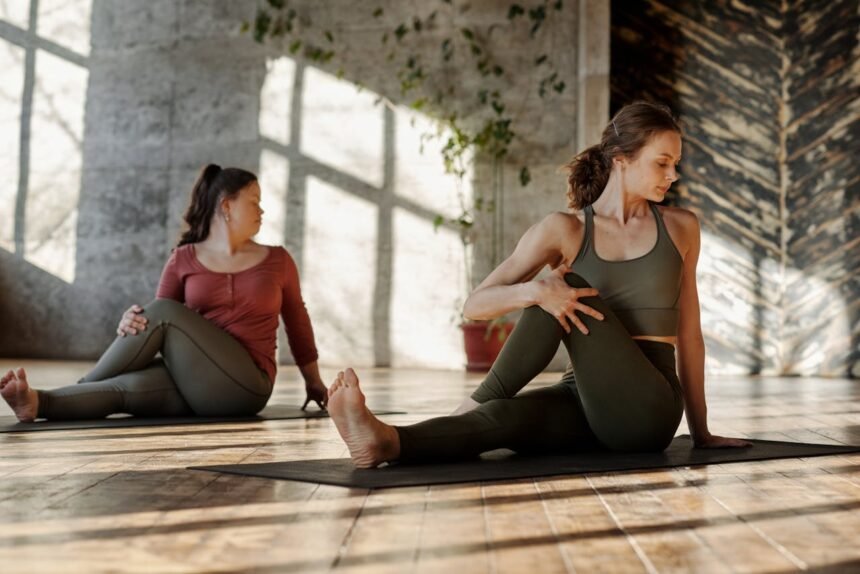
If there is one phrase that yoga teachers hear more than any other, it is likely this: “I can’t do yoga; I’m not flexible enough.” This sentiment, while common, is akin to saying you are too dirty to take a shower or too sick to go to the doctor. Flexibility is not a prerequisite for yoga; it is often a byproduct of the practice. However, the modern image of yoga—dominated by social media photos of slender bodies contorted into pretzel-like shapes—has created a significant barrier to entry for the general public.
The truth is that yoga is a functional system of movement and breath designed to meet you exactly where you are. Whether you are a runner with tight hamstrings, an office worker with stiff shoulders, or someone simply looking to move better, you can start yoga without being flexible. In fact, the “stiffer” you are, the more you have to gain from the practice. This comprehensive guide will explore how to approach the mat with limited range of motion, the science of stretching, and the tools available to make yoga accessible to everyone.
The Myth of Pre-Existing Flexibility
To understand why you don’t need to be bendy to begin, we must look at the roots of the practice. According to Wikipedia’s overview of Yoga as exercise, the physical postures (asanas) are a relatively modern emphasis in the grand timeline of yoga history. Originally, the primary goal was to prepare the body to sit comfortably for meditation. The acrobatics seen today are not the essence of the practice.
Functional vs. Aesthetic Yoga
When you focus on how a pose looks, you are practicing aesthetic yoga. When you focus on how a pose feels and how it serves your body, you are practicing functional yoga. For beginners with limited mobility, the goal is not to touch your toes but to stretch the muscles of the back and legs to improve circulation and reduce pain.
Harvard Health Publishing notes that yoga aids in balance, strength, and mindfulness regardless of your initial flexibility level. The practice teaches proprioception (body awareness), allowing you to respect your limits rather than pushing past them.
The Science of Stiffness: Why You Feel Tight
Before diving into the “how-to,” it is helpful to understand why you aren’t flexible. Stiffness can result from several factors:
- Sedentary Lifestyle: Prolonged sitting shortens the hip flexors and weakens the glutes.
- Genetics: The shape of your femoral head and hip socket dictates your ultimate range of motion.
- The Stretch Reflex: Also known as the myotatic reflex, this is your body’s defense mechanism against tearing a muscle. If you stretch too fast, the muscle contracts to protect itself.
Research from the National Center for Complementary and Integrative Health (NCCIH) suggests that yoga works on the nervous system as much as the muscular system. By breathing deeply (activating the parasympathetic nervous system), you tell your brain that it is safe to lower the guard of the stretch reflex, allowing muscles to lengthen gradually over time.
Choosing the Right Style for Low Flexibility
Not all yoga classes are created equal. If you are stiff, jumping into a fast-paced Ashtanga or Power Yoga class might lead to injury or discouragement. Instead, look for styles that emphasize alignment and prop usage.
Recommended Styles for Stiff Beginners
- Iyengar Yoga: Founded by B.K.S. Iyengar, this style is the gold standard for using props. It focuses on precise alignment.
- Yin Yoga: Involves holding passive floor poses for 3-5 minutes to target connective tissues (fascia) rather than just muscle.
- Hatha Yoga: A general term often used for slower-paced classes that focus on the basics.
Comparison of Yoga Styles for Limited Mobility
| Yoga Style | Pace | Prop Usage | Intensity | Best For |
|---|---|---|---|---|
| Iyengar | Slow & Methodical | Very High | Moderate | Precision, safety, and learning how to modify poses. |
| Yin | Very Slow | High | Low (Physical) / High (Mental) | Deep connective tissue release and joint mobility. |
| Restorative | Passive | Very High | Very Low | Relaxation and stress relief; minimal stretching sensation. |
| Hatha | Slow to Moderate | Moderate | Low to Moderate | Learning the foundational poses and breathwork. |
| Vinyasa | Fast/Flowing | Low to Moderate | High | Cardiovascular health (recommended only after learning basics). |
For a deeper dive into these distinctions, Verywell Fit offers a breakdown of the most popular styles to help you decide.
The Toolkit: Using Props to Bridge the Gap
One of the biggest mistakes beginners make is refusing to use props because they feel it is “cheating.” In reality, props are tools of intelligence. They bring the floor closer to you, allowing you to maintain structural integrity without straining.
- Yoga Blocks: These are essential for bringing the ground up to your hands in standing poses like Triangle or Forward Fold.
- Straps: If you cannot reach your feet in a seated forward fold, a strap acts as an arm extension, keeping your spine straight.
- Bolsters: Firm pillows used to support the body in restorative poses, allowing muscles to relax fully.
The official Iyengar Yoga website details how B.K.S. Iyengar invented many of these props specifically to help people with ailments and stiffness practice safely.
Top 3 Poses for the Inflexible (And How to Modify Them)
To start yoga without being flexible, you must learn the art of modification. Here is how to tackle three classic poses.
1. Downward-Facing Dog (Adho Mukha Svanasana)
- The Problem: Tight hamstrings and calves make it impossible to put heels on the floor or straighten the legs, causing the back to round.
- The Modification: Bend your knees deeply! Focus on pressing your hands into the mat and lengthening your spine toward the ceiling. Your heels do not need to touch the ground.
- Expert Insight: According to Yoga Journal, the priority in this pose is a straight spine, not straight legs.
2. Standing Forward Fold (Uttanasana)
- The Problem: Trying to touch toes leads to a hunched back and compressed chest.
- The Modification: Keep a micro-bend (or deep bend) in your knees. Place two blocks under your hands. Let your head hang heavy to release the neck.
3. Seated Forward Bend (Paschimottanasana)
- The Problem: Tight lower backs prevent hinging forward.
- The Modification: Sit on a folded blanket to elevate your hips. This slight elevation tilts the pelvis forward, neutralizing the lumbar curve. Use a strap around the soles of your feet and pull gently with a straight spine.
The Mental Game: Letting Go of Ego
Starting yoga as a stiff individual is a lesson in humility. You may look around the class and see others performing splits or backbends. It is vital to remember that mental health benefits are a massive part of the practice. Comparison is the thief of joy—and in yoga, the thief of progress.
Focus on your breath. If you are breathing deeply and feeling a stretch, you are doing the yoga perfectly. The Mayo Clinic highlights that yoga is a stress-reduction technique; worrying about your flexibility contradicts the purpose of the practice.
Consistency Over Intensity
If you want to increase flexibility, consistency is key. A study cited by ACE Fitness (American Council on Exercise) suggests that frequent, moderate stretching is more effective than infrequent, intense stretching.
Aim for 15 minutes a day rather than one 90-minute class a week. Over weeks and months, the connective tissues will adapt. You will notice that you can reach a little further, sit a little taller, and move with greater ease.
Tips for a Sustainable Practice
- Warm Up: Never stretch cold muscles. Do a few minutes of walking or gentle movement first.
- Listen to Pain: Discomfort is okay; sharp, shooting pain is not. This is a sign of potential injury, particularly in joints.
- Breathe: Holding your breath creates tension. Fluid breath encourages release.
For those dealing with specific conditions like arthritis which limits flexibility, Johns Hopkins Medicine confirms that gentle yoga is safe and effective for symptom management.
Conclusion
Thinking you need to be flexible to start yoga is a misunderstanding of what yoga truly is. It is a practice of self-discovery, breath control, and gradual improvement. By utilizing props, choosing the right style, and modifying poses to fit your unique anatomy, you can unlock the myriad benefits of this ancient discipline.
Do not wait until you can touch your toes to step onto the mat. Start where you are, use what you have, and let the practice do the rest. Your body—stiffness and all—is ready to begin.
Ready to start your journey? Look for a “Beginner Basics” or “Iyengar” class at your local studio this week, and don’t forget to ask for blocks!