Whether you are a powerlifter chasing a new deadlift personal best or a fitness enthusiast looking to improve daily functionality, your connection to the weight is the most critical link in the chain. Often, the limiting factor in strength training is not the back or legs, but the hands.
Using specific grip tools can unlock latent potential in your major lifts and improve overall upper body resilience. While straps and hooks have their place, relying on them exclusively can mask weaknesses. Developing raw hand strength requires a strategic approach using the right equipment.
This article explores the most effective tools for building a vice-like grip, the anatomy of forearm strength, and how to integrate these implements into your routine safely.
Overview: Why Grip Strength Matters
Grip strength is more than just a measure of how hard you can squeeze a barbell. It is a powerful biomarker for overall health. According to research published by Harvard Health, grip strength is often correlated with cardiovascular health and longevity.
From a performance standpoint, a stronger grip allows for greater neural drive. This phenomenon, known as concurrent activation potentiation (or irradiation), means that by contracting your hands harder, you can generate more force in surrounding muscle groups, such as the shoulders and upper back. This is why Why Relative Strength Matters for Athletes and Daily Function is such a crucial concept; your ability to manipulate your own body weight and external loads relies heavily on hand integrity.
The Three Types of Grip
To effectively utilise grip tools, one must understand the three distinct types of grip strength:
- Crush Grip: The ability to squeeze something between your fingers and palm (e.g., shaking hands).
- Pinch Grip: Holding an object between the thumb and fingers (e.g., holding a weight plate).
- Support Grip: The ability to hold onto an object for an extended period (e.g., carrying groceries or hanging from a bar).
Essential Grip Tools for Your Gym Bag
Investing in a few pieces of specialised equipment can yield high returns. Below are the best tools categorised by their primary function.
1. Hand Grippers (Crush Grip)
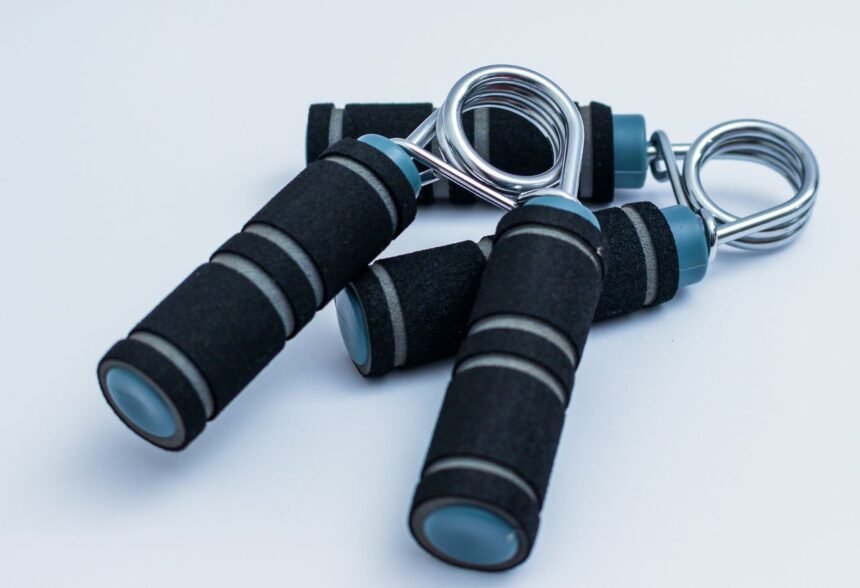
Hand grippers are the gold standard for crush grip training. These torsion-spring devices come in various resistance levels. Unlike the cheap plastic versions found in department stores, high-quality metal grippers offer resistance levels that can challenge even elite strongmen.
How to use them:
Perform sets of fully closing the handles. For hypertrophy, aim for 8–12 reps. For pure strength, work with a gripper you can only close 3–5 times. Regular use helps distinctively with brachioradialis isolation and general forearm density.
2. Fat Gripz and Thick Bar Adapters
Thick bar training is one of the most efficient ways to recruit more motor units in the arms. By increasing the diameter of the handle, you force the hand to work much harder to maintain a hold, actively engaging the thumb and weak points in the flexors.
Fat gripz benefits include increased muscle activation in the biceps and forearms during standard movements like curls or rows. If you are struggling with joint issues, this wider grip can also reduce stress on the elbows.
For those interested in dynamic movement, A Complete Guide to Steel Club Training for Grip and Joint Health offers an excellent alternative to static thick bar holds, blending mobility with thick-handle conditioning.
3. Pinch Blocks and Hubs
Pinch strength exercises are often neglected but are vital for thumb strength. Pinch blocks are wooden or metal blocks attached to a loading pin. You must lift the weight by pinching the block with your fingertips and thumb.
This type of training targets the specific muscles used when your hand is in an open position. Developing this strength is essential for athletes who play ball sports or grapple. Similarly, plate pinch hold drills—where you hold two smooth bumper plates together—are a cost-effective alternative if you do not have specialised blocks.
4. Wrist Rollers
A wrist roller workout provides an intense pump and strengthens both the extensors and flexors of the forearm. The device consists of a handle with a rope attached to a weight. You roll the weight up and down by rotating your wrists.
This tool is exceptional for hypertrophy. However, form is paramount. Ensure your elbows remain tucked or your arms extended straight out without recruiting the shoulders to cheat the movement. This is similar to the discipline required in The Science of Isometric Holds for Building Functional Strength, where strict positioning yields the best results.
5. Finger Extensor Bands
Most lifting involves flexion (closing the hand). This can lead to muscle imbalances and elbow pain. Finger extensor bands provide resistance as you open your hand. Strengthening the extensors is a critical