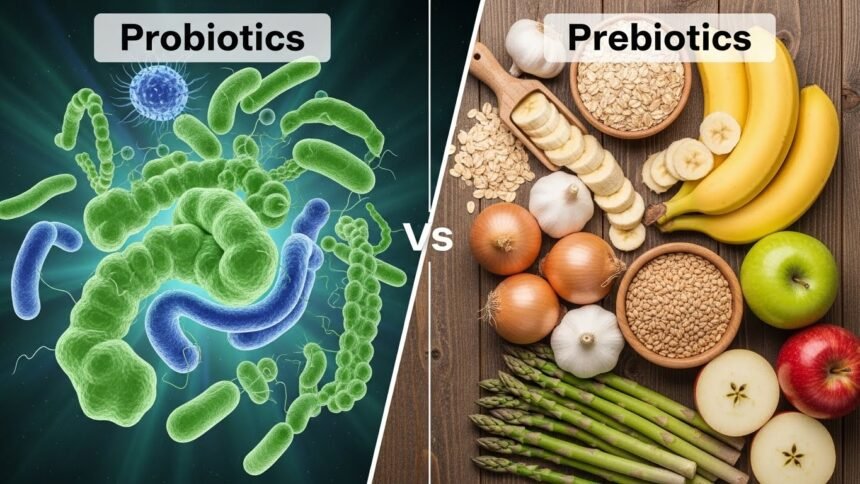
Gut health has become a dominant topic in the wellness world, and for good reason. Your gastrointestinal tract is not just a tube for digesting food; it is a complex ecosystem that influences everything from your immune system to your mental health.
Within this conversation, you will often hear two terms paired together: probiotics vs prebiotics. While they sound similar, they play distinct yet complementary roles in maintaining your health.
Understanding the difference between these two components is crucial if you are looking to optimise your microbiome. Are you feeding the right bacteria? Are you introducing new ones? It can be confusing to navigate the aisles of supplements and health foods without a clear map.
This article explains exactly what probiotics and prebiotics are, how they differ, and how they work together to support your overall wellbeing.
What Are Probiotics?
Probiotics are live microorganisms—primarily bacteria and yeasts—that provide health benefits when consumed in adequate amounts. You can think of them as the “good” bacteria that help populate your gut microbiome.
These microorganisms naturally exist in your body, but you can also obtain them through certain foods and supplements. They act as a line of defence, helping to keep “bad” bacteria in check and preventing them from proliferating and causing illness.
Common Strains
Not all probiotics are the same. Different strains have different effects on the body. The most common groups include:
- Lactobacillus: This is perhaps the most well-known probiotic. It is typically found in yoghurt and other fermented foods. Different strains can help with diarrhoea and may help people who cannot digest lactose, the sugar in milk.
- Bifidobacterium: You can find this in some dairy products. It may help ease symptoms of irritable bowel syndrome (IBS) and other conditions.
- Saccharomyces boulardii: This is actually a yeast found in probiotics. It appears to help fight diarrhoea and other digestive problems.
When you consume probiotics, you are essentially sending reinforcements to your gut to help maintain a healthy balance of microflora.
What Are Prebiotics?
On the other side of the equation, we have prebiotics. Unlike probiotics, prebiotics are not alive. They are types of dietary fibre found naturally in plants that your body cannot digest.
Because your digestive system cannot break these fibres down, they travel to your lower digestive tract virtually intact. Once they reach the colon, they act as a food source for the healthy bacteria (probiotics) already living there.
The Mechanism of Action
When your good gut bacteria eat prebiotic fibre, they ferment it. This fermentation process produces short-chain fatty acids (SCFAs), such as butyrate, acetate, and propionate.
According to the British Dietetic Association, these fatty acids are essential for gut health. They provide energy to the cells lining your colon, strengthen the gut barrier, and help regulate inflammation.
In simple terms: Probiotics are the soldiers, and prebiotics are the supplies that keep them alive and fighting.
Probiotics vs Prebiotics: The Comparison
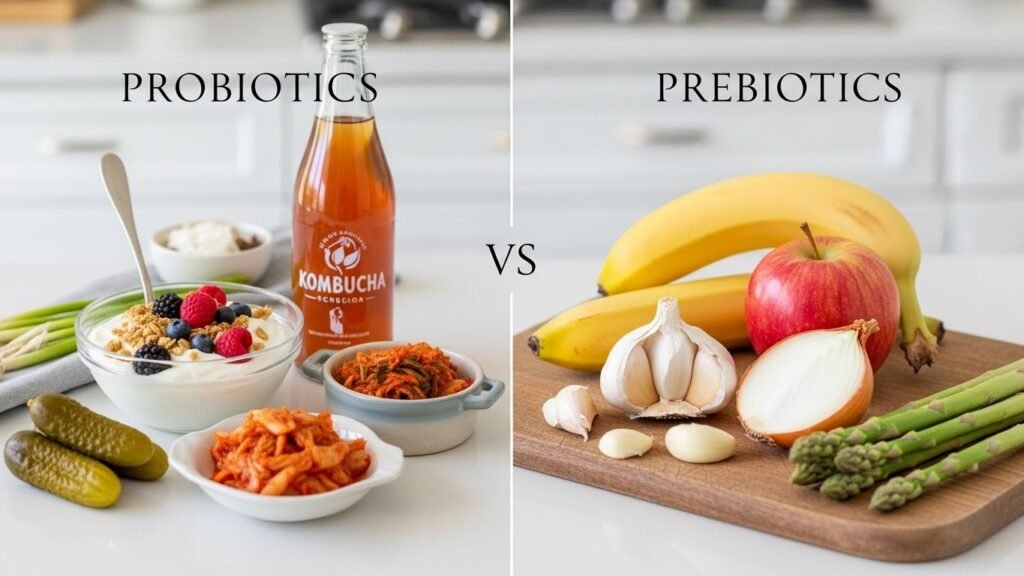
To visualise the probiotics vs prebiotics distinction, it helps to see them side-by-side.
| Feature | Probiotics | Prebiotics |
|---|---|---|
| Definition | Live beneficial bacteria and yeasts. | Non-digestible plant fibres. |
| Function | Adds to the population of good bacteria. | Feeds the existing good bacteria. |
| Nature | Living organisms (sensitive to heat/stomach acid). | Carbohydrates (resilient to heat/acid). |
| Sources | Yoghurt, kefir, kimchi, sauerkraut. | Garlic, onions, bananas, oats, chicory root. |
| Primary Benefit | Restores gut flora balance. | Stimulates growth of gut flora. |
Why Are They Important?
The combination of probiotics and prebiotics is vital because your gut microbiome affects much more than just digestion. An imbalance in gut bacteria—known as dysbiosis—has been linked to numerous chronic health conditions.
Digestive Health
This is the most direct benefit. Probiotics can help reduce symptoms of antibiotic-associated diarrhoea and combat IBS symptoms like bloating and gas. Prebiotics help maintain bowel regularity by adding bulk to the stool and keeping the gut lining healthy.
The Gut-Brain Axis
Surprisingly, your gut communicates directly with your brain. This connection is called the gut-brain axis. Research suggests that a healthy microbiome can influence mood and cognitive function.
Some studies, including reviews discussed by Harvard Health, indicate that certain probiotic strains may help alleviate symptoms of anxiety and depression, highlighting the systemic impact of gut health.
Immune System Support
A significant portion of your immune system resides in your gut. By maintaining a diverse and robust microbiome, you enhance your body’s ability to ward off infections. The SCFAs produced by prebiotic fermentation also play a role in modulating immune responses.
Sources of Probiotics
Incorporating probiotics into your diet is often best achieved through fermented foods. These foods have undergone a process where natural bacteria feed on sugar and starch, creating lactic acid.
Here are some of the best sources:
- Yoghurt: Choose options with “live and active cultures”. Avoid those with high amounts of added sugar.
- Kefir: A fermented probiotic milk drink. It is made by adding kefir grains to cow’s or goat’s milk.
- Sauerkraut: Finely cut raw cabbage that has been fermented by various lactic acid bacteria. Make sure to buy unpasteurised versions, as heat kills the bacteria.
- Tempeh: A fermented soybean product. It forms a firm patty and has a nutty, earthy flavour.
- Kimchi: A spicy Korean side dish usually made from fermented cabbage.
- Miso: A Japanese seasoning produced by fermenting soybeans with salt and a fungus named koji.
For a comprehensive list of fermented foods, you can refer to resources on Healthline.
Sources of Prebiotics
Prebiotics are generally easier to include in a standard diet because they are found in many common fruits, vegetables, and whole grains.
Top prebiotic foods include:
- Chicory Root: Approximately 47% is prebiotic fibre (inulin).
- Dandelion Greens: These can be used in salads and are a great source of fibre.
- Jerusalem Artichoke: Also known as the sunroot, it is rich in inulin.
- Garlic and Onions: Versatile ingredients that promote the growth of beneficial Bifidobacteria.
- Asparagus: A great source of prebiotic fibre and antioxidants.
- Bananas: Specifically, under-ripe (green) bananas are high in resistant starch, which acts like a prebiotic.
- Oats: They contain beta-glucan fibre and resistant starch.
Should You Take Supplements?
Ideally, you should aim to get both probiotics and prebiotics from whole foods. However, supplements can be useful, particularly if you are recovering from a course of antibiotics or managing a specific condition like IBS.
Probiotic Supplements
When choosing a probiotic supplement, look for the CFU (Colony Forming Units) count. This indicates the number of live bacteria per dose. The NHS notes that while probiotics are generally considered safe, they are regulated as food supplements rather than medicines, meaning quality can vary significantly between brands.
Prebiotic Supplements
Prebiotic supplements often contain inulin or oligosaccharides. While effective, they can sometimes cause more initial bloating than food sources as your gut bacteria adjust to the influx of fibre.
Synbiotics
You may also encounter products labelled as “synbiotics”. These are supplements that combine both probiotics and prebiotics in one dose. The theory is that the prebiotic helps the probiotic survive the journey through the gut.
Risks and Considerations
While generally safe, increasing your intake of probiotics and prebiotics can come with temporary side effects.
Digestive Discomfort
Rapidly increasing fibre (prebiotics) or introducing new bacterial strains (probiotics) can lead to gas, bloating, and changes in bowel movements. This is usually the result of bacteria fermenting the food and releasing gas.
Vulnerable Groups
People with compromised immune systems, such as those undergoing chemotherapy or with severe underlying illnesses, should consult a doctor before taking probiotic supplements. According to the Mayo Clinic, there is a small risk that the bacteria in probiotics could cause an infection in these individuals.
Practical Tips for Gut Health
Optimising your gut health does not require an expensive cabinet full of pills. Here are practical ways to balance probiotics vs prebiotics in your daily life:
- Start Slow: If you are new to fermented foods or high-fibre diets, introduce them gradually to avoid bloating.
- Eat a Diverse Diet: A diverse diet leads to a diverse microbiome. Try to eat 30 different plant-based foods per week.
- Check Labels: When buying yoghurt or sauerkraut, look for words like “raw”, “unpasteurised”, or “contains live cultures”.
- Cool Your Carbs: Cooking and then cooling potatoes, rice, and pasta increases their resistant starch content, effectively turning them into prebiotics.
- Limit Sugar: High-sugar diets can feed harmful bacteria and yeasts like Candida, upsetting the balance.
For more clinical guidance on strain specificity, the ISAPP (International Scientific Association for Probiotics and Prebiotics) provides excellent resources for consumers and healthcare professionals.
The Bottom Line
The debate of probiotics vs prebiotics is not about choosing one over the other. They are teammates working toward the same goal: a healthy, balanced gut.
Probiotics replenish your army of good bacteria, while prebiotics provide the nourishment they need to thrive. For most people, a diet rich in fruits, vegetables, pulses, and fermented foods is sufficient to maintain this balance.
However, if you struggle with specific digestive issues, speaking with a healthcare professional or a dietitian can help you determine if supplements are right for you. Remember, a healthy gut is a foundational pillar of a healthy life.
Disclaimer: This article is for informational purposes only and does not constitute medical advice. Always consult with a healthcare professional before starting any new supplement regime.
Additional References: