
Imagine waking up without that familiar stiffness in your lower back or the tightness in your shoulders. For many, mobility is something taken for granted until it begins to fade. However, the path to a fluid, pain-free range of motion is not reserved for gymnasts or elite athletes. Incorporating easy daily stretches for flexibility into your routine is one of the most effective ways to enhance your quality of life, regardless of your age or fitness level.
In our modern, increasingly sedentary world, our bodies are often locked in static positions for hours on end. This leads to what health professionals call “sedentary death syndrome” or simply the deterioration of muscle elasticity. This comprehensive guide will walk you through the science of mobility, safety protocols, and a practical routine designed to keep you moving freely through every decade of life.
The Vital Difference: Mobility vs. Flexibility
Before diving into the exercises, it is crucial to understand the mechanics of movement. While often used interchangeably, flexibility and mobility are distinct concepts.
- Flexibility refers to the ability of a muscle to lengthen passively through a range of motion (ROM).
- Mobility is the ability of a joint to move actively through a range of motion.
Think of flexibility as having the rubber band length, while mobility is the ability to control that rubber band. According to the American Council on Exercise (ACE), both are essential for functional movement. Without adequate flexibility, your mobility is restricted; without mobility, your flexibility is uncontrollable and can lead to injury.
Why You Need to Stretch Now
Ignoring flexibility training can lead to a cascade of physical issues. Tight muscles pull on joints, altering posture and causing pain. For example, tight hip flexors from sitting all day can tilt the pelvis forward, contributing to chronic lower back pain.
Research published by Harvard Health Publishing emphasizes that stretching keeps the muscles flexible, strong, and healthy. Without it, muscles shorten and become tight. Then, when you call on the muscles for activity, they are weak and unable to extend all the way.
Safety First: Rules of Engagement
To reap the benefits of easy daily stretches for flexibility, you must approach your routine with mindfulness. Aggressive stretching can trigger the “myotatic reflex,” causing the muscle to contract to protect itself, which is counterproductive.
- Warm Up First: Never stretch a cold muscle. A cold muscle is like a dry rubber band—prone to snapping. Perform 5 minutes of light movement or utilize dynamic warm-ups before deep stretching.
- Breathe: Breath is the bridge between the mind and body. Deep, diaphragmatic breathing activates the parasympathetic nervous system, telling your muscles it is safe to relax.
- Consistency Over Intensity: It is better to stretch gently for 10 minutes every day than to force painful stretches for an hour once a week.
The Routine: Easy Daily Stretches for Flexibility
This routine addresses the major muscle groups most affected by daily life. Hold each static stretch for 30–60 seconds, breathing deeply.
1. The Neck Release (Upper Trapezius)
Target: Relieves tension from looking at screens.
Sit or stand tall. Gently drop your right ear toward your right shoulder. To deepen the stretch, extend your left arm down and away from your body. This combats “tech neck,” a growing concern identified by the Cleveland Clinic.
2. The Doorway Chest Opener
Target: Pectorals and Anterior Deltoids.
Stand in a doorway. Place your forearms on the doorframe at a 90-degree angle (cactus arms). Step one foot forward gently until you feel a stretch across your chest. This is vital for correcting the hunched-over posture associated with computer work.
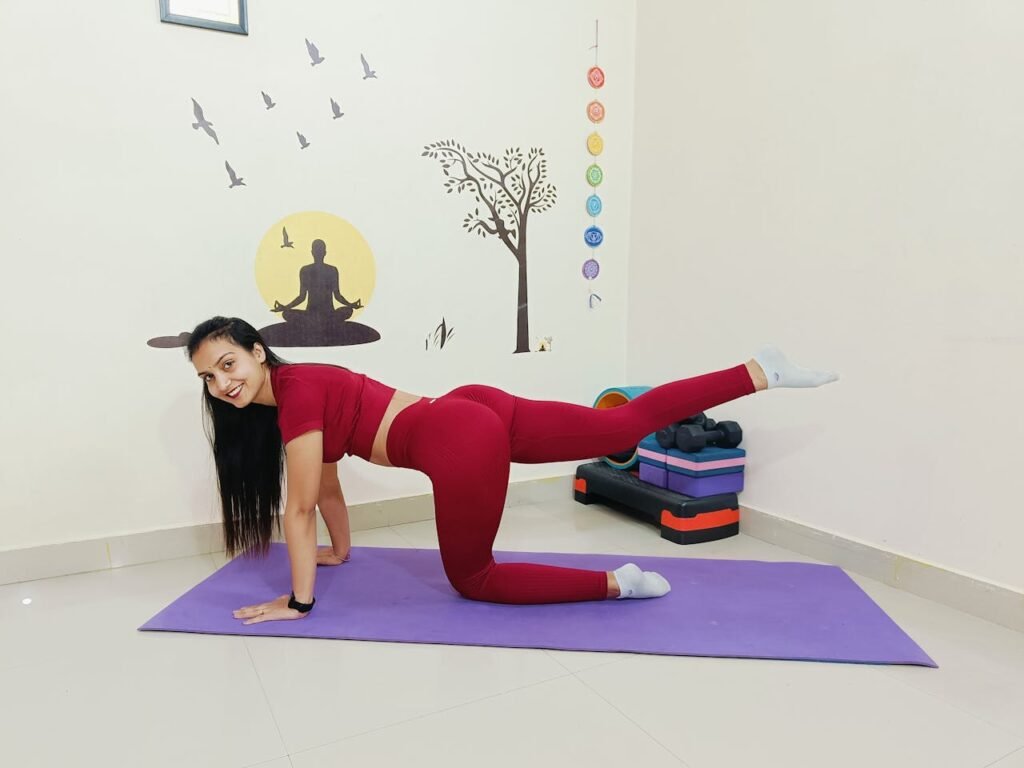
3. Cat-Cow Stretch
Target: Spine and Core.
Start on all fours. Inhale, dropping your belly and lifting your gaze (Cow). Exhale, arching your back toward the ceiling and tucking your chin (Cat). This promotes spinal fluid circulation and disc health, supported by recommendations from the Arthritis Foundation.
4. Standing Hip Flexor Lunge
Target: Iliopsoas (Hip Flexors).
Step your right foot forward and lower your left knee toward the ground (use a cushion if needed). Tuck your pelvis under (glute squeeze) and lean forward slightly. If you sit for more than 4 hours a day, this is non-negotiable for lower back health.
5. Seated Hamstring Stretch
Target: Posterior Chain.
Sit on the floor with one leg extended and the other bent inward. Hinge at the hips—keeping a straight back—and reach toward your toes. Avoid rounding the spine. Tight hamstrings are a primary contributor to lumbar pain.
6. Figure-Four Glute Stretch
Target: Piriformis and Glutes.
Lie on your back. Cross your right ankle over your left knee. Grasp the back of your left thigh and pull it gently toward you. This can help alleviate sciatic pain.
Stretching Through the Ages
Your body’s needs change as you age. Here is how to adapt your easy daily stretches for flexibility throughout your lifespan.
The 20s and 30s: Counteracting Stress
In this stage, the focus is on counteracting the effects of long work hours and repetitive stress. Focus on the chest, neck, and hips. Establishing a habit now will pay dividends in later years.
The 40s and 50s: Preserving Range of Motion
Collagen production decreases, and joints may stiffen. The National Institute on Aging suggests focusing on rotational movements to maintain spinal mobility. Consistency becomes critical here to prevent the onset of arthritis-related stiffness.
The 60s and Beyond: Balance and Independence
Flexibility is directly linked to balance. Tight ankles and hips can increase fall risk. Gentle yoga or Tai Chi are excellent, low-impact ways to maintain flexibility while also training proprioception (body awareness).
Data Comparison: Static vs. Dynamic Stretching
Understanding when to use which type of stretching is key to performance and injury prevention. The following table breaks down the two primary methodologies.
| Feature | Dynamic Stretching | Static Stretching |
|---|---|---|
| Definition | Active movements moving joints through full ROM. | Holding a specific position to lengthen muscle. |
| Best Time | Pre-workout / Morning Warm-up. | Post-workout / Evening relaxation. |
| Goal | Increase body temperature, blood flow, and neural priming. | Lengthen muscle tissue and relax the nervous system. |
| Examples | Arm circles, leg swings, torso twists. | Toe touch hold, butterfly stretch, calf stretch. |
| Injury Risk | Low (if controlled). | Moderate (if done on cold muscles). |
Source data aggregated from guidelines by the American College of Sports Medicine (ACSM).
Overcoming Barriers to Consistency
The biggest hurdle to better mobility isn’t physical; it is behavioral. Many view stretching as an optional “add-on” to a workout rather than a standalone necessity.
- The “No Time” Myth: You do not need an hour. A 10-minute routine performed while watching TV or listening to a podcast is effective.
- Habit Stacking: Associate your stretching routine with an existing habit, such as brushing your teeth or brewing coffee. This concept, often discussed in behavioral psychology, makes the new habit stickier.
As noted by the Centers for Disease Control and Prevention (CDC), physical activity, which includes flexibility work, is one of the most important things you can do for your health.
Conclusion: Your Mobility is Your Freedom
Flexibility is not just about being able to touch your toes; it is about the freedom to tie your shoes, reach for a high shelf, and play with your children or grandchildren without pain. By integrating these easy daily stretches for flexibility into your life, you are investing in a future of independence and vitality.
Don’t wait for stiffness to set in. Choose three stretches from the list above and perform them today. Your future self will thank you for the range of motion you preserve today.
Disclaimer: Always consult with a healthcare provider before starting any new exercise routine, especially if you have a history of injury or chronic health conditions. For more information on physical activity guidelines, visit Health.gov.