You wake up, draw the curtains, and expect to see a crisp, blue morning. Instead, the sky is a hazy, milky grey, or perhaps an unsettling shade of burnt orange. The sun appears as a dim red disc, barely piercing the gloom.
It feels apocalyptic, yet there isn’t a fire for thousands of miles.
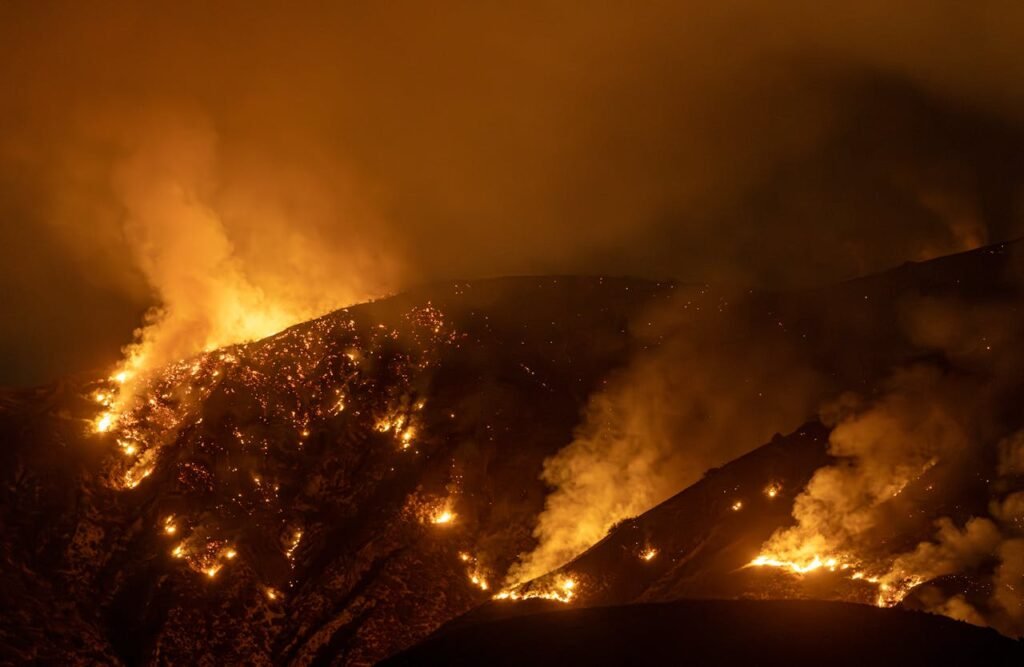
This phenomenon has become increasingly common across the UK and Europe. As wildfires rage in locations as distant as Canada, California, or Southern Europe, the smoke they generate does not simply stay put. It travels across oceans and continents, carried by upper-atmospheric winds, eventually settling in our local neighbourhoods.
While the visual effect can be dramatic, the impact on air quality is a serious public health concern. Seeing smoke from a continent away can provoke anxiety, but understanding the science behind it empowers you to take control.
Here, we explore exactly how wildfire smoke travels such vast distances, what it contains, and the practical, evidence-based steps you can take to protect your health when the air quality drops.
What is wildfire smoke and how does it travel?
Wildfire smoke is not just simple ash; it is a complex, toxic mixture of gases and fine particles produced when wood and other organic materials burn.
The primary concern for long-range transport is Particulate Matter 2.5 (PM2.5). These are microscopic particles less than 2.5 micrometres in diameter—roughly 30 times smaller than a single human hair.
Because these particles are so lightweight, they can be lifted high into the atmosphere by the intense heat of a wildfire. Once they reach the upper troposphere, they are caught by high-altitude wind currents, such as the jet stream, described by the Met Office as a ribbon of strong winds moving high above the Earth.
The ‘Plume’ Effect
Once in the jet stream, these smoke plumes can travel thousands of miles in a matter of days.
Satellite imagery from organisations like NASA often tracks these plumes moving from North America across the Atlantic to the UK. As the smoke travels, it may thin out, but it can also mix with local pollution, creating a ‘chemical cocktail’ that degrades air quality significantly.
According to the European Environment Agency, transboundary air pollution is a major factor in local air quality episodes, meaning the air you breathe in London or Manchester can be directly affected by forestry management issues in British Columbia.
Health risks: Why distance doesn’t equal safety
Even after travelling 3,000 miles, wildfire smoke retains the ability to harm human health. When you inhale PM2.5, the particles are small enough to bypass your body’s natural defences (nose hair and mucus) and travel deep into your lungs.
From there, they can enter your bloodstream, causing systemic inflammation.
Respiratory Impacts
The most immediate effects are often felt in the respiratory system. You might notice:
- A scratchy throat or coughing.
- Runny nose or sinus irritation.
- Shortness of breath during exercise.
For those with pre-existing conditions, the risks are higher. The NHS warns that triggers like smoke can cause severe asthma attacks. Inflammation in the lungs can persist even after the skies have cleared.
Cardiovascular Risks
Emerging research suggests that the heart is just as vulnerable as the lungs.
The British Heart Foundation highlights that fine particulate matter can damage blood vessels and increase the risk of blood clots. This can trigger heart attacks and strokes in vulnerable individuals, particularly the elderly.
Mental Health Considerations
It is important to acknowledge the psychological toll. A study discussed by Healthline notes that poor air quality and the visual reminder of climate change (often called ‘eco-anxiety’ or ‘solastalgia’) can impact mental wellbeing.
Actionable steps to protect yourself
When the forecast predicts a plume of smoke arriving, or you wake up to hazy skies, you do not need to panic. There are effective ways to reduce your exposure.
1. Monitor Air Quality Daily
Do not rely solely on your eyes. Smoke at high altitudes can block the sun without affecting ground-level air, while invisible particles can be hazardous at ground level.
Check the Daily Air Quality Index (DAQI) provided by DEFRA. This UK government resource provides a simple 1-10 banding system to help you plan your day.
2. Create a ‘Clean Air’ Room
If the outside air is toxic, your home needs to be a sanctuary.
- Keep windows and doors shut: This is the most effective first line of defence.
- Use an Air Purifier: Look for a device with a HEPA (High Efficiency Particulate Air) filter. These are certified to remove 99.97% of dust, pollen, and smoke particles.
- Avoid adding indoor pollution: Do not burn candles, use wood burners, or fry food at high temperatures during smoke events.
3. Wear the Right Mask
If you must go outside when air quality levels are ‘High’ or ‘Very High’, a standard cloth mask or surgical mask is insufficient. They are designed to catch droplets you exhale, not tiny particles you inhale.
Public health advice on GOV.UK emphasises reducing exposure. If you require respiratory protection, opt for FFP2 or FFP3 masks (equivalent to N95). These form a tight seal around the face and filter out fine particulates.
4. Adjust Your Routine
Exercise makes you breathe deeper and faster, pulling more pollution into your lungs.
- Swap the run for the gym: Move your cardio indoors where air is filtered.
- Walk, don’t jog: If you must be outside, keep your heart rate low.
- Timing: Pollution often settles overnight and is worst in the morning or evening. Mid-day might occasionally be clearer, depending on wind patterns.
Comparison: Choosing the right protection
Not all protective measures are created equal. The table below outlines which masks and filters are effective against wildfire smoke (PM2.5).
| Protection Type | Effectiveness against PM2.5 | Best Use Case |
|---|---|---|
| Cloth Mask | Low | Basic hygiene; offers almost no protection against smoke. |
| Surgical Mask | Low to Moderate | Catches droplets; gaps at the sides allow smoke to enter. |
| FFP2 / N95 Mask | High | Filters ~94-95% of particles if fitted correctly. Ideal for outdoor necessity. |
| HEPA Air Purifier | Very High | The gold standard for indoor air cleaning. |
| Activated Carbon | Moderate (Odours) | Removes gases and smells, but must be paired with HEPA for particles. |
Frequently asked questions
Does rain clear the smoke?
Generally, yes. Rain acts as a ‘scavenger’, washing particulate matter out of the air and depositing it on the ground. A heavy downpour is often the quickest way to improve local air quality.
Can I rely on smells to detect danger?
Not always. While fresh smoke smells strong, smoke that has travelled thousands of miles may lose its distinct campfire scent due to chemical changes in the atmosphere, yet the harmful PM2.5 particles remain. Always check the data.
Are children more at risk?
Yes. Children breathe faster than adults and their lungs are still developing. Asthma + Lung UK advises keeping children with respiratory conditions indoors during high pollution episodes.
How do I know what acts as a safe level?
The World Health Organization (WHO) sets global guidelines for air quality. However, there is no completely ‘safe’ level of PM2.5, which is why minimising exposure is always the best strategy.
The bottom line
Wildfire smoke is no longer just a problem for those living near forests. In our interconnected climate system, smoke is a global traveller that can affect air quality in the UK and beyond.
While the sight of hazy skies can be unsettling, knowledge is your best defence. By monitoring local air quality forecasts, investing in HEPA filtration, and knowing when to stay indoors, you can significantly mitigate the risks to your health.
If you experience persistent chest pain, difficulty breathing, or a severe cough during a smoke event, do not hesitate to contact your GP or NHS 111 for advice. Prioritising your lung health is essential, especially as these weather patterns become more frequent.