


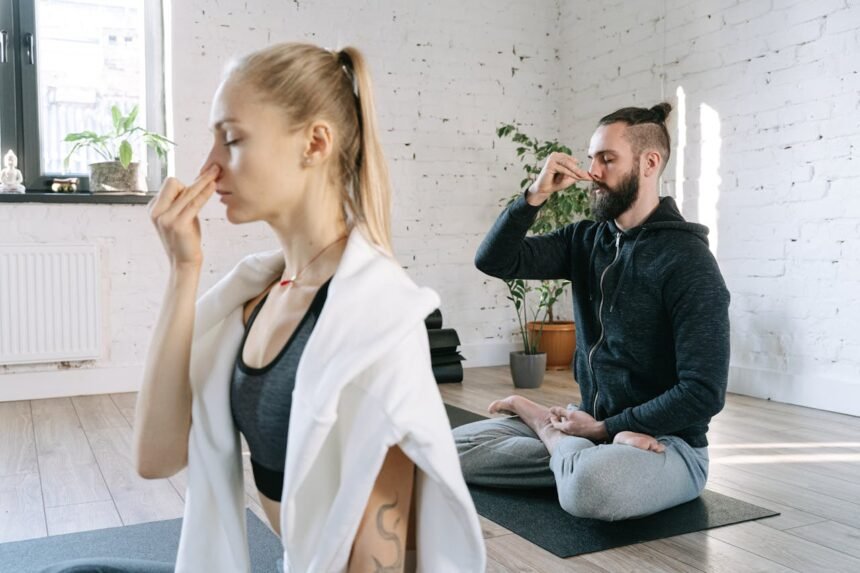
For many of us, the thrill of travel is often dampened by the physical toll of getting there. The cramped economy seats, the disruption of circadian rhythms, and the stress of navigating busy terminals can leave the body feeling rigid and the mind scattered. However, maintaining your wellness routine does not require a studio membership or checking a heavy mat at the oversized luggage counter. By integrating specific travel yoga poses into your itinerary, you can counteract the negative effects of transit and arrive at your destination feeling grounded and revitalized.
This guide explores a compact, accessible yoga flow designed for the modern traveler, backed by physiological principles and adaptable to the smallest hotel rooms or airport lounges.
The Physiology of Travel: Why Movement Matters
Before diving into the poses, it is helpful to understand why the body reacts so poorly to long-haul travel. Prolonged immobility, particularly on flights, slows blood circulation and causes fluid to pool in the lower extremities. According to the Mayo Clinic, sitting for long periods without moving your legs increases the risk of deep vein thrombosis (DVT), a condition where blood clots form in deep veins.
Furthermore, the stress of travel triggers the release of cortisol. Research from Harvard Health Publishing suggests that yoga modulates the stress response, reducing heart rate and lowering blood pressure. Integrating movement is not just about flexibility; it is a critical component of travel health.
Pre-Flight: Terminal Tension Release
Don’t wait until you board to start moving. Use your time at the gate to stretch the posterior chain (the back of the body), which often becomes tight during sitting.
Standing Forward Fold (Uttanasana)
This pose calms the nervous system and releases the hamstrings.
- How to do it: Stand with feet hip-width apart. Exhale and hinge at your hips, lengthening your torso as you fold forward. Let your head hang heavy.
- Modification: Bend your knees generously if your lower back feels tight.
Standing Crescent Moon
Lateral stretches are essential for expanding the rib cage and improving breathing capacity.
- How to do it: In a standing position, interlace fingers overhead, pointing index fingers up. Lean to the right while pressing hips to the left, then switch sides.
In-Transit: The Seat Yoga Series
The Centers for Disease Control and Prevention (CDC) recommends frequent movement of the legs during travel to prevent blood clots. These subtle travel yoga poses can be performed discreetly in your seat.
- Seated Cat-Cow: Place hands on knees. Inhale, arch the back and look up (Cow). Exhale, round the spine and tuck the chin (Cat). This mobilizes the thoracic spine.
- Seated Pigeon: Cross your right ankle over your left knee (figure-four shape). Keep the foot flexed to protect the knee. Lean forward slightly to feel a stretch in the outer hip.
- Ankle Pumps: Simply pointing and flexing the feet stimulates the calf muscle pump, aiding venous return.
The Hotel Room Routine: A Compact Flow
Once you arrive, you likely have limited space. This sequence requires no props and takes up only the space of a standard bath towel. It focuses on hips, spine, and resetting the nervous system.
1. Downward-Facing Dog (Adho Mukha Svanasana)
The quintessential full-body stretch. According to Yoga Journal, this pose lengthens the spine, opens the shoulders, and stretches the calves.
- Travel Tip: If you don’t have a mat, use the carpet or do a modified version with your hands against a wall or sturdy desk.
2. Low Lunge (Anjaneyasana)
Sitting shortens the hip flexors (psoas). Lunges are the antidote.
- Execution: Step one foot forward between your hands, lowering the back knee to the floor (pad it with a towel). Press the hips forward gently while lifting the chest.
3. Supine Spinal Twist (Supta Matsyendrasana)
Twists aid in digestion, which often slows down during travel. The American Council on Exercise (ACE) notes that spinal rotation improves mobility and alleviates lower back tension.
- Execution: Lie on your back. Hug knees into the chest, then drop them to the right while looking to the left. Hold for 10 breaths, then switch.
4. Legs-Up-The-Wall (Viparita Karani)
If you do only one pose, make it this one. It is a restorative inversion.
- Benefits: The Cleveland Clinic highlights this pose for its ability to reduce edema (swelling) in the feet and legs and calm the mind.
- Execution: Scoot your hips as close to the wall (or headboard) as possible and extend your legs upward. Relax your arms by your side.

Quick Reference: Travel Poses by Benefit
Use this table to quickly identify which travel yoga poses suit your current needs.
| Pose Name | Target Area | Best Time to Practice | Primary Benefit |
|---|---|---|---|
| Uttanasana (Forward Fold) | Hamstrings, Spine | Airport Terminal | Calms anxiety; decompress spine |
| Seated Pigeon | Outer Hips, Glutes | On the Plane/Train | Prevents hip stiffness from sitting |
| Viparita Karani (Legs-Up-Wall) | Circulatory System | Post-Arrival (Hotel) | Reduces swelling; aids sleep |
| Cat-Cow | Spine (Thoracic) | In-Seat or Hotel | Relieves back pain; improves breath |
| Vriksasana (Tree Pose) | Core, Ankles | Morning after arrival | Re-establishes balance and grounding |
Combating Jet Lag with Mindfulness
Physical poses are only half the battle. Jet lag disrupts the body’s internal clock. The Sleep Foundation explains that circadian rhythm disruption affects alertness and digestion. Combining your physical flow with Pranayama (breathwork) can help regulate the autonomic nervous system.
Try the 4-7-8 Breathing Technique: Inhale for 4 seconds, hold for 7, and exhale for 8. This signals the body that it is safe to rest, regardless of the time zone.
Essential Minimalist Gear
You do not need a full kit, but a few items can enhance your practice:
- Travel Mat: Foldable mats (1-2mm thick) fit in carry-ons. See Wikipedia for material comparisons like PVC vs. natural rubber.
- Grip Socks: If you prefer not to be barefoot in a hotel room.
- Lacrosse Ball: Small and perfect for rolling out tight knots in the back or feet.
Overcoming the “All or Nothing” Mindset
The biggest barrier to maintaining a practice while traveling is the belief that it must look like a 60-minute studio class. The National Center for Complementary and Integrative Health (NCCIH) emphasizes that even short bouts of yoga can improve functional health.
Consistency beats intensity. Ten minutes of travel yoga poses in your hotel room is infinitely better than zero minutes because you couldn’t find an hour. According to the American Heart Association, breaking activity into short sessions is an effective way to meet health goals when time is scarce.
Conclusion
Travel expands the mind, but it shouldn’t shrink the body’s capabilities. by adopting a flexible approach—both literally and figuratively—you can mitigate the stress of transit. Whether it is a discrete stretch at 30,000 feet or a restorative Legs-Up-The-Wall session after a long day of sightseeing, these compact travel yoga poses ensure your practice remains a portable sanctuary.
Next time you pack your bags, remember that your breath and your body are the only equipment you truly need. Commit to just ten minutes of movement upon arrival, and notice the difference in your energy and exploration.
*References related to balance and aging provided by Johns Hopkins Medicine.*


