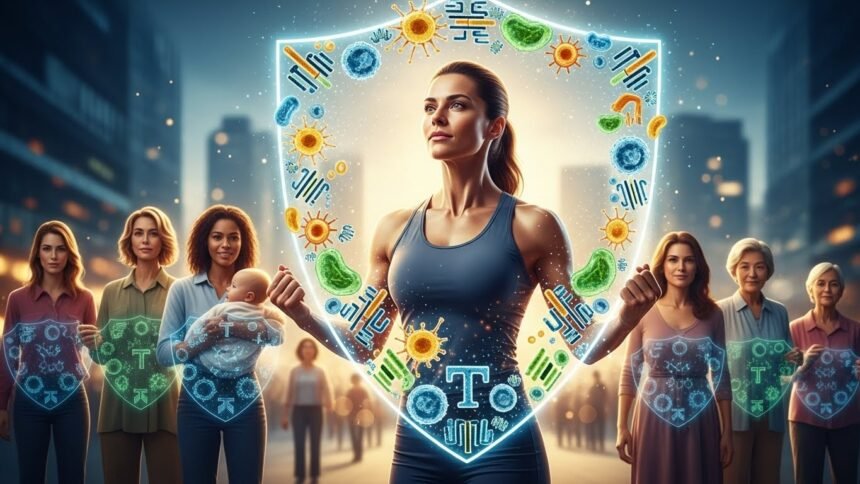
In the intricate web of public health, individual choices rarely remain isolated. The decision to vaccinate extends far beyond personal protection; it is a fundamental pillar of societal safety. This concept is best understood through the lens of herd immunity, or community immunity. While the term is frequently tossed around in news cycles, its true mechanics and ethical weight are often underestimated. At its core, community immunity protecting vulnerable populations is about creating a biological shield around those who cannot protect themselves.
From newborns too young to receive shots to cancer patients with compromised immune systems, millions of individuals rely entirely on the vaccination status of those around them. This article delves into the science, the statistics, and the moral imperative of maintaining high vaccination rates to safeguard our most fragile community members.
The Mechanics of the Invisible Shield
Community immunity occurs when a sufficient percentage of a population becomes immune to an infectious disease, whether through vaccination or previous infection, thereby reducing the likelihood of infection for individuals who lack immunity.
According to the World Health Organization, when a high proportion of the population is immune, the virus has limited hosts to infect. This interrupts the chain of transmission. The virus hits a “dead end” when it encounters a vaccinated individual, preventing it from jumping to the next susceptible person.
Understanding the Reproduction Number (R0)
To understand the threshold required for safety, one must understand the basic reproduction number, known as R0 (pronounced “R-naught”). This value represents the average number of people who will catch a disease from a single infected person in a completely vulnerable population.
- High R0: Diseases like measles are incredibly contagious (R0 of 12–18), meaning one person can infect up to 18 others. This requires a very high vaccination threshold (93–95%) to stop the spread.
- Lower R0: Diseases like Influenza have a lower R0, requiring a lower, yet still significant, portion of the population to be immune.
When vaccination rates drop even slightly below these thresholds, the “shield” develops cracks, allowing outbreaks to penetrate and reach the vulnerable.
Identifying the Vulnerable: Who Relies on You?
When we discuss community immunity protecting vulnerable groups, we are not speaking of abstract statistics. We are talking about neighbors, family members, and friends. The Centers for Disease Control and Prevention identifies several key groups who depend on herd immunity:
- Infants and Young Children: Many vaccines, such as those for measles (MMR), cannot be administered until a child is 12 months old. Until that birthday, they are defenseless against the virus.
- The Immunocompromised: Individuals undergoing chemotherapy, organ transplant recipients taking immunosuppressants, and those with HIV/AIDS often cannot receive live vaccines or do not develop a strong immune response to them.
- The Elderly: As we age, our immune systems naturally weaken (immunosenescence), making vaccines less effective and infections more deadly.
- Individuals with Severe Allergies: A small fraction of the population has life-threatening allergies to vaccine components (like gelatin or egg protein), making vaccination medically impossible for them.
For these groups, the vaccination of the general public is their only line of defense.
Vaccination Thresholds: The Data Behind the Defense
Not all diseases require the same level of community immunity to be held at bay. The contagiousness of the pathogen dictates the necessary coverage. The following table illustrates the approximate herd immunity thresholds required to stop the transmission of specific infectious diseases.
| Disease | Transmission Method | Basic Reproduction Number (R0) | Herd Immunity Threshold |
|---|---|---|---|
| Measles | Airborne | 12 – 18 | 93 – 95% |
| Pertussis (Whooping Cough) | Airborne droplets | 12 – 17 | 92 – 94% |
| Diphtheria | Saliva | 6 – 7 | 83 – 86% |
| Rubella | Airborne droplets | 6 – 7 | 83 – 86% |
| Smallpox | Airborne droplets | 5 – 7 | 80 – 85% |
| Polio | Fecal-oral route | 5 – 7 | 80 – 86% |
| Mumps | Airborne droplets | 4 – 7 | 75 – 86% |
| SARS-CoV-2 (COVID-19) | Airborne droplets | Varies by variant (Delta/Omicron > 5) | Estimated > 80% |
| Influenza | Airborne droplets | 1.5 – 1.8 | 33 – 44% |
Data compiled from epidemiological studies and Wikipedia estimates based on R0 values.
As demonstrated, highly contagious diseases like Measles allow for almost no margin of error. A drop of just 5% in vaccination rates can lead to explosive outbreaks, putting infants and the immunocompromised at immediate risk.

The Myth of Natural Infection vs. Vaccine-Induced Immunity
A persistent myth suggests that “natural immunity” gained by contracting the disease is superior to vaccine-induced immunity. While surviving an infection often results in immunity, the cost is unacceptably high.
The Mayo Clinic emphasizes that relying on natural infection to reach herd immunity would result in millions of unnecessary deaths and severe long-term health complications. Vaccines provide a safe pathway to immunity without the prerequisite of suffering or the risk of paralysis, deafness, or death associated with diseases like Polio or Meningitis.
Furthermore, vaccines act as a firewall. When a vaccinated person encounters a virus, their immune system neutralizes it quickly, shedding less virus and reducing the chance of passing it on. This is the essence of community immunity protecting vulnerable populations—stopping the virus before it can find a foothold.
The Economic and Social Impact of Pockets of Unvaccination
Global vaccination rates may look high on average, but averages can be deceiving. Outbreaks often occur in “clusters” or pockets where vaccination rates have dipped. This phenomenon was clearly visible in recent years with measles outbreaks in developed nations.
UNICEF reports that vaccine hesitancy and logistical barriers create these dangerous pockets. When an outbreak occurs, the economic toll is staggering. Public health resources are diverted to containment, schools close, and productivity plummets. More importantly, the social contract is broken.
When we choose to vaccinate, we are effectively paying “social insurance.” The U.S. Department of Health & Human Services notes that vaccines prevent lost wages and high medical costs. But the moral economy is even more significant: by getting vaccinated, you ensure that a child undergoing leukemia treatment can attend school safely or that a grandmother can hold her newborn grandchild without fear.
Protecting the Future: A Global Perspective
In our interconnected world, community immunity is no longer just a local issue; it is a global one. A virus is only a plane ride away from moving between continents. Therefore, supporting global vaccination initiatives is crucial for domestic safety. Organizations like Gavi, the Vaccine Alliance work tirelessly to introduce vaccines in low-income countries, which in turn reduces the global reservoir of diseases.
The National Institute of Allergy and Infectious Diseases (NIAID) underscores that pathogens do not respect borders. To truly protect the vulnerable at home, we must advocate for equitable vaccine access worldwide, ensuring that no reservoir for the virus remains unchecked.
Addressing Vaccine Fatigue
It is natural for the public to feel “vaccine fatigue,” especially following a pandemic. However, routine immunizations remain the bedrock of pediatric and adult health. The American Academy of Pediatrics stresses the importance of adhering to the recommended schedule. Delaying vaccines leaves children vulnerable during the exact developmental windows when they are most susceptible to severe outcomes.
By viewing vaccination not as a medical chore but as a civic duty, we shift the narrative. It becomes an act of service. Just as we obey traffic laws to keep others safe on the road, we vaccinate to keep others safe in our shared biological environment.
Conclusion: The Ultimate Act of Care
Ultimately, community immunity protecting vulnerable loved ones is a collective endeavor. It is a silent victory won every day that an outbreak does not occur. It is the reason polio wards are a thing of the past and why measles is no longer a rite of passage for children.
However, this shield is not permanent. It requires constant maintenance. Every generation must recommit to the social contract of vaccination. By keeping your immunizations up to date and encouraging those around you to do the same, you are not just looking after your own health—you are serving as a guardian for the most fragile members of society.
Call to Action: Don’t let your shield rust. Check your vaccination records today, consult with your healthcare provider about boosters, and ensure your family is fully protected. Your decision could be the barrier that saves a life.
Disclaimer: This article is for informational purposes only and does not constitute medical advice. Always consult with a qualified healthcare professional regarding vaccination decisions.