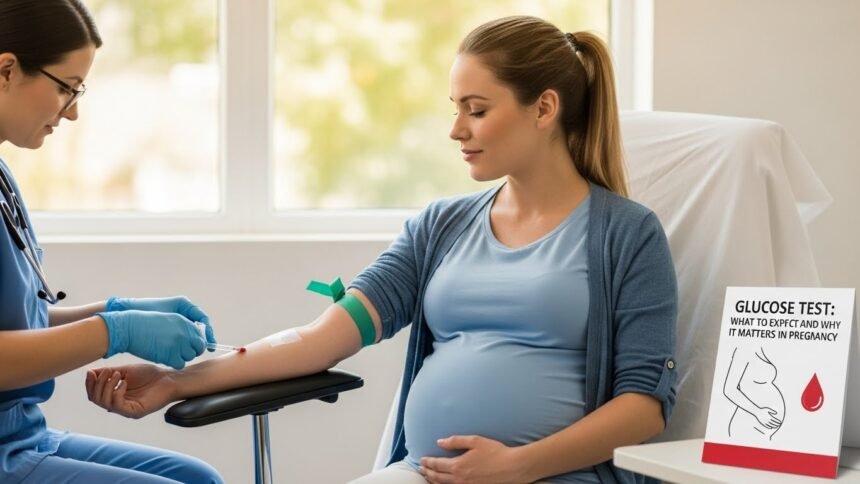
Pregnancy is a journey marked by milestones, from the first ultrasound heartbeat to the feeling of those first flutters of movement. However, among the excitement and nursery planning, there is one particular milestone that often elicits a groan from expectant mothers: the glucose screening. Often associated with a sugary, neon-colored drink known as “Glucola,” this test is a critical component of prenatal care.
While the prospect of drinking a syrupy solution on an empty stomach isn’t appealing, understanding glucose test pregnancy protocols is essential for the health of both mother and baby. This guide will walk you through exactly what gestational diabetes is, how the testing process works, and why these numbers matter so much.
What is Gestational Diabetes Mellitus (GDM)?
Before diving into the test mechanics, it is important to understand what is being screened. Gestational Diabetes Mellitus (GDM) is a type of diabetes that develops during pregnancy in women who do not already have diabetes. According to the Centers for Disease Control and Prevention (CDC), GDM impacts between 2% and 10% of pregnancies in the United States annually.
During pregnancy, the placenta produces hormones that help the baby grow. These hormones can also cause insulin resistance in the mother’s body. If the mother’s pancreas cannot produce enough insulin to overcome this resistance, her blood sugar levels rise, leading to gestational diabetes.
When Does the Test Happen?
Universal screening is the standard of care. According to guidelines set by the American College of Obstetricians and Gynecologists (ACOG), most women are tested between 24 and 28 weeks of pregnancy.
However, if you have significant risk factors—such as a high BMI, a history of GDM in previous pregnancies, or a strong family history of diabetes—your healthcare provider may recommend an early glucose challenge test during your first trimester.
The Two Types of Glucose Tests
There is often confusion because there are two different ways providers approach this. Some use a two-step process (screening then diagnosis), while others use a one-step diagnostic process.
1. The Glucose Challenge Screening (1-Hour Test)
This is the most common first step.
- Preparation: You usually do not need to fast strictly, though providers often recommend avoiding high-sugar foods right before the appointment.
- The Process: You will drink a solution containing 50 grams of glucose within 5 minutes. After waiting exactly one hour, your blood will be drawn.
- The Result: If your blood sugar is below a certain threshold (typically 130–140 mg/dL), you pass and are finished. If it is elevated, you proceed to the next step.
2. The Glucose Tolerance Test (3-Hour Test)
If you “fail” the one-hour screening, you will be scheduled for this diagnostic test.
- Preparation: You must fast (usually 8 to 14 hours) before this test.
- The Process: A baseline fasting blood draw is taken. Then, you drink a stronger solution containing 100 grams of glucose. Blood is drawn at one, two, and three hours post-drink.
- The Result: If two or more of your four blood values are abnormal, you are diagnosed with gestational diabetes.
Comparison of Normal Blood Glucose Thresholds
Interpreting the numbers can be confusing. The table below outlines the general thresholds used to diagnose GDM based on criteria from the American Diabetes Association (ADA).
| Test Stage | 1-Hour Screening (50g) | 3-Hour Diagnostic (100g) |
|---|---|---|
| Fasting | N/A | < 95 mg/dL |
| 1 Hour Post-Drink | < 140 mg/dL* | < 180 mg/dL |
| 2 Hours Post-Drink | N/A | < 155 mg/dL |
| 3 Hours Post-Drink | N/A | < 140 mg/dL |
- Note: Some clinics use a stricter cutoff of 130 mg/dL or 135 mg/dL for the 1-hour screening to catch more potential cases.
Surviving the “Glucola” Drink
For many, the drink is the most dreaded part. It is essentially a flat, highly concentrated soda. It typically comes in orange, lemon-lime, or fruit punch flavors.
Tips for the test day:
- Chill it: If allowed, ask if the drink can be refrigerated. It is often more palatable when cold.
- Don’t Chug, but Don’t Sip: You generally have 5 minutes to finish it. Sipping too slowly prolongs the taste, but chugging might make you nauseous.
- Bring a Distraction: Bringing a book or downloading a show is wise, especially for the 3-hour test where you are stuck in the waiting room. Read more about preparation tips at the Cleveland Clinic.

Why It Matters: Risks of Untreated GDM
It can be tempting to view this test as an annoyance, but understanding glucose test pregnancy implications is vital because GDM generally has no symptoms. You cannot feel your blood sugar rising, but the effects on the fetus are real.
Risks to the Baby
- Macrosomia: Extra glucose in the mother’s bloodstream crosses the placenta, triggering the baby’s pancreas to make extra insulin. This can cause the baby to grow very large (macrosomia), leading to potential birth injuries or the need for a C-section.
- Hypoglycemia at Birth: Because the baby is used to high sugar levels, their own insulin production is high. Once the umbilical cord is cut, their blood sugar can drop dangerously low.
- Respiratory Distress: Babies born to mothers with poorly controlled GDM may have lungs that are less developed. The March of Dimes provides extensive resources on these neonatal risks.
Risks to the Mother
- Preeclampsia: GDM increases the risk of high blood pressure and preeclampsia, a serious complication that threatens the life of both mother and child.
- Type 2 Diabetes Later in Life: According to the National Institute of Diabetes and Digestive and Kidney Diseases (NIDDK), women who have GDM are more likely to develop type 2 diabetes later in life, making postpartum follow-up essential.
What Happens if You Are Diagnosed?
First, do not panic. A diagnosis is not a failure of your pregnancy or your diet. It is largely driven by placental genetics and hormones.
The Mayo Clinic outlines that management usually involves:
- Blood Sugar Monitoring: You will likely need to test your blood sugar 4 times a day (fasting and after meals) using a finger-prick glucometer.
- Dietary Changes: This does not mean cutting carbs entirely, but rather balancing them. You will focus on complex carbohydrates, proteins, and healthy fats.
- Medication: If diet and exercise are not enough to control levels, providers may prescribe insulin or oral medications like Metformin.
Many women successfully manage GDM through diet alone and go on to have perfectly healthy, average-sized babies.
Alternatives to the Glucola Drink
Some expectant mothers are concerned about the ingredients in the standard glucose drink (dyes, corn syrup). If you are looking for alternatives, you must discuss this with your provider early.
Some providers may allow:
- The “Jelly Bean” Test: Consuming a specific number of jelly beans to equal 50g of sugar. However, studies cited by the National Institutes of Health (NIH) suggest this may not be as accurate as the polymer glucose solution.
- Fresh Juice or Food Monitoring: Some midwives allow a specific breakfast or a period of home blood sugar monitoring instead of the drink.
Note: Do not attempt an alternative without strict medical approval, as accurate diagnosis is paramount for safety.
Conclusion: A Sweet Sacrifice for Safety
While the glucose test is arguably one of the least enjoyable appointments on the prenatal calendar, it plays a massive role in obstetrics safety. By understanding glucose test pregnancy screenings, you empower yourself to make the best decisions for your future child.
Whether you pass with flying colors or receive a diagnosis that requires lifestyle adjustments, the goal remains the same: a healthy delivery and a healthy baby. If your test is coming up, pack a book, bring a snack for after the blood draw, and remember that this temporary discomfort is a proactive step toward a lifetime of health for your little one.
If you have concerns about your upcoming screening or your risk factors, reach out to your OB-GYN or midwife today to discuss a testing plan that works for you.