Finding excessive strands of hair in your shower drain or on your hairbrush can be an unsettling experience. For many, hair health is closely tied to self-confidence, and noticing thinning or dullness often triggers a search for immediate solutions.
While the market is flooded with expensive serums and chemical treatments, many people are turning their attention back to nature. Specifically, the humble strawberry has emerged as a popular topic of conversation in beauty circles.
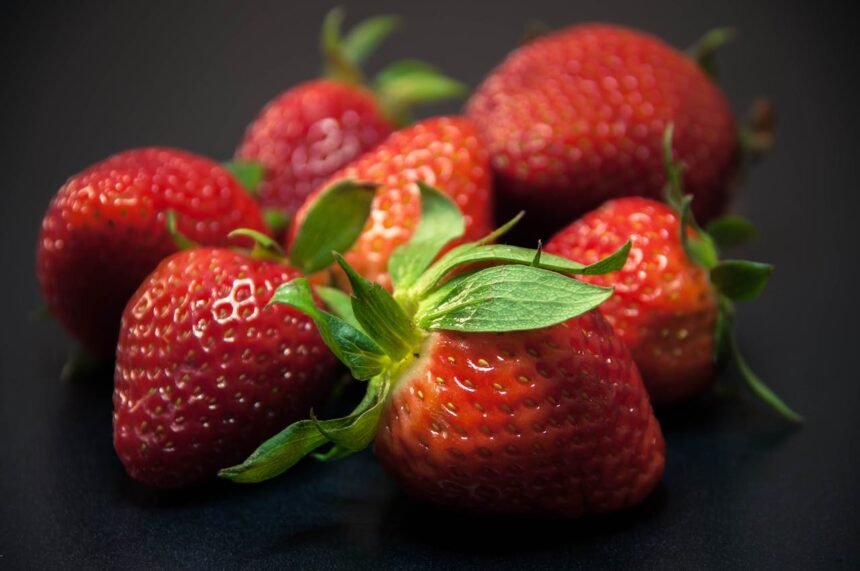
Renowned for their vibrant red colour and sweet taste, strawberries are a summer staple in the UK. But beyond their role in desserts, could they actually hold the key to a healthier scalp and stronger hair?
The answer lies in their nutritional profile. These berries are packed with vital compounds that your body utilises to maintain cellular health. However, separating internet hype from scientific reality is crucial before you start mashing fruit onto your scalp.
This article explores the potential benefits of strawberries for hair growth, analyses the science behind the claims, and provides actionable tips on how to incorporate them into your routine.
What is the Link Between Strawberries and Hair?
To understand if strawberries can truly aid hair growth, we must first look at the biology of hair. Your hair follicles require a steady supply of oxygen, minerals, and vitamins to produce strong keratin strands. When nutritional deficiencies occur, hair is often the first thing the body sacrifices to prioritise vital organs.
Strawberries are essentially a nutrient powerhouse. They are loaded with specific vitamins that are directly linked to hair health.
Vitamin C and Collagen Production
Perhaps the most significant attribute of strawberries is their exceptionally high Vitamin C content. Vitamin C is not just for boosting immunity; it is a critical cofactor in the production of collagen. Collagen is a structural protein that provides amino acids necessary to build hair keratin.
Furthermore, Vitamin C acts as a potent antioxidant. It helps protect hair follicles against damage from harmful molecules known as free radicals. According to Healthline, maintaining adequate levels of Vitamin C is essential for preventing oxidative stress, which can block hair growth and cause hair to age faster.
Ellagic Acid and Scalp Health
Strawberries are a rich source of ellagic acid. This is a polyphenol antioxidant known for its anti-inflammatory properties. A healthy scalp is the bedrock of healthy hair, and inflammation is a common cause of hair thinning and shedding.
Research suggests that ellagic acid may help protect the scalp from fungal infections, such as dandruff, which can inhibit follicle function. By reducing inflammation, you create a more favourable environment for hair to grow.
Silica and Iron Absorption
Trace minerals also play a massive role. Strawberries contain silica, a trace mineral that is thought to prevent hair thinning. Perhaps more importantly, the Vitamin C in strawberries significantly enhances iron absorption from plant-based foods.
Iron deficiency is a leading cause of hair loss, particularly in women. The NHS lists iron deficiency anaemia as a common reversible cause of shedding. By pairing strawberries with iron-rich foods, you maximise your body’s ability to fuel hair growth.
Folate (Vitamin B9)
Folate is essential for healthy cell division and tissue growth. Since hair tissues grow rapidly, ensuring you have enough folate in your diet allows these cells to proliferate efficiently. A deficiency in folate can lead to slower growth or finer, weaker strands.
How to Use Strawberries for Hair Growth
Incorporating strawberries into your hair care regimen can be done in two primary ways: dietary consumption and topical application. Both methods offer distinct benefits, and a combination of the two is often the best approach.
1. Dietary Integration
The most effective way to deliver nutrients to your hair follicles is through your bloodstream. Eating strawberries ensures that your body absorbs the vitamins and minerals necessary for systemic health.
Morning Boost: Add a handful of sliced strawberries to your morning porridge or Greek yoghurt. The protein in the yoghurt combined with the Vitamin C in the berries aids collagen synthesis.
Smoothies: Blend strawberries with spinach and flaxseeds. The British Nutrition Foundation highlights the importance of a varied diet rich in fruit and vegetables for maintaining overall tissue health, including hair.
Snacking: simply washing and eating a bowl of strawberries is a low-calorie, high-fibre way to boost your antioxidant intake.
2. Topical Strawberry Hair Masks
Topical applications can help exfoliate the scalp and add shine to the hair shaft. Strawberries contain natural fruit acids (AHAs) that can gently remove product build-up and dead skin cells from the scalp.
Recipe: The Shine and Strength Mask
- Ingredients: 5-7 ripe strawberries, 1 tablespoon of coconut oil, 1 tablespoon of honey.
- Method: Mash the strawberries into a smooth pulp (ensure there are no large chunks). Mix in the coconut oil and honey.
- Application: Apply the mixture to damp hair, focusing on the scalp. Massage gently for 3-5 minutes. Leave it on for 20 minutes under a shower cap.
- Rinse: Rinse thoroughly with cool water. You may need to shampoo lightly to remove the seeds.
Recipe: The Exfoliating Scalp Scrub
- Ingredients: 4 mashed strawberries, 2 tablespoons of oatmeal, tea tree oil (2 drops).
- Method: Combine ingredients to form a thick paste.
- Application: Massage in circular motions on the scalp to slough away dandruff and dead skin. Rinse well.
3. Combining with Other Natural Ingredients
To maximise the effects, pair strawberries with other science-backed ingredients:
- Egg Yolk: For added protein and biotin.
- Aloe Vera: For soothing an itchy scalp.
- Yoghurt: For lactic acid and probiotics.
Nutritional Breakdown: Eating vs. Applying
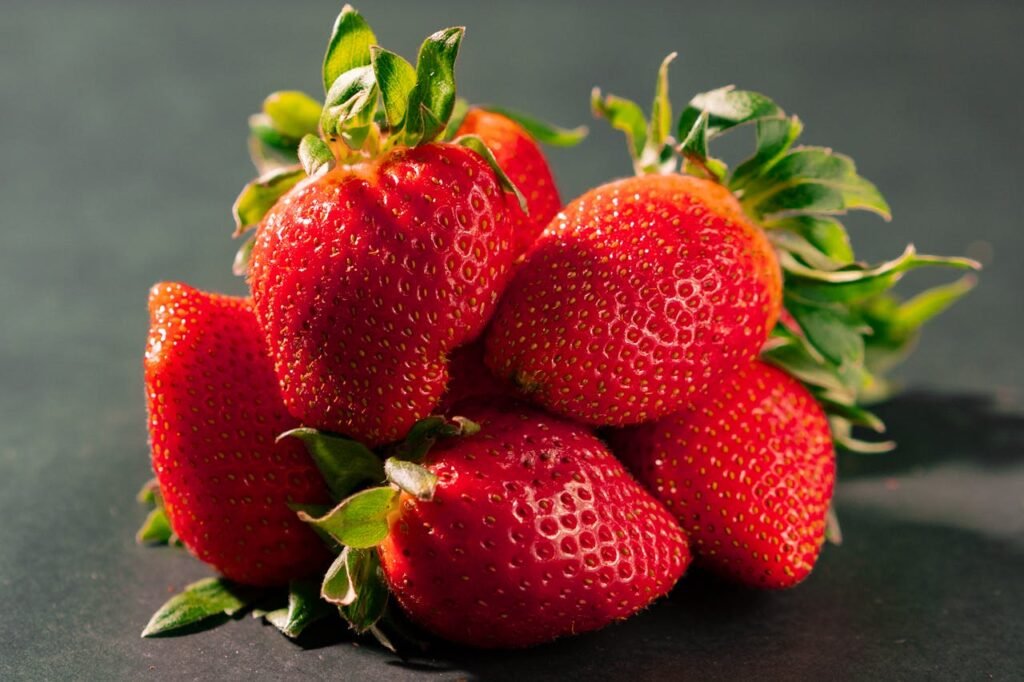
It is important to realise that while topical treatments feel luxurious, the internal mechanisms of hair growth rely on diet. The following table compares the benefits of eating strawberries versus applying them topically.
| Feature | Dietary Consumption (Internal) | Topical Application (External) |
|---|---|---|
| Primary Benefit | Delivers nutrients (Vit C, Folate) directly to the hair follicle via blood supply. | Exfoliates the scalp and removes build-up via natural acids. |
| Absorption | High bioavailability of antioxidants. | Limited absorption; mostly acts on the surface (cuticle/scalp). |
| Duration of Effect | Long-term systemic health improvements. | Temporary aesthetic improvement (shine/smoothness). |
| Key Component | Vitamin C, Iron helpers, Ellagic Acid. | Alpha Hydroxy Acids (AHAs), Moisture. |
| Best For | Preventing thinning, strengthening roots, boosting growth speed. | Combating dandruff, adding gloss, oily scalp management. |
Frequently Asked Questions
Can strawberries cure male or female pattern baldness?
No. Pattern baldness is largely genetic and hormonal. While strawberries support overall hair health, they cannot reverse genetic hair loss. For concerns regarding significant balding, consulting the [Institute of Trichologists](https:// trichologists.org.uk/) or a dermatologist is recommended.
Are there any side effects to using strawberries on hair?
Generally, strawberries are safe. However, the seeds can be difficult to wash out, potentially causing mechanical friction if you scrub too hard. Always ensure you mash them into a fine pulp.
Can I be allergic to topical strawberries?
Yes. If you have a food allergy to strawberries, you should avoid putting them on your skin. Oral allergy syndrome can also cause skin irritation. The GOV.UK guidelines on allergen labelling highlight that berries are a known allergen for some individuals.
How often should I use a strawberry hair mask?
Once a week is sufficient. Over-exfoliating with fruit acids can dry out the scalp if done too frequently. Balance is key.
Do frozen strawberries work as well as fresh ones?
Yes, frozen strawberries retain most of their nutrients. In fact, studies cited by the National Institutes of Health suggest that flash-freezing can preserve Vitamin C levels effectively, sometimes better than fresh fruit that has sat on a shelf for days.
Does eating strawberries help with grey hair?
Oxidative stress contributes to greying. Because strawberries are high in antioxidants, they help neutralise free radicals. Harvard T.H. Chan School of Public Health notes that antioxidant-rich foods are vital for delaying cellular ageing, which may theoretically slow down the greying process, though they cannot reverse it.
The Bottom Line
Strawberries are undeniably beneficial for your overall health, and by extension, your hair. Their high concentration of Vitamin C makes them a potent weapon against oxidative stress and a vital player in collagen production.
However, it is vital to manage expectations. Strawberries are not a miracle cure for hair loss, especially if the underlying cause is genetic or medical. They are best viewed as a supportive measure—a delicious supplement to a balanced lifestyle.
If you are experiencing sudden or patchy hair loss, this could signal an underlying medical issue. In such cases, seeking advice from a medical professional is crucial.
For the average person looking to add lustre and support scalp health, adding strawberries to your diet and occasional beauty routine is a safe, science-backed, and effective strategy.
Whether you blend them into a smoothie or mash them into a mask, your hair will likely thank you for the extra nutrient boost. For more inspiration on healthy recipes, sources like BBC Good Food offer excellent ways to integrate more fruit into your daily meals.
Remember, consistency is key. Hair growth is a slow process, and nutritional changes can take months to show visible results. Be patient, eat well, and treat your hair with care.