In the crowded landscape of dietary trends and weight loss protocols, few strategies have withstood the scrutiny of science and time quite like Intermittent Fasting (IF). Unlike fad diets that vilify specific macronutrients, IF is not about what you eat, but rather when you eat. It is a metabolic instrument that, when tuned correctly, can help unlock your body’s natural ability to burn fat.
If you have been searching for a sustainable approach to weight management, this comprehensive intermittent fasting guide for fat loss will walk you through the science, the methods, and the practical steps to reclaim your health.
Understanding the Basics: What is Intermittent Fasting?
Intermittent fasting is an eating pattern that cycles between periods of fasting and eating. It doesn’t specify which foods you should eat but rather when you should eat them. In this respect, it’s not a diet in the conventional sense but more accurately described as an eating pattern.
Evolutionarily, humans are designed to function without food for extended periods. Our hunter-gatherer ancestors didn’t have supermarkets, refrigerators, or food available year-round. According to Johns Hopkins Medicine, our bodies have evolved to be able to go without food for many hours, or even several days or longer.
The Metabolic Switch
The primary mechanism behind IF is a process often referred to as the “metabolic switch.” In the fed state, your body runs on glucose derived from the food you just ate. When you fast, your insulin levels drop, and your body exhausts its glucose stores (glycogen). Once these stores are depleted, the body switches to burning fatty acids and ketone bodies for energy.
Research published by the National Institutes of Health (NIH) suggests that this switch typically occurs 12 to 36 hours after cessation of food consumption, depending on the individual’s liver glycogen content and physical activity level. By extending your fasting window, you force your body to tap into stored fat for fuel.
Popular Intermittent Fasting Protocols
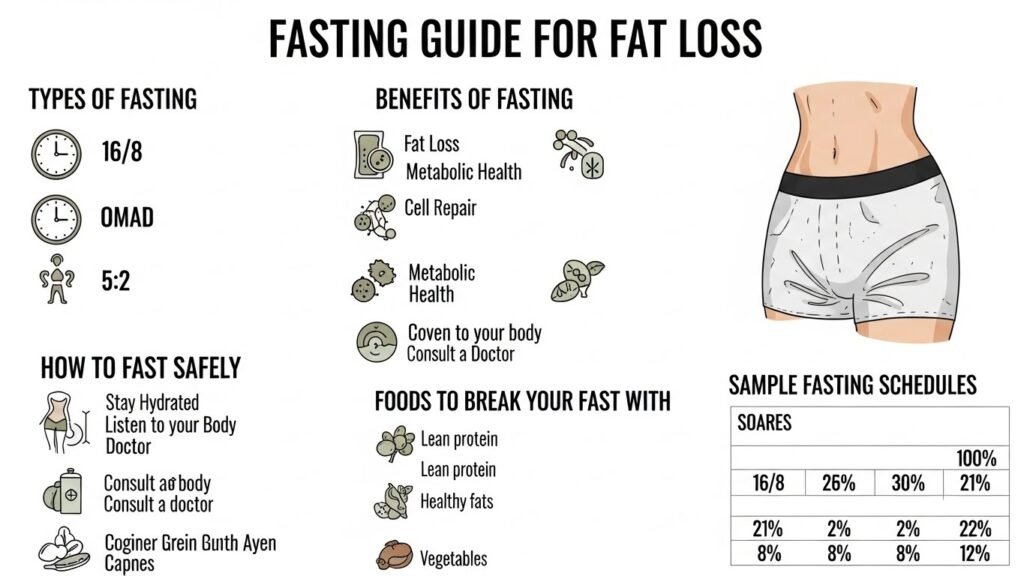
There is no one-size-fits-all approach. The success of your journey depends on choosing a protocol that fits your lifestyle. Here are the most effective methods:
1. The 16/8 Method (Leangains)
This is the most popular entry point for beginners. It involves fasting for 16 hours each day and restricting your daily eating window to 8 hours. For many, this is as simple as skipping breakfast and not eating anything after dinner.
2. The 5:2 Diet
Popularized by journalists and health advocates, the 5:2 diet involves eating normally for five days of the week and restricting calorie intake to 500–600 calories on the other two days. The Mayo Clinic notes that this method can be easier for those who find daily restrictions difficult.
3. Eat-Stop-Eat (24-Hour Fast)
This involves a full 24-hour fast once or twice a week. For example, you might finish dinner at 7:00 PM on Monday and not eat again until 7:00 PM on Tuesday.
4. Alternate-Day Fasting (ADF)
As the name implies, you fast every other day. Some versions of ADF allow up to 500 calories on fasting days. While effective, this is often considered a more advanced protocol.
Comparison of Fasting Protocols
To help you decide which method suits you best, consult the table below:
| Protocol | Structure | Difficulty Level | Best For |
|---|---|---|---|
| 16/8 Method | 16 hours fasting, 8 hours eating | Low / Beginner | Daily consistency, social eaters, gym-goers |
| 5:2 Diet | 5 days normal eating, 2 days restricted (500-600 kcal) | Moderate | Those who prefer weekly planning over daily rules |
| Eat-Stop-Eat | 24-hour fast, 1-2 times per week | High | People with strong willpower, busy schedules |
| Alternate-Day | Fast every other day | Very High | Rapid fat loss goals, experienced fasters |
The Science: How IF Accelerates Fat Loss
Beyond simple calorie restriction, intermittent fasting triggers hormonal changes that facilitate weight loss.
- Insulin Sensitivity: High insulin levels block fat burning. Fasting drastically lowers insulin, making stored body fat more accessible. According to the American Diabetes Association, improving insulin sensitivity is crucial for preventing Type 2 diabetes and managing weight.
- Human Growth Hormone (HGH): Fasting can increase blood levels of growth hormone, which promotes fat loss and muscle gain.
- Norepinephrine: The nervous system sends norepinephrine to fat cells, causing them to break down body fat into free fatty acids that can be burned for energy.
Beyond Fat Loss: The Cellular Benefits
While this is an intermittent fasting guide for fat loss, the benefits extend far beyond the scale. One of the most profound benefits is autophagy. Derived from Greek words meaning “self-eating,” autophagy is the body’s way of cleaning out damaged cells in order to regenerate newer, healthier cells.
The Cleveland Clinic explains that autophagy is essential for cellular health and may play a role in preventing diseases like cancer and Alzheimer’s. By constantly eating, we never allow our bodies the downtime required to perform this deep cleaning.
Furthermore, fasting has been linked to improved heart health. Harvard Health Publishing highlights that fasting may improve blood pressure, resting heart rate, and other heart-related measurements.
Step-by-Step: Getting Started
Starting IF requires planning. Here is your roadmap:
Step 1: Hydration is Key
During your fasting window, you must stay hydrated. Water, black coffee, and tea are generally permitted and can help suppress hunger. Dehydration can often be mistaken for hunger.
Step 2: Nutrient Density
Do not use your eating window as an excuse to binge on junk food. To maximize fat loss, prioritize whole foods: lean proteins, healthy fats, and vegetables. Follow the USDA MyPlate guidelines to ensure you are meeting your nutritional needs within your shorter eating window.
Step 3: Listen to Your Body
If you feel dizzy, excessively weak, or unwell, break the fast. Intermittent fasting is a stressor on the body—albeit a positive one (hormesis)—but you must build up your tolerance.
Common Mistakes to Avoid
- Overeating During the Window: Calories still count. If you consume 3,000 calories in your 8-hour window, you will not lose weight.
- Starting Too Aggressively: Jumping straight into a 24-hour fast can lead to binging and burnout. Start with 12 hours and work your way up.
- Ignoring Sleep: Poor sleep raises cortisol, which can hinder fat loss. The Centers for Disease Control and Prevention (CDC) emphasize that sleep is a pillar of health equal to diet and exercise.
Safety and Contraindications
Intermittent fasting is safe for many, but not everyone. It is strongly advised that you consult with a healthcare provider before starting.
You should likely avoid IF if you:
- Are pregnant or breastfeeding.
- Have a history of eating disorders. Resources like the National Eating Disorders Association provide guidance on why restrictive patterns can be triggering.
- Are underweight.
- Have unmanaged diabetes or blood sugar regulation issues.
Conclusion
Intermittent fasting is more than a weight-loss hack; it is a lifestyle change that realigns your body with its evolutionary biology. By controlling when you eat, you can regulate insulin, trigger autophagy, and create a sustainable caloric deficit without the mental burden of tracking every morsel of food.
This intermittent fasting guide for fat loss serves as your foundation. Remember, the best diet is the one you can stick to in the long run. Start slowly, stay hydrated, and focus on nutrient-dense foods. Unlock your potential today—your body is ready to adapt.
Disclaimer: This content is for informational purposes only and does not constitute medical advice. Always consult a physician before making significant changes to your diet.