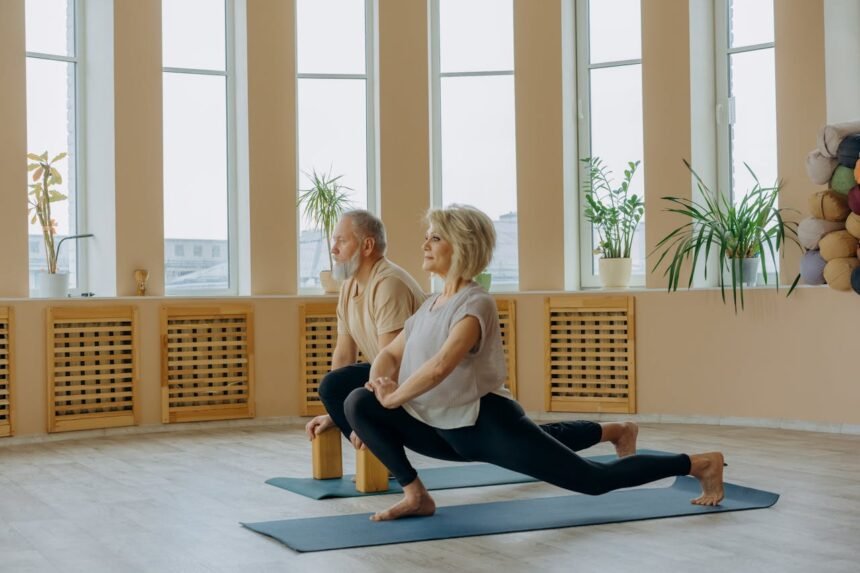
Aging is a privilege, but it often comes with physical changes that can challenge our independence. As we grow older, the sedentary lifestyle trap becomes easier to fall into, yet movement remains the single most effective medicine for longevity. Active aging is not about preparing for a marathon; it is about maintaining functional fitness—the ability to perform daily tasks with ease and without pain.
For many seniors, the gym environment can be intimidating or inaccessible. Fortunately, effective wellness does not require heavy weights or expensive memberships. By incorporating gentle exercise for elderly individuals into a home routine, seniors can significantly improve their quality of life, boost mental health, and reduce the risk of falls. This guide explores the science of active aging and provides actionable, low-impact routines designed for the comfort of home.
The Physiology of Aging and the Power of Movement
Understanding why we need to move is the first step toward building a sustainable habit. As we age, our bodies undergo natural physiological changes. Sarcopenia, the involuntary loss of skeletal muscle mass and strength, can begin as early as age 40 and accelerates after age 75. Additionally, bone density decreases, leading to concerns regarding osteoporosis.
However, research consistently shows that these processes can be slowed, and in some cases reversed, through consistent activity. According to the World Health Organization, regular physical activity is a key determinant of healthy aging, reducing the risk of heart disease, stroke, and diabetes.
The Four Pillars of Senior Fitness
To build a comprehensive routine, one must address the four main categories of fitness identified by the National Institute on Aging:
- Endurance: Increases breathing and heart rate.
- Strength: Keeps muscles and bones strong.
- Balance: Prevents falls.
- Flexibility: Keeps muscles limber and joints mobile.
Safety First: Preparing for Home Exercise
Before embarking on any new fitness regimen, safety is paramount. It is crucial to consult with a healthcare provider, especially if there are pre-existing conditions such as heart disease or arthritis. The Mayo Clinic suggests starting slowly and listening to your body to avoid injury.
Setting Up Your Space
- Clear the floor: Remove throw rugs and cords to prevent tripping hazards.
- Sturdy support: Have a sturdy chair (without wheels) and a clear section of wall available.
- Footwear: Wear non-slip sneakers that provide arch support.
Section 1: Warm-Up (5 Minutes)
Never skip the warm-up. Cold muscles are prone to injury. A gentle warm-up increases blood flow and prepares the joints for movement.
- Seated Marching: Sit tall in a sturdy chair. Lift one knee, then the other, mimicking a marching motion. Swing arms gently. Continue for 2 minutes.
- Shoulder Rolls: Lift shoulders up toward the ears, roll them back, and down. Repeat 10 times, then reverse direction.
- Neck Turns: Slowly turn your head to the right, hold for a second, and turn to the left. Repeat 5 times per side.
Section 2: Strength Building for Functional Independence
Strength training is vital for combating muscle loss. You don’t need dumbbells; body weight and gravity are sufficient for gentle exercise for elderly beginners.
1. The Chair Squat (Sit-to-Stand)
This is perhaps the most functional exercise, mimicking the motion of getting out of a car or off a sofa.
- How to do it: Start seated in a sturdy chair. Plant feet hip-width apart. Lean forward slightly from the hips and push through your heels to stand up. Slowly lower yourself back down without collapsing into the seat.
- Goal: 2 sets of 8–10 repetitions.
- Benefit: Strengthens quadriceps and glutes, essential for walking and climbing stairs.
2. Wall Push-Ups
Floor push-ups can be difficult on the wrists and back. Wall push-ups offer the same upper-body benefits with less strain.
- How to do it: Stand arm’s length from a wall. Place palms flat on the wall at shoulder height. Bend elbows to bring your chest toward the wall, keeping your body in a straight plank line. Push back to the starting position.
- Goal: 2 sets of 10 repetitions.
- Benefit: Builds chest and arm strength, aiding in carrying groceries or lifting objects.
3. Seated Knee Extensions
- How to do it: Sit in a chair with your back straight. Slowly extend one leg until it is straight out in front of you. Hold for 2 seconds, squeezing the thigh muscle. Lower slowly.
- Goal: 2 sets of 10 repetitions per leg.
- Benefit: specifically targets the knee joint support muscles, which the Arthritis Foundation notes can help alleviate joint pain.
Section 3: Balance and Fall Prevention
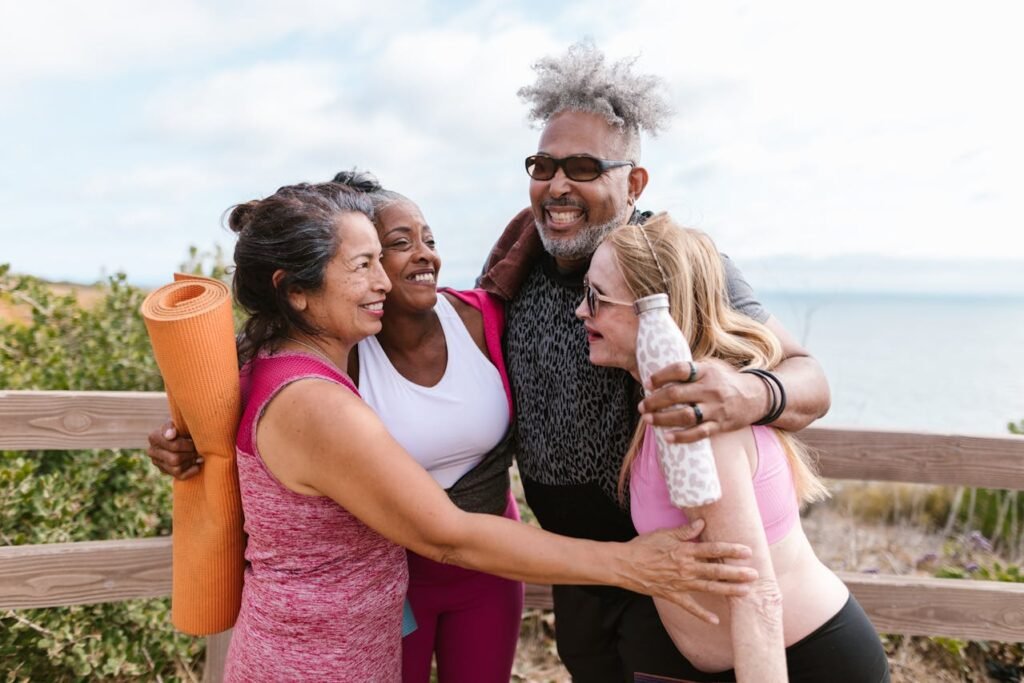
According to the Centers for Disease Control and Prevention (CDC), falls are the leading cause of injury-related death among adults age 65 and older. Integrating balance exercises is non-negotiable.
1. The Single-Leg Stand (Flamingo Stand)
- How to do it: Stand behind a sturdy chair, holding onto the backrest for support. Lift one foot slightly off the ground. Hold the position for 10–15 seconds. Switch legs. As you improve, try holding on with just one finger, or letting go completely.
- Why it works: It forces the brain to recalibrate the center of gravity and strengthens the stabilizing muscles in the ankles.
2. Heel-to-Toe Walk
- How to do it: Imagine a straight line on the floor. Step forward, placing the heel of the front foot directly against the toes of the back foot. Take 10 steps forward, turn carefully, and repeat.
- Why it works: This narrows your base of support, challenging your equilibrium in a safe manner.
Section 4: Flexibility and Cool Down
Flexibility exercises help maintain range of motion. Harvard Health Publishing emphasizes that stretching keeps muscles flexible and healthy, which we need to maintain the range of motion in the joints.
- Hamstring Stretch: Sit on the edge of a chair. Extend one leg out with the heel on the floor. Keep the back straight and lean forward slightly from the hips until a gentle stretch is felt in the back of the thigh. Hold for 30 seconds.
- Chest Opener: Sit or stand tall. Clasp hands behind your back (or hold onto the chair back) and gently pull shoulders back. Open the chest. Hold for 20 seconds.
Comparative Overview: Choosing Your Routine
It can be difficult to decide which exercises to prioritize. The following table breaks down different types of exercises suitable for seniors and their specific impacts.
| Exercise Category | Examples | Suggested Frequency | Primary Health Benefit |
|---|---|---|---|
| Low-Impact Aerobic | Walking, Swimming, Stationary Bike | 150 minutes per week | Improves cardiovascular health and stamina (Source: American Heart Association) |
| Strength Training | Chair squats, Wall push-ups, Resistance bands | 2-3 days per week | Combats sarcopenia, increases metabolism, strengthens bones |
| Balance | Tai Chi, Heel-to-toe walk, Single-leg stand | Daily | Reduces fall risk by improving proprioception |
| Flexibility | Yoga, Static stretching | Daily | Maintains joint range of motion and reduces stiffness |
The Mental Health Connection
Exercise is not merely about the body; it is a powerful neuroprotector. Physical activity stimulates the release of endorphins and other chemicals that improve mood and sleep. Furthermore, the Alzheimer’s Association highlights that regular cardiovascular exercise can help reduce the risk of cognitive decline and dementia by increasing blood flow to the brain.
Engaging in a routine also provides a sense of accomplishment and structure to the day, which is vital for emotional well-being in retirement.
Nutrition and Hydration: The Support System
No exercise routine is effective without proper fuel. As we age, our sense of thirst diminishes, making dehydration a silent risk. Drink water before, during, and after exercise.
Regarding nutrition, ensuring adequate protein intake is essential for muscle repair. The Academy of Nutrition and Dietetics recommends nutrient-dense meals rich in lean proteins, fruits, and vegetables to support an active lifestyle.
Conclusion: Consistency Over Intensity
The journey of active aging is a marathon, not a sprint. The most effective gentle exercise for elderly individuals is the one that is done consistently. It is better to perform 10 minutes of light movement every day than to do an intense hour-long workout once a week and risk injury or burnout.
Start today. Stand up during commercial breaks, take a walk around the garden, or try the chair squats mentioned above. By reclaiming your movement, you are reclaiming your independence and paving the way for a healthier, happier future.
Disclaimer: The content provided in this article is for informational purposes only and does not constitute medical advice. Always consult with a physician before starting any new exercise program.