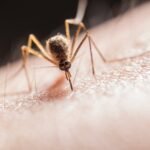
When you think of a mosquito, you likely think of an annoying itch. However, the Anopheles life cycle is a complex biological journey that has profound implications for global public health. As the primary insect vectors for the Plasmodium parasite, these mosquitoes are responsible for malaria transmission across the globe, particularly in tropical regions.
By understanding how these creatures grow from tiny eggs into flying adults, we can better implement vector control strategies to protect our communities. Whether you are a student, a traveller, or someone living in a high-risk area, knowing the stages of their development is a powerful tool in the fight against mosquito-borne diseases.
The Four Stages of the Anopheles Life Cycle
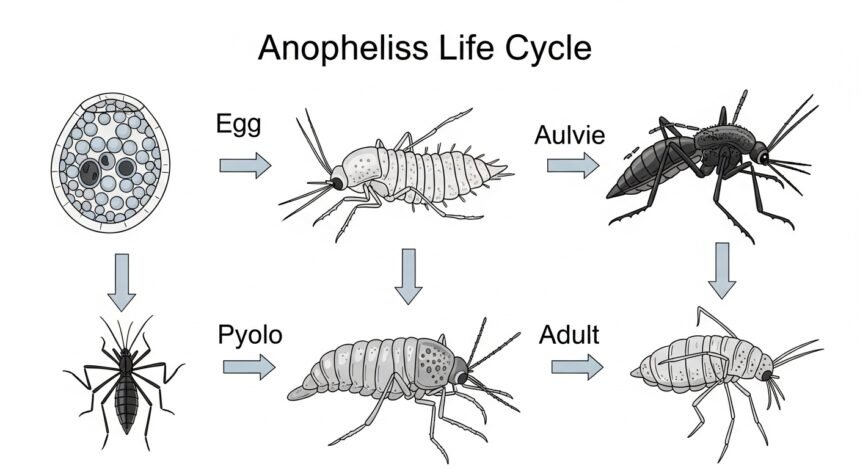
Like all mosquitoes, the Anopheles undergoes a process called complete metamorphosis. This means they pass through four distinct stages: egg, larva, pupa, and adult. The first three stages are entirely dependent on an aquatic environment, which is why monitoring stagnant water is so crucial for prevention.
1. The Egg Stage: New Beginnings
The journey begins when a female adult mosquito finds a suitable water source for egg-laying. Unlike other mosquito species that lay eggs in “rafts,” Anopheles mosquitoes lay their eggs individually directly onto the water’s surface.
- Each female can lay between 50 and 200 eggs per oviposition.
- The eggs are unique because they possess lateral “floats” that keep them buoyant.
- In warm, humid climates, eggs typically hatch within 2 to 3 days.
2. The Larval Stage: The Feeders
Once hatched, the larval stage begins. These larvae live in the water and are often called “wigglers.” They spend most of their time feeding on microorganisms and organic matter. A key identifier of Anopheles larvae is that they lack a respiratory siphon (breathing tube) and lie parallel to the water surface to breathe through spiracles.
During this stage, they undergo four “instars” or growth phases, shedding their skin each time. High-quality larval habitats, such as marshes or rice fields, are essential for their survival. Research from The London School of Hygiene & Tropical Medicine suggests that temperature significantly impacts how quickly they progress through these instars.
3. The Pupal Stage: The Transformation
After the fourth instar, the larva develops into a pupa. The pupal stage is a period of internal transformation, similar to a caterpillar in a cocoon. The pupae are comma-shaped and, while active and mobile (often called “tumblers”), they do not feed. They must stay near the surface of the water to breathe through two respiratory trumpets. This stage is brief, usually lasting only a few days before the adult emerges.
4. The Adult Stage: Taking Flight
The final phase of the Anopheles life cycle is the adult mosquito. After emerging from the pupal case, the mosquito rests on the water’s surface until its wings dry and its exoskeleton hardens. While both males and females feed on plant nectar for energy, only the female requires a blood meal to produce eggs. This is the critical point where malaria can be spread to humans.
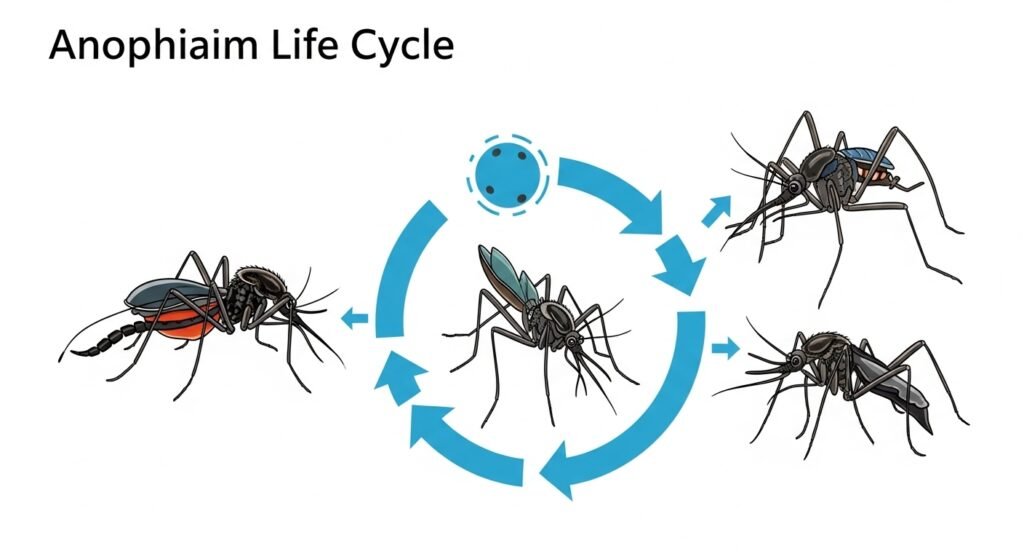
Anopheles Life Cycle Comparison Table
To help visualise the progression, the following table breaks down the characteristics of each stage of development:
| Stage | Habitat | Primary Activity | Duration (Average) |
|---|---|---|---|
| Egg | Surface of water | Embryonic development | 2–3 days |
| Larva | Water column | Feeding and growing | 7–14 days |
| Pupa | Near water surface | Metamorphosis | 2–3 days |
| Adult | Terrestrial/Aerial | Mating and egg-laying | Up to 1 month |
Why the Environment Matters
The environment plays a massive role in the Anopheles life cycle. Mosquitoes thrive in warm, damp conditions. Global organisations like the World Health Organization (WHO) emphasise that environmental management is a pillar of disease prevention. If we can disrupt the aquatic environment where they breed, we can significantly lower the local mosquito population.
Common breeding grounds include:
- Rainwater collected in discarded tyres or containers.
- Slow-moving streams or ponds with vegetation.
- Irrigation ditches and puddles.
The Link to Malaria
The most dangerous aspect of this life cycle is the mosquito’s role as a carrier. According to the NHS, malaria is a serious and sometimes fatal disease. When an Anopheles mosquito bites an infected person, it ingests the Plasmodium parasite. The parasite then undergoes its own development within the mosquito’s gut before moving to the salivary glands, ready to infect the next person the mosquito bites.
Medical experts at the Mayo Clinic explain that preventing these bites is the most effective way to stay safe. Utilising insecticide-treated bed nets and indoor residual spraying are proven methods to interrupt the transmission cycle.
Prevention and Control Strategies
To effectively manage the risks associated with the Anopheles life cycle, integrated vector control is necessary. This involves a combination of methods:
- Chemical Control: Using larvicides in water sources or insecticides in homes.
- Biological Control: Introducing natural predators like “mosquito fish” that eat larvae.
- Environmental Modification: Draining stagnant water to remove potential larval habitats.
Innovative research, such as that conducted by Imperial College London, is even exploring genetic modifications to prevent mosquitoes from being able to carry parasites. Furthermore, organisations like the Bill & Melinda Gates Foundation provide significant funding to scale these interventions globally.
The Global Impact
The Anopheles life cycle isn’t just a biological curiosity; it’s a matter of life and death for millions. Journals such as Nature and The Lancet Infectious Diseases frequently publish studies on how climate change is expanding the range of these mosquitoes into previously unaffected areas. Stay updated through authoritative sources like ScienceDirect and PNAS to understand current trends in entomology.
If you are travelling to an area where Anopheles mosquitoes are prevalent, it is vital to consult your GP or a travel clinic. Resources from the British Red Cross and Wellcome Trust offer excellent guidance on how communities can prepare and protect themselves.
Frequently Asked Questions (FAQs)
How long does the entire Anopheles life cycle take?
On average, the cycle from egg to adult takes about 10 to 20 days. However, this is highly dependent on ambient temperature and the availability of food in their aquatic environment. In cooler climates, the process may take several weeks.
Do all Anopheles mosquitoes carry malaria?
No. Only females of the Anopheles genus can transmit malaria, and they must first bite someone who is already infected with the Plasmodium parasite. Males do not bite humans at all, as they feed exclusively on nectar.
Where do Anopheles mosquitoes usually breed?
They prefer clean, unpolluted stagnant water. This can include anything from large marshes and mangrove swamps to small rainwater puddles or even hoof prints in the mud that have filled with water. Identifying and treating these larval habitats is key to vector control.
Why is the larval stage the best time for control?
Targeting the larval stage is effective because the mosquitoes are concentrated in specific water sources and cannot fly away. By treating these areas, you can stop thousands of mosquitoes from ever reaching the adult mosquito stage.
For more information on how you can contribute to global health efforts, visit Oxford University’s Malaria Research page or check the latest updates from the CDC.