
Bananas are arguably one of the most popular fruits on the planet. They are convenient, highly portable, and packed with essential nutrients. However, their reputation in the weight loss community is somewhat mixed. Because they are higher in carbohydrates and sugar compared to berries or citrus fruits, some diet trends—particularly low-carb programmes—often advise avoiding them.
This has led to a great deal of confusion. Can a fruit that is so nutritious really hamper your weight loss efforts? Or is it a misunderstood superfood that can actually help you shed pounds?
If you are trying to improve your body composition, it is crucial to look beyond calorie counting and understand how specific foods affect satiety, blood sugar, and metabolism. The answer regarding bananas is generally positive, but the way you eat them matters.
This detailed guide explores the science behind bananas and weight loss, helping you decide if they deserve a place in your diet plan.
Overview: The Nutritional Profile of Bananas
Before determining if bananas are conducive to weight loss, we must look at what is inside them. Bananas are rich in fibre and contain several important antioxidants. A medium-sized banana (approximately 118 grams) provides about 105 calories.
Despite their sweet taste, they are mostly comprised of water and carbohydrates. They contain very little protein and almost no fat. However, they are a powerhouse of micronutrients.
Here is the nutritional breakdown for one medium banana:
- Potassium: 9% of the Reference Nutrient Intake (RNI)
- Vitamin B6: 33% of the RNI
- Vitamin C: 11% of the RNI
- Magnesium: 8% of the RNI
- Copper: 10% of the RNI
- Manganese: 14% of the RNI
- Fibre: 3.1 grams
The high fibre content is the most relevant factor for weight management. Most of the carbohydrates in unripe bananas consist of resistant starch, which acts more like fibre than sugar.
For a deeper look into the health benefits, you can read more on Healthline’s overview of bananas.
Why Bananas Can Support Weight Loss
While there is no single food that melts fat away, bananas have several properties that make them a weight-loss-friendly food. Understanding these mechanisms can help you utilise them effectively within a balanced diet.
High Fibre and Satiety
Fibre is critical for maintaining a healthy weight. Increased fibre intake has been consistently linked to lower body weight and weight loss. A medium banana provides over 3 grams of fibre, which is a significant contribution towards your daily needs.
The specific type of fibre found in bananas is often soluble fibre, particularly pectin. Soluble fibre absorbs water during digestion and turns into a gel-like substance. This process slows down the emptying of your stomach.
When your stomach empties more slowly, you feel fuller for longer. This increased sense of satiety can naturally lead you to eat fewer calories throughout the day without feeling deprived. According to the British Nutrition Foundation, most adults in the UK do not eat enough fibre, so adding a banana is an easy way to boost intake.
The Role of Resistant Starch
The ripeness of a banana dramatically changes its nutritional composition. Unripe, green bananas are loaded with resistant starch. As the name suggests, this starch ‘resists’ digestion in the small intestine.
Instead of being absorbed as sugar, it passes into the large intestine where it feeds friendly gut bacteria. This process produces short-chain fatty acids like butyrate, which may improve metabolic health. Several studies suggest that resistant starch can increase fat burning and reduce fat storage.
Furthermore, because resistant starch functions similarly to soluble fibre, green bananas tend to be more filling than their yellow counterparts. This can reduce your overall appetite.
Low to Medium Glycaemic Index
One of the main fears regarding bananas is their impact on blood sugar. However, bananas generally have a low to medium Glycaemic Index (GI), depending on their ripeness.
The GI is a measure of how quickly foods raise blood sugar levels. Unripe green bananas have a GI value of about 30, while ripe yellow bananas rank around 60. This means they do not cause major spikes in blood sugar levels in healthy individuals compared to processed sweet treats.
Maintaining stable blood sugar is vital for weight loss, as crashes in glucose levels often lead to cravings for high-calorie, sugary foods. Managing these levels is a core component of advice from Diabetes UK.
A Low-Calorie Substitute
At roughly 100 calories, a banana makes for an excellent substitute for processed snacks. If you swap a chocolate bar or a bag of crisps (which can easily range from 200 to 300 calories) for a banana, you create an immediate calorie deficit.
The volume of the fruit, combined with its water content, helps you feel satisfied physically, something a sugary drink or biscuit rarely achieves.
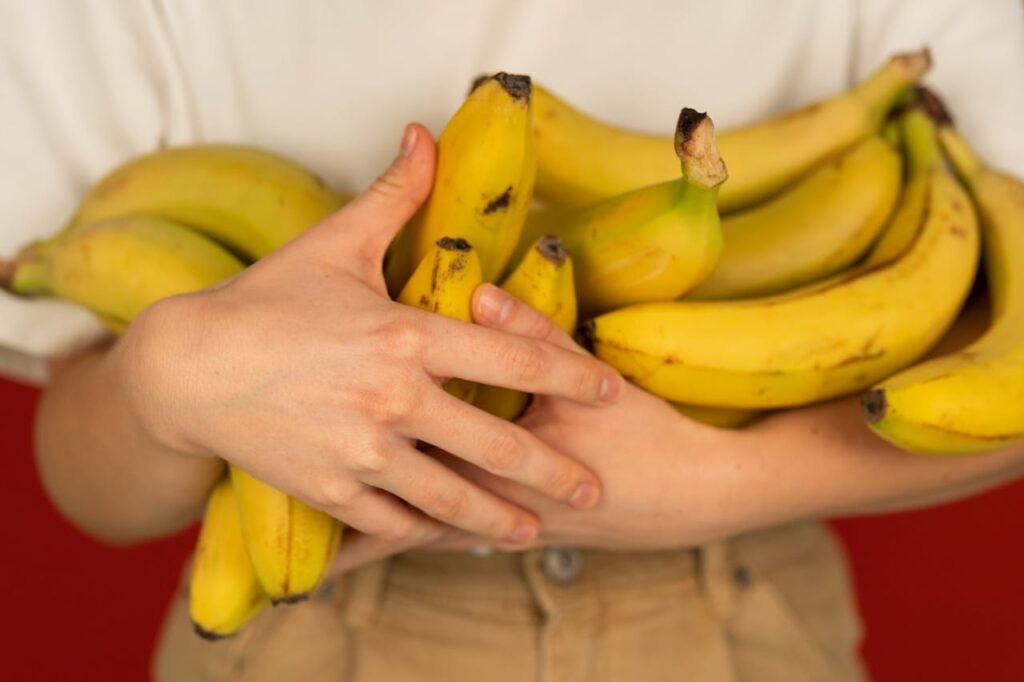
Tips for Management: How to Eat Bananas for Weight Loss
To maximise the benefits of bananas, you should consider how and when you eat them. Here are practical strategies to incorporate them into your routine.
Pair with Protein or Fat
While nutritious, bananas are carbohydrate-heavy. To further slow down the absorption of sugar and keep you full for hours, pair your banana with a source of healthy fat or protein.
- Nut Butter: Slice a banana and top it with almond or peanut butter.
- Yoghurt: Mix banana slices into Greek yoghurt for a high-protein breakfast.
- Nuts: Eat a banana alongside a handful of walnuts.
This combination blunts the insulin response and provides a more sustained energy release.
Choose Your Ripeness Based on Goals
If your primary goal is reducing appetite and keeping blood sugar low, opt for greenish-yellow bananas. They contain less free sugar and more resistant starch.
If you need quick energy before a workout, a ripe, yellow banana with brown spots is ideal because the sugars are easily accessible for your muscles. The NHS recommends basing meals on starchy foods, but choosing wholegrain or higher fibre versions where possible.
Watch Your Portions
While healthy, bananas are not calorie-free. Eating five large bananas a day would add over 500 calories to your intake, which could hinder weight loss. Stick to one or two per day as part of a varied diet rich in vegetables, lean proteins, and whole grains. For guidance on portion sizes, the British Heart Foundation offers excellent resources.
Comparison: Green vs. Ripe Bananas
Understanding the difference between the stages of ripeness can help you choose the right fruit for your specific needs.
| Feature | Green (Unripe) Bananas | Yellow (Ripe) Bananas |
|---|---|---|
| Taste | Less sweet, slightly bitter | Sweet, creamy |
| Texture | Firm, waxy | Soft, mushy |
| Main Carbohydrate | Resistant Starch | Sugar (Sucrose, Fructose, Glucose) |
| Glycaemic Index | Low (~30) | Medium (~60) |
| Digestibility | Slower (Prebiotic effect) | Rapid (Quick energy) |
| Best Use | Weight loss, gut health | Pre-workout, baking |
Frequently Asked Questions
Do bananas cause belly fat?
No. There is no evidence that bananas specifically target the abdominal area for fat storage. Weight gain occurs when you consume more calories than you burn. In fact, the potassium in bananas can help reduce bloating by counteracting sodium retention, potentially making the stomach appear flatter. For more on fluid balance, Medical News Today explains the role of potassium extensively.
Is it bad to eat bananas at night?
Eating a banana at night is not inherently bad for weight loss. The body burns calories around the clock. However, eating large amounts of carbohydrates right before bed without expelling energy might not be ideal for everyone. If you are hungry at night, a banana is a far superior choice to processed snacks.
Can I eat bananas on a low-carb or Keto diet?
Generally, bananas are difficult to fit into a strict Keto diet due to their carbohydrate content (approx 23g net carbs). However, on a moderate low-carb diet, a small banana can certainly fit within your daily allowance. It depends on your specific carbohydrate limit.
How many bananas should I eat a day to lose weight?
There is no magic number, but moderation is key. One or two bananas per day constitutes a healthy intake for most people. This contributes to your 5 A Day without overloading on sugar or displacing other vital nutrients from vegetables and proteins.
The Bottom Line
Bananas are a healthy, nutrient-dense addition to a balanced diet. They are not intrinsically fattening; on the contrary, their high fibre content and resistant starch (especially in green bananas) can support weight loss by promoting fullness and stabilising blood sugar levels.
While they do contain sugar, it is naturally occurring and comes packaged with vitamins and minerals, making them vastly superior to processed sweet snacks. To get the most out of bananas for weight loss, try to eat them when they are slightly under-ripe or pair them with protein and fats like nut butter or yoghurt.
Ultimately, no single food causes weight gain or loss. It is the totality of your diet and lifestyle that counts. For a comprehensive guide on eating well, the GOV.UK Eatwell Guide remains the gold standard for British dietary advice. By replacing high-calorie junk foods with whole foods like bananas, you are taking a positive step towards a healthier weight.