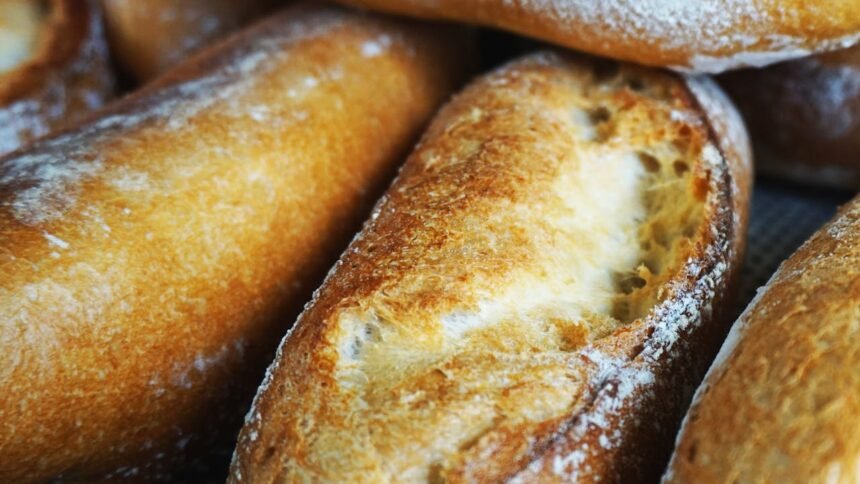
When you bite into a legendary Vietnamese sandwich, it isn’t just the pickled daikon or the savoury pâté that steals the show. It is the vessel itself: the banh mi dough. Unlike its European counterparts, the perfect Vietnamese baguette possesses a crust so thin and crisp it virtually shatters, revealing an interior that is remarkably light and cloud-like.
Achieving this specific texture at home can feel like a culinary puzzle. However, understanding the science of banh mi dough allows you to replicate that street-food magic in your own kitchen. Whether you are a seasoned baker or a curious novice, mastering this dough is about balancing gluten development with specific ingredients that keep the crumb delicate.
Why Banh Mi Dough is Different from a French Baguette
While the French introduced the baguette to Vietnam in the 19th century, local bakers adapted the recipe to suit the climate and available resources. The primary distinction lies in the density. A traditional French loaf is chewy and robust, whereas banh mi dough is engineered for maximum lightness. To understand how these differ, we must look at the history of the baguette and how it evolved in Southeast Asia.
The addition of rice flour is often cited as the secret, though many modern bakers also utilise a bread improver to achieve that signature lift. This modification alters the starch content of the dough, ensuring that the finished product isn’t too heavy on the stomach.
The Comparison: Traditional vs. Vietnamese Baguette
To help you visualise the structural differences, here is a breakdown of how banh mi dough stacks up against its French ancestor:
| Feature | French Baguette | Vietnamese Banh Mi |
|---|---|---|
| Crust Texture | Thick, chewy, and hard | Thin, brittle, and papery |
| Crumb Structure | Dense with large irregular holes | Airy crumb, cotton-soft, and light |
| Flour Type | All-purpose or T55 flour | High-protein flour blended with rice flour |
| Hydration Level | 65% – 75% | High dough hydration (approx 65-70%) |
| Core Ingredients | Flour, water, salt, yeast | Flour, water, yeast, sugar, sometimes vitamin C |
Essential Ingredients for Success
Creating the ultimate banh mi dough requires more than just mixing flour and water. You must be precise with your ratios to ensure the yeast fermentation provides enough gas to puff the dough without making it overly tough.
- High-protein flour: Provides the necessary structure to hold the air bubbles.
- Rice flour: This reduces the overall gluten, contributing to a thin crust that shatters easily.
- Yeast: Essential for the rise; ensure your yeast is fresh to optimise yeast dynamics.
- Warm Water: Vital for activating the yeast and maintaining a soft dough consistency.
- Sugar and Salt: Sugar feeds the yeast and aids in browning (Maillard reaction), while salt controls the fermentation rate.
For those mindful of their health, it is worth noting that while banh mi dough is a source of starchy carbohydrates, the light nature of the bread means you are often consuming less calorie-dense dough per sandwich than with thicker breads. According to the British Nutrition Foundation, balancing these carbohydrates with plenty of vegetable fillings is key to a healthy diet.
The Step-by-Step Process to Perfect Dough
Mastering banh mi dough involves a specific sequence of kneading and resting. You are looking for a supple, slightly tacky feel that indicates proper hydration.
- The Initial Mix: Combine your flours, yeast, sugar, and salt. Gradually add warm water until a shaggy mass forms.
- Kneading for Strength: This is where gluten development happens. Knead until the dough passes the “windowpane test”—you should be able to stretch it thin enough to see light through it without it tearing.
- The First Rise: Place the dough in a warm, draught-free spot. This proofing time allows the yeast fermentation to create those all-important air pockets.
- Shaping: Gently deflate the dough and divide into portions. Roll them into tight cylinders. Proper shaping ensures an even crumb structure.
- Scoring: Use a very sharp blade for scoring the dough. A deep, longitudinal cut allows the bread to expand rapidly in the oven.
During the baking phase, steam baking is non-negotiable. Introducing moisture into the oven during the first few minutes prevents the crust from setting too quickly, allowing for maximum “oven spring.” This technique is frequently discussed in culinary physics as a way to manipulate starch gelatinisation.
Health and Dietary Considerations
While delicious, banh mi dough is traditionally made with wheat. For those with coeliac disease or gluten sensitivities, modifications are necessary. Research into dough rheology shows that replacing wheat with 100% rice flour requires binding agents like xanthan gum to mimic the stretch of gluten.
From a metabolic perspective, the simple sugars in white flour can lead to a quicker rise in blood glucose levels. To mitigate this, consider incorporating a small percentage of whole-wheat flour or ensuring your sandwich is packed with high-fibre vegetables and lean proteins, which help slow down digestion as suggested by Harvard Health.
Common Mistakes to Avoid
Even expert bakers can struggle with banh mi dough. Here are a few pitfalls to watch out for:
- Under-kneading: If the gluten isn’t strong enough, your bread will collapse, resulting in a dense, gummy interior.
- Skipping the steam: Without steam, you will get a hard, thick crust rather than the signature thin, crispy shell of a Vietnamese baguette.
- Incorrect flour ratios: Too much rice flour will make the dough brittle and difficult to work with; keep it to about 10-20% of the total flour weight.
- Poor Temperature Control: Yeast is sensitive. If your water is too hot, you will kill the yeast; too cold, and it won’t activate properly. Check food safety guidelines for optimal ingredient handling.
For more technical insights into how enzymes interact with dough, you can explore the role of digestive enzymes and their parallels in food science at King Arthur Baking.
Storage and Freshness
Because banh mi dough results in such a light bread, it tends to go stale faster than denser loaves. For the best experience, eat it within a few hours of baking. If you must store it, wrap it tightly in foil and reheat it in a hot oven for a few minutes to restore the thin crust. For professional tips on maintaining bread quality, refer to the BBC Good Food guide on bread science.
Frequently Asked Questions (FAQs)
Can I make banh mi dough without rice flour?
Yes, you can use 100% high-protein flour (bread flour). However, the addition of rice flour is what gives the bread its iconic “shatter” and extra lightness. If you skip it, your bread will be slightly more similar to a standard baguette.
What is a bread improver and do I need it?
A bread improver is a blend of enzymes and minerals (like Vitamin C/ascorbic acid) that strengthens the dough and boosts the rise. While not strictly necessary for home bakers, it helps achieve that professional, airy crumb structure seen in Vietnamese bakeries.
How long should I proof the dough?
Typically, the first rise takes about 1 hour, and the second rise (after shaping) takes 45-60 minutes. However, this depends on the ambient temperature. You want the dough to double in size. For more on the chemistry of this process, see Serious Eats’ bread glossary.
Why is my banh mi dough too sticky?
High dough hydration is common in this recipe to ensure a soft interior. If it is unmanageable, use lightly oiled hands or a bench scraper rather than adding too much extra flour, which can make the bread heavy. You can learn more about managing sticky doughs via Epicurious.
Where can I find the history of this bread?
The evolution of the banh mi is a fascinating study of culinary fusion. For a deep dive into its cultural significance, visit The Guardian’s food travel archives.