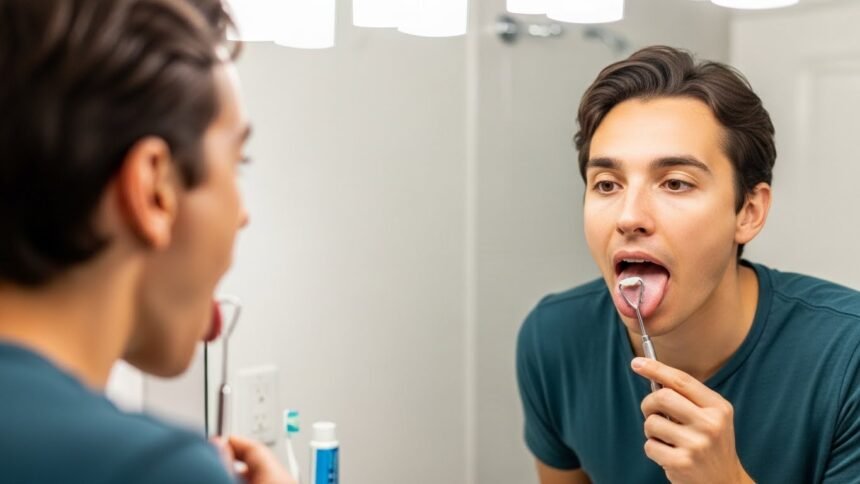
We all know the drill: brush twice a day and floss regularly. These are the pillars of a solid morning oral hygiene routine. However, many of us are missing a crucial step that takes less than thirty seconds but delivers massive results. That step is tongue scraping.
If you have ever noticed a white or yellowish film on your tongue in the morning, you are looking at a buildup of bacteria, food debris, and dead cells. Simply brushing your teeth will not remove it effectively. In fact, brushing your tongue often just moves this debris around. This is where a tongue scraper becomes your best friend.
In this guide, we will explore the scientifically backed benefits of tongue scraping*, compare **copper vs stainless steel tongue scraper** options, and show you exactly *how to clean tongue scraper properly tools for the best results.
What is Tongue Scraping?
Tongue scraping is an ancient oral hygiene practice that involves running a tool across the surface of your tongue to remove buildup. While it has recently gained popularity in the West, it has been a staple in Ayurveda (traditional Indian medicine) for thousands of years.
In Ayurveda, this buildup is known as ‘ama’—toxic residue that accumulates in the digestive tract and appears on the tongue. By physically removing this coating, you are not just cleaning your mouth; you are aiding your body’s detoxification process. For more on the history of these practices, you can read about Ayurvedic preventive medicine here.
5 Major Benefits of Tongue Scraping
Why should you add this extra step to your morning ritual? Here are the most compelling reasons.
1. Banishes Bad Breath (Halitosis)
Bad breath is often caused by volatile sulphur compounds (VSCs). These are produced by bacteria that live at the back of the tongue.
Does tongue scraping remove bad breath? The answer is a resounding yes. Studies suggest that scraping is significantly more effective than brushing at removing the bacteria that cause these odours. By eliminating the source of the smell rather than just masking it with minty toothpaste, you achieve fresher breath that lasts longer.
> “Tongue scraping has been shown to reduce volatile sulphur compounds by up to 75%.”
For more on the causes of bad breath, visit the NHS guide on halitosis.
2. Enhances Your Sense of Taste
If you love food, this benefit is for you. Over time, the biofilm on your tongue can clog your taste buds. This dulls your ability to distinguish between distinct flavours.
One of the best ways to improve taste buds naturally is to remove this film. Many people report that after just a week of daily scraping, foods taste richer and more vibrant. You may even find you need less salt or sugar to feel satisfied.
3. Supports Gut Health and Digestion
Your mouth is the gateway to your gut. Digestion begins the moment food enters your mouth. However, swallowing the toxins and bacteria accumulated on your tongue can disrupt your internal balance.
Understanding how to improve gut health naturally* often starts with oral hygiene. By scraping away harmful bacteria before you eat or drink, you prevent them from travelling down your oesophagus and into your stomach. This simple act supports the *signs of a healthy gut microbiome.
Learn more about the mouth-body connection from the Mayo Clinic.
4. Boosts Overall Immunity
The mouth is the first line of defence for your immune system. It is rich in bacteria—some good, some bad. When bad bacteria proliferate, they can cause inflammation and lead to other health issues, including heart disease.
By reducing the bacterial load in your mouth, you stop these pathogens from entering your bloodstream. This is a key aspect of holistic dental care tips that focus on total body wellness.
Read about the link between oral health and general health at Harvard Health.
5. Improves appearance
A healthy tongue should be pink. If you are dealing with white coating on tongue causes, it is likely just excess debris. Scraping daily reveals the natural, healthy pink tissue underneath, which simply looks cleaner and healthier.
Copper vs Stainless Steel Tongue Scraper: Which is Best?
When choosing a tool, avoid plastic. It harbours bacteria and is bad for the environment. The real debate is between copper and stainless steel.
* Stainless Steel: These are highly durable, easy to clean, and will not rust. They are excellent for those who want a low-maintenance tool.
* Copper: Copper has natural antibacterial properties. In Ayurveda, copper is prized for its ability to kill bacteria on contact. However, it can tarnish over time and requires a bit more care.
Both are excellent choices. For a deeper look at materials, check this resource on antimicrobial properties of copper.
How to Scrape Your Tongue Properly
Getting the Ayurvedic tongue scraping benefits requires the right technique. It is simple, but precision matters.
- Stand in front of a mirror. Open your mouth wide and stick your tongue out.
- Place the scraper. Set the rounded end of the scraper at the back of your tongue. go as far back as you can without gagging.
- Pull forward. Apply gentle pressure and pull the scraper forward to the tip of your tongue.
- Rinse and repeat. Rinse the debris off the tool. Repeat this process 5 to 10 times.
- Wash the tool. Clean your scraper with soap and hot water. Dry it thoroughly.
When is the Best Time to Scrape Tongue?
The best time to scrape tongue is immediately after waking up, on an empty stomach. Do this before you drink water or brush your teeth. If you drink water first, you risk swallowing the bacteria accumulated overnight.

Integrating Scraping with Other Natural Remedies
Tongue scraping works beautifully alongside other natural health practices.
Oil Pulling
Many people combine scraping with oil pulling. The benefits of oil pulling with coconut oil include reducing plaque and whitening teeth. A common routine is to scrape first, then oil pull, and finally brush your teeth. This trio creates a powerful defence against decay.
Learn the basics of oil pulling at Healthline.
Hydration and Diet
While scraping removes debris externally, hydration cleanses internally. Ensure you drink plenty of water. Additionally, consuming foods that cause inflammation (like excessive sugar) can increase oral bacteria. Stick to a balanced diet to support your oral pH.
For dietary advice, consult the British Nutrition Foundation.
Common Myths and Safety Tips
“Can I just use my toothbrush?”
While better than nothing, toothbrushes are designed for the hard enamel of teeth, not the spongy texture of the tongue. They tend to push bacteria into the gaps between taste buds rather than removing it. A dedicated scraper is far superior.
See what the Cleveland Clinic says about scrapers versus brushes.
“Will it hurt?”
It should not hurt. If it does, you are pressing too hard. Tongue scraping side effects are rare but can include accidental cuts or gagging if you go too far back initially. Be gentle.
“Is it safe for everyone?”
Generally, yes. However, if you have a tongue piercing or an open sore on your tongue, consult your dentist first. Always ensure you know how to clean tongue scraper properly to avoid reintroducing bacteria.
For more safety standards, visit the Oral Health Foundation.
Summary
To reduce oral bacteria naturally, you do not need expensive chemicals or treatments. A simple metal tool, used every morning, can transform your oral health. From better breath to a stronger immune system, the rewards are well worth the ten seconds of effort.
Start your journey to a cleaner mouth today. Your gut, your taste buds, and your friends will thank you.
Frequently Asked Questions (FAQ)
1. How often should I scrape my tongue?
You should scrape your tongue once a day, ideally first thing in the morning. Some people choose to do it at night as well, but the morning scrape is the most important for removing overnight buildup.
2. Can tongue scraping cure bad breath permanently?
While it is not a “cure” for underlying medical conditions, it is one of the most effective ways to manage and prevent chronic bad breath caused by oral bacteria. For persistent issues, consult a dentist.
3. Should I scrape before or after brushing my teeth?
It is best to scrape before brushing. This removes the bulk of the debris so your toothbrush and toothpaste can work more effectively on your teeth and gums.
4. Is a copper scraper better than a plastic one?
Yes. Copper is naturally antimicrobial and more durable. Plastic scrapers can develop micro-cracks that harbour bacteria and need to be replaced frequently, making them less eco-friendly.
5. Can tongue scraping help with a white tongue?
Absolutely. A white tongue is usually caused by a buildup of debris and dead cells. Regular scraping physically removes this layer, restoring the tongue’s natural pink colour.
*
External Resources Used:
* NCBI – Ayurveda Context
* NHS – Bad Breath
* Mayo Clinic – Oral Health
* Harvard Health – Heart & Oral Health
* NCBI – Copper Properties
* Healthline – Oil Pulling
* British Nutrition Foundation
* Cleveland Clinic – Scrapers vs Brushes
* Oral Health Foundation
* WebMD – Oral Care
* Johns Hopkins Medicine – Oral Health
* Sleep Foundation – Oral Health