
For many, the concept of arthritis conjures images of elderly individuals struggling with severe mobility issues or visible joint deformities. However, this degenerative condition does not appear overnight. It is a progressive disease that often begins silently, years before chronic pain becomes a daily companion. Understanding the early stages osteoarthritis presents is crucial for effective intervention, potentially slowing the disease’s progression and preserving quality of life.
While occasional aches are a normal part of life, persistent changes in how your joints feel and function can be warning signs. This guide delves deep into the biology, symptoms, and proactive management strategies for early-onset osteoarthritis (OA), moving beyond simple joint pain to look at the comprehensive picture of joint health.
The Biological Mechanics: What is Happening Inside?
Osteoarthritis is often referred to as “wear and tear” arthritis, but that description oversimplifies a complex biological process. It is a disease of the entire joint, involving the cartilage, joint lining, ligaments, and underlying bone.
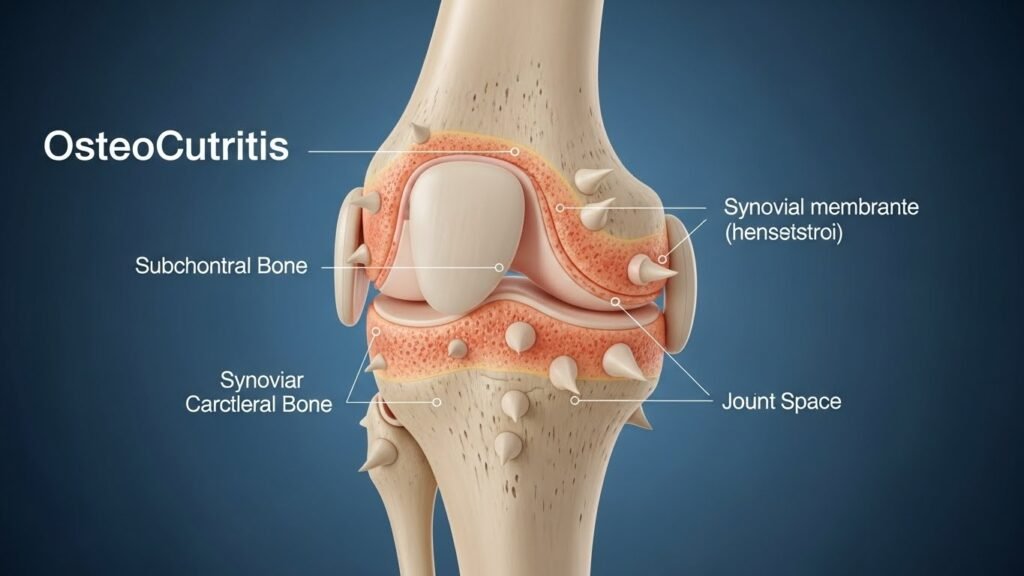
In a healthy joint, the ends of the bones are covered with a tough, slippery tissue called cartilage, which allows for smooth motion. According to the Mayo Clinic, OA occurs when this protective cartilage gradually wears down. As the buffer decreases, the bone surface becomes rougher.
In the early stages of osteoarthritis, this damage is microscopic. The cartilage may begin to fray or thin, and the body attempts to repair it. Unfortunately, these repair processes can sometimes lead to aberrant bone growth, known as osteophytes or bone spurs. The National Institute on Aging notes that inflammation of the synovium (the joint lining) can also occur early on, contributing to the sensation of stiffness.
Recognizing the Subtle Signs: It’s Not Just Pain
Identifying OA early requires tuning into signals that are less obvious than acute pain. By the time severe pain sets in, significant cartilage loss has usually already occurred. Here are the nuanced symptoms characteristic of the early stages:
1. Morning Stiffness
One of the hallmark signs is stiffness after periods of inactivity, particularly upon waking up. unlike Rheumatoid Arthritis, where stiffness can last for hours, OA-related stiffness usually resolves within 30 minutes of moving around. The Arthritis Foundation highlights this “gelling” phenomenon as a key early indicator.
2. Reduced Range of Motion
You might notice that you cannot bend your knee as fully as you used to, or that turning your head while driving feels tighter. This gradual loss of flexibility is often dismissed as a symptom of aging but is frequently a sign of early joint changes.
3. Crepitus
Crepitus refers to the crunching, grating, or popping sounds heard when moving a joint. While not always painful, this audible friction suggests that the smooth gliding surface of the cartilage is becoming irregular.
4. Activity-Related Discomfort
In the early stages, pain is rarely constant. It is typically “mechanical,” meaning it is triggered by specific activities (like climbing stairs or playing tennis) and relieved by rest.
The Spectrum of Progression: A Comparative Look
Osteoarthritis is clinically classified into stages to help determine the severity of deterioration and the appropriate course of treatment. The Kellgren-Lawrence scale is commonly used to grade these stages.
Below is a breakdown of how the condition progresses, emphasizing the difference between early and late stages.
| Stage | Classification | Cartilage Status | Radiographic Findings (X-Ray) | Typical Symptoms |
|---|---|---|---|---|
| 0 | Normal | Healthy, intact cartilage. | No abnormalities. | None. |
| 1 | Doubtful (Early) | Very minor wear; softening of cartilage structure. | Possible narrowing of joint space; unlikely to see bone spurs. | None or very minor discomfort; rare pain. |
| 2 | Mild (Early) | Visible signs of wear; surface begins to harden/crack. | Definite osteophytes (bone spurs) and possible narrowing of joint space. | Stiffness, intermittent pain after activity, tenderness. |
| 3 | Moderate | Cartilage thinning is extensive; inflammation present. | Moderate joint space narrowing; multiple osteophytes; sclerosis (hardening of bone). | Frequent pain, popping sounds, morning stiffness, swelling. |
| 4 | Severe | Cartilage is almost gone; bone-on-bone friction. | Severe joint space narrowing; large osteophytes; bone deformity. | Constant pain, severe stiffness, significant loss of mobility. |
Data adapted from clinical staging guidelines found at Johns Hopkins Medicine.
Risk Factors: Who Should Be Vigilant?
While age is the strongest predictor—the Centers for Disease Control and Prevention (CDC) reports that OA affects over 32.5 million US adults—it is not inevitable. Certain factors can accelerate the onset of the early stages of osteoarthritis:
- Obesity: Excess weight puts additional stress on weight-bearing joints (knees and hips). Furthermore, fat tissue produces proteins that can cause harmful inflammation in and around your joints.
- Previous Joint Injury: An ACL tear or a fracture near a joint can increase the risk of OA developing in that area years later.
- Genetics: Some people inherit a tendency to develop defective cartilage or slight joint malformations.
- Occupational Hazards: Jobs that require repetitive stress on specific joints (like kneeling, lifting, or twisting) are significant contributors.
Diagnosing Early Stage OA
Diagnosing OA in its infancy is challenging because standard X-rays often do not show significant damage until stage 2. If you suspect you are in the early stages, your doctor may rely on a combination of methods:
- Physical Exam: Checking for tenderness, swelling, redness, and range of motion.
- MRI (Magnetic Resonance Imaging): Unlike X-rays, MRIs can reveal damage to cartilage and soft tissues before bone changes occur. The Cleveland Clinic notes that MRI is more sensitive for detecting early abnormalities.
- Joint Aspiration: Analyzing fluid from the joint can rule out other conditions like gout or infection.
Proactive Management: Slowing the Clock
If you catch osteoarthritis in the early stages (Stage 1 or 2), you have a unique opportunity to slow its progression. The goal shifts from pain management to joint preservation.
Strategic Exercise and Weight Management
Motion is lotion for the joints. Low-impact exercises such as swimming, cycling, and walking help strengthen the muscles around the joints, providing better support and reducing the load on the cartilage. According to Harvard Health Publishing, losing even a small amount of weight can dramatically decrease the pressure on your knees and hips.
Nutritional Support
While no diet can cure OA, an anti-inflammatory diet rich in omega-3 fatty acids, antioxidants, and vitamins can support joint health. Some studies cited in PubMed Central suggest that certain supplements, like glucosamine and chondroitin, may help some individuals, though results vary.
Physical Therapy
A physical therapist can design a personalized regimen to improve flexibility and correct gait issues that might be contributing to uneven joint wear. The American College of Rheumatology strongly recommends physical interventions as a first-line treatment for early OA.
The Global Impact and Future Outlook
Osteoarthritis is a leading cause of disability worldwide. The World Health Organization (WHO) emphasizes that as the global population ages and obesity rates rise, the prevalence of OA is expected to increase. This makes awareness of the early signs more critical than ever.
Researchers are currently investigating regenerative medicine, including stem cell therapy and platelet-rich plasma (PRP) injections, which hold promise for regenerating damaged cartilage in the early stages. While more research is needed, these advancements offer hope for future treatments that go beyond symptom management.
Conclusion
Viewing joint pain as merely an inevitable consequence of aging is a dangerous mindset. By understanding the early stages osteoarthritis presents—such as minor stiffness, crepitus, and activity-based discomfort—you can take control of your musculoskeletal health before irreversible damage occurs.
If you recognize these subtle signs in your own body, do not wait for the pain to become debilitating. Consult a healthcare professional to discuss a management plan. Through weight management, targeted exercise, and early intervention, it is possible to maintain an active, fulfilling life and keep your joints moving smoothly for years to come.